דילוג לתוכן הראשי
תיקי DNA

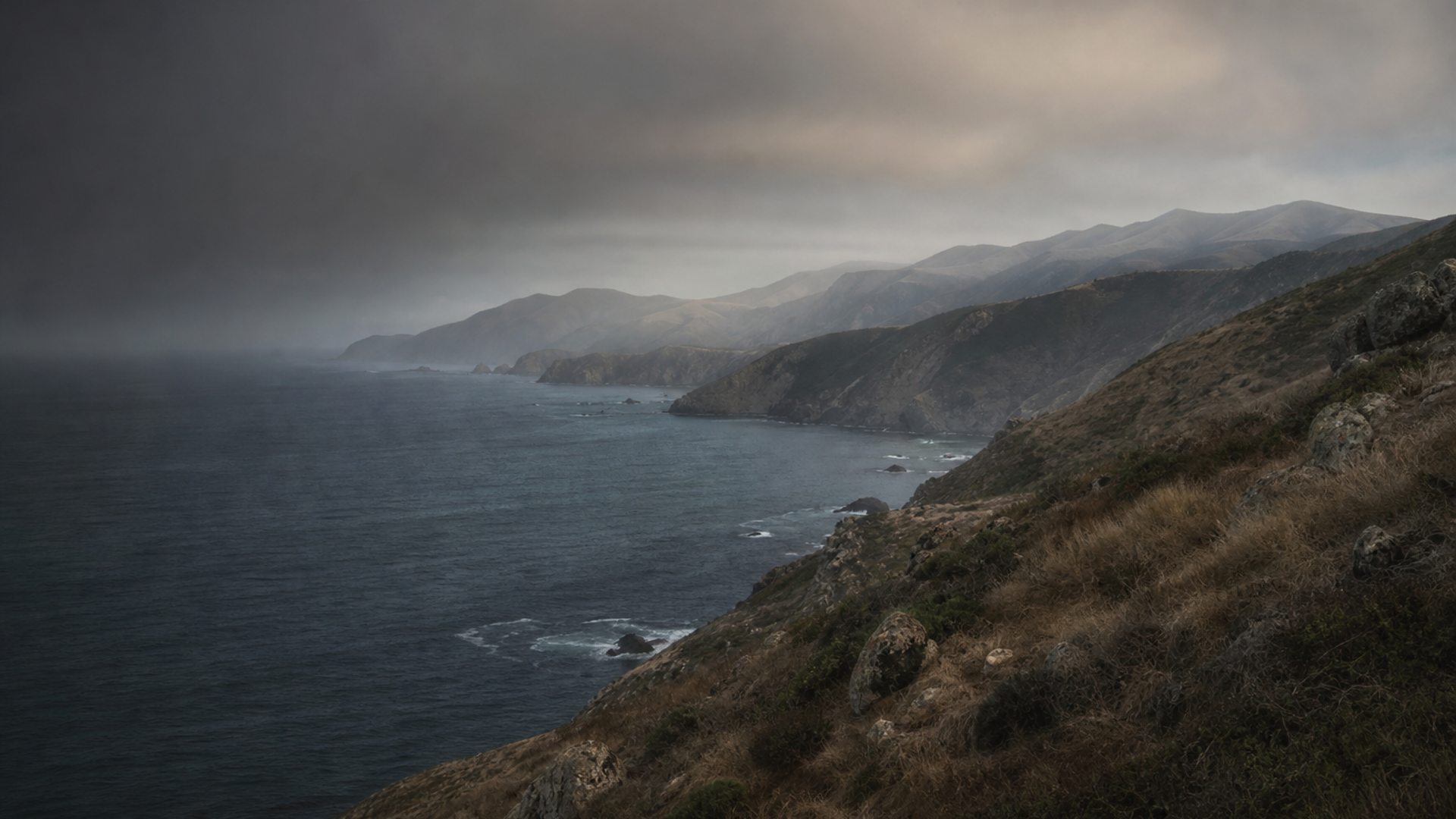
Chumash of the Santa Barbara Channel

A coastal people traced through shell middens, plank boats, and ancient DNA

5982 BCE - 1800 CE
Santa Barbara Channel & central California, USA
2 דגימות קדומות

הסיפור

Archaeological and aDNA evidence from 56 samples (5982 BCE–1800 CE) reveals deep continuity of Chumash peoples along the Santa Barbara Channel. Genetic signatures (Y‑Q, mtDNA A2/A/D1) align with long-standing coastal lifeways preserved in sites such as Burton Mound and Carpinteria.

Time Period

c. 5982 BCE–1800 CE (Holocene)

Region

Santa Barbara Channel & central California, USA

Common Y-DNA

Q (24 observed)

Common mtDNA

A2 (22), A (10), D1 (7), C1b (3), R (2)

מיקומי הדגימות

המפה האינטראקטיבית אינה זמינה. אפשר לראות את המיקומים הרשומים בקטלוג הדגימות.

ציר הזמן

5982 BCE

Earliest sampled individual

Oldest individual in the dataset, evidencing Holocene presence on the central California coast.

5050 BCE

7000 BP coastal lifeways

Primary era (~7000 BP) marks establishment of sustained shellfish gathering and coastal settlements.

1000 CE

Village complexity intensifies

Archaeological deposits indicate growth of large coastal villages and specialized craft, including shell‑bead production.

1769 CE

European contact begins

Sustained European presence initiates rapid cultural and demographic changes in the region.

1800 CE

Late historic samples

Newest individuals approach the mission and early colonial period in Chumash history.

Origins & Emergence

The Chumash emerge in the archaeological record as a coastal constellation of communities ringed around the Santa Barbara Channel. Archaeological data indicates repeated and long‑term use of shoreline sites: shell middens, hearth features, and darkened occupation deposits at Carpinteria (CA‑SBA‑1, CA‑SBA‑7, CA‑SBA‑17), Goleta (CA‑SBA‑52, CA‑SBA‑72, CA‑SBA‑73), and the prominent village at Burton Mound (CA‑SBA‑28). The dated range in this dataset spans roughly 5982 BCE to 1800 CE, with a primary era centered around ~7000 BP (c. 5000 BCE), when coastal economies and settlement nuclei consolidated.

Limited evidence suggests that these early coastal communities depended heavily on marine resources and seasonal foraging zones, with adaptive technologies—fish hooks, shell fishery gear, and ultimately plank canoe craft—emerging over millennia. Archaeological signatures across islands (San Miguel, Santa Rosa) and mainland points to mobility, exchange, and maritime knowledge that anchored a distinctive regional lifeway. Genetic data from this study complements the material record by indicating deep local continuity but also hints at population structure across islands and mainland locales. Where the archaeological record is sparse or disturbed, interpretations remain cautious: archaeological continuity is robust at some sites, equivocal at others, and always open to refinement with new fieldwork and additional ancient DNA sampling.

  • Long-term coastal occupation documented at Carpinteria, Goleta, and Burton Mound
  • Primary era centered ~7000 BP (c. 5000 BCE) with Holocene coastal adaptations
  • Evidence for maritime specialization and inter-site exchange

Daily Life & Society

The Chumash world was shaped by the sea and the slope of coastal oak woodlands. Archaeological deposits preserve thick shell middens of intertidal species, fish bones and vertebrae, stone and bone tools, and the debris of prolific shell‑bead manufacture—small Olivella shell beads that circulated as valuables and likely functioned in exchange. Villages ranged from small seasonal encampments to substantial, multi‑hearth settlements such as Burton Mound, where layered occupation deposits record centuries of craft, cooking, and burial.

Material culture and burial patterns point to craft specialization: skilled basketry, shell‑bead workshops, and woodworking consistent with seafaring technology. Ethnohistoric and archaeological inference together indicate the tomol (plank canoe) as a cultural symbol and practical technology enabling island access, fishing at sea, and tight maritime trade networks. Social life was structured around kin groups and village alliances; grave goods and differential burial contexts suggest social differentiation, but archaeological interpretation is cautious about degree and form of hierarchy. Environmental rhythms—upwelling seasons, acorn harvests, and storm cycles—dictated mobility and storage strategies, and archaeological stratigraphy often preserves clear seasonal signals. These daily practices left an enduring imprint on the landscape, visible today in shellmounds and buried village floors.

  • Marine resources and acorn economies supported dense coastal villages
  • Shell‑bead production and seafaring (tomol) indicate craft specialization

Genetic Profile

This assemblage includes 56 ancient individuals sampled across Carpinteria, Goleta, Lake Cachuma (Tequepis Creek), Burton Mound, Mikiw, Las Llagas, and island contexts. The most common paternal marker observed is Y‑haplogroup Q (24 counts), a lineage widely associated with Indigenous peoples of the Americas. On the maternal side, mtDNA haplogroup A2 is predominant (22 counts), followed by A (10), D1 (7), C1b (3), and small counts of R (2). These mtDNA lineages are characteristic of Native American populations and point to deep matrilineal continuity in the region.

Archaeogenetic data align with the archaeological picture of long‑term occupation and localized continuity, suggesting that many Chumash communities retain genetic signatures traceable into the Holocene. However, caution is needed in interpretation: some haplogroups (C1b, R) are represented by only a few individuals (<10), and therefore any population‑level inferences about migration or admixture are preliminary. Temporal depth in the dataset (nearly 8,000 years) also means that patterns of gene flow, drift, and local differentiation could shift through time; fine‑scale demographic modeling and comparison with broader coastal and inland samples are necessary to test scenarios of island‑mainland structure, kinship networks, and responses to environmental change. Collaboration with descendant communities and strict contamination controls remain central to meaningful and ethical genetic interpretation.

  • Y‑haplogroup Q is the most frequent paternal lineage (24/56)
  • mtDNA dominated by A2 (22) with additional A, D1, C1b, and rare R; small counts require caution

Legacy & Modern Connections

The Chumash cultural legacy endures in descendant communities, place names, and revival of language and craft traditions. Ancient DNA offers one thread linking living people to deep time, but genetic signals must be interpreted alongside oral histories, ethnography, and archaeological context. Genetic continuity suggested by common haplogroups complements cultural continuity visible in persistent maritime practices and shell‑bead traditions.

Ethical stewardship and partnership with Chumash communities guide modern research: results are more meaningful when shared, contextualized, and used to support cultural revitalization and repatriation goals. For individuals using DNA ancestry platforms, findings from this dataset can illuminate regional ancestries and deep-time connections, but they do not replace cultural identity or community membership. Archaeology and genetics together can tell a cinematic, evidence‑based story of resilience—sea, stone, and lineage braided across millennia—so long as uncertainty, sample limits, and respect for descendant voices remain central.

  • Genetic and archaeological continuity supports cultural connections to present-day Chumash communities
  • Ethical collaboration and contextual interpretation are essential for meaningful ancestry results

קטלוג הדגימות

2 / 2 דגימות
תמונה דגימה מדינה תקופה תאריך תרבות מין Y-DNA mtDNA
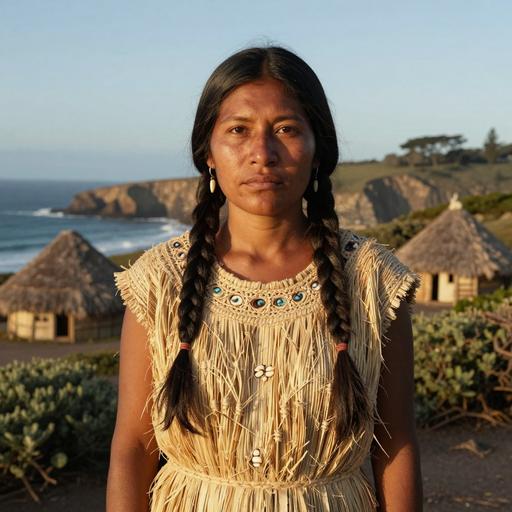
שחזור אמנותי שנוצר בבינה מלאכותית של Chumash individual, USA
USA USA_CA_SanMiguel_IslandChumash 1174 CE Chumash F - A2
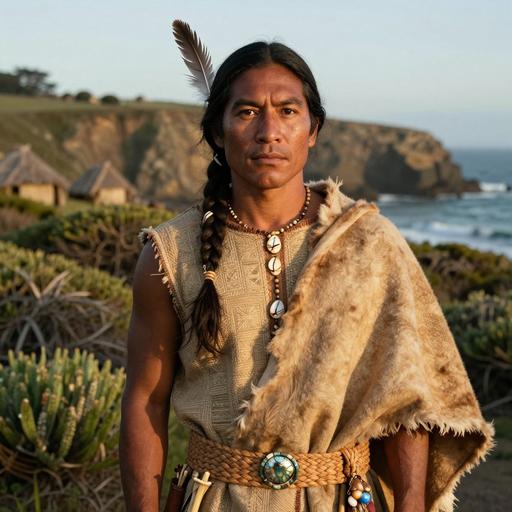
שחזור אמנותי שנוצר בבינה מלאכותית של Chumash individual, USA
USA USA_CA_SanMiguel_IslandChumash 1286 CE Chumash M Q-M902 A2

עוזר הבינה המלאכותית

עוזר הבינה המלאכותית מאת DNA Genics

פתיחת התכונה הזו
שאלו שאלות על תרבות Chumash of the Santa Barbara Channel. העוזר יכול להסביר ממצאים גנטיים, הקשר היסטורי, ראיות ארכאולוגיות וקשרים לעת המודרנית.
דוגמה לניתוח בבינה מלאכותית

מבט על תרבות Chumash of the Santa Barbara Channel

דגימות DNA קדום עוזרות לחוקרים לחקור דפוסי נדידה וקשרים גנטיים בין אוכלוסיות קדומות.

זו תצוגה מקדימה של הניתוח. העוזר המלא מאפשר לעיין בנושאים הבאים:

  • הרכב גנטי ודמיון גנטי
  • דפוסי נדידה ומקורות
  • חיי יומיום ומנהגים תרבותיים
  • קשרים גנטיים בני זמננו