דילוג לתוכן הראשי
תיקי DNA

Coastal Fujian: Late Neolithic Shores

Tanshishan and Xitoucun communities on the Min River, 2850–2200 BCE

2850 CE - 2200 BCE
Fujian, China (Min River, Minhou)

הסיפור

Archaeological sites in Fujian (Tanshishan, Xitoucun) reveal coastal Late Neolithic communities (2850–2200 BCE). A modest DNA sample (11 individuals) shows predominantly Y-haplogroup O with traces of NO, K, and F, linking material culture to deep East Asian lineages.

Time Period

2850–2200 BCE

Region

Fujian, China (Min River, Minhou)

Common Y-DNA

O (4), NO (1), K (1), F (1)

Common mtDNA

Limited/uneven reporting; patterns unclear

ציר הזמן

2500 BCE

Flourishing of coastal hamlets

Tanshishan and Xitoucun show concentrated occupation and shellfish-based subsistence along the Min River estuary (brief, preliminary description).

Origins & Emergence

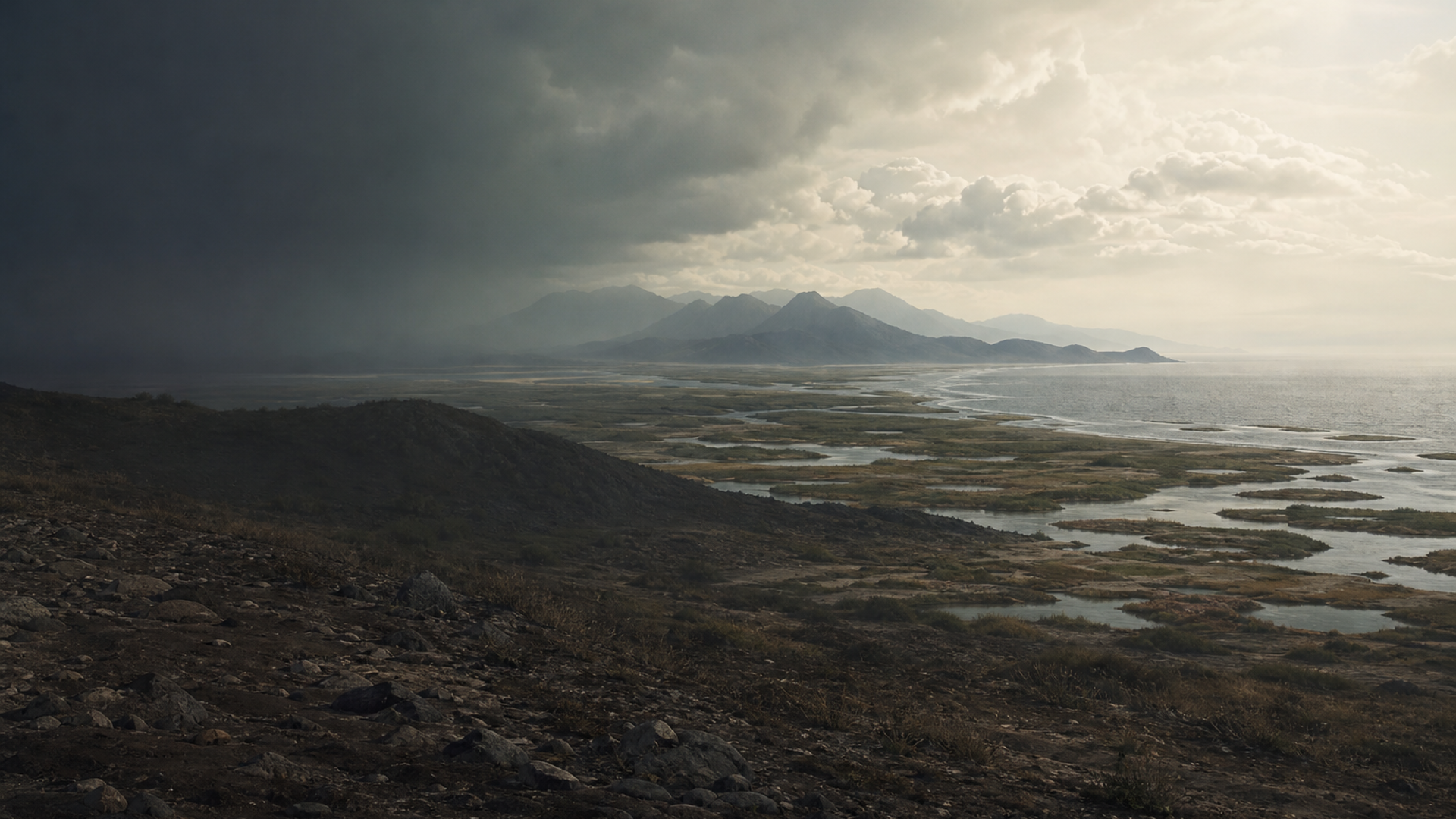
Along the bending mouth of the Min River, communities clustered at Tanshishan and nearby Xitoucun during the Late Neolithic (c. 2850–2200 BCE), carving lifeways from tidal marshes and riverine plains. Archaeological data indicates shell middens, coastal dwellings, and pottery traditions adapted to a maritime-edge environment. Excavations at Tanshishan reveal stratified deposits that suggest sustained occupation through several centuries in which people combined foraging, fishing, and incipient rice cultivation.

Culturally, these sites sit within the broader Late Neolithic of southeast China, a dynamic horizon of localized pottery styles, polished stone tools, and emergent social differentiation. Limited evidence suggests exchanges with upriver and offshore groups; marine resources and riverine trade likely structured settlement choices. Material traces—shoreline middens, hearth features, and curvilinear dwelling post-holes—paint a picture of resilient coastal lifeways facing seasonal tides and monsoon rhythms.

From a temporal perspective, the 2850–2200 BCE window captures a phase of regional consolidation before later Bronze Age transformations. Archaeological data indicates that these Fujian communities were neither isolated nor static: they were part of a pulse of demographic, economic, and cultural interaction along China’s southeastern littoral.

  • Occupation concentrated at Tanshishan and Xitoucun (Min River, Minhou, Fujian)
  • Evidence for shell middens, pottery, fishing, and early rice cultivation
  • Regional connections across coastal and riverine networks

Daily Life & Society

Life on these Late Neolithic shores blended the rhythm of tides with crafted domestic routines. Archaeological deposits at Tanshishan contain abundant shell, fish bone, and bird remains—archaeozoological signatures of a seafood-rich diet—alongside carbonized plant remains that point to wetland rice and wild grasses. Hearths and storage pits, when present, suggest on-site processing and seasonal storage of resources.

Pottery fragments—often cord-impressed or plain-fired—carry fingerprints of household practices: cooking, fermentation, and food sharing. Stone tools include adzes and ground axes for woodworking and watercraft construction; microflakes and polished implements imply specialized complementarity between maritime foragers and early cultivators. Spatially, houses appear clustered into hamlets rather than nucleated towns, consistent with kin-based household groups operating in local catchment areas.

Social life likely centered on kin networks and seasonal mobility: fishing and shellfish gathering during resource peaks, supplemented by small-scale rice tending and foraging. Archaeological data indicates craft specialization at modest scales rather than monumental hierarchy. This paints a cinematic tableau—low wooden dwellings, smoke curling above estuarine dawns, and nets cast into a silvering river.

  • Diet dominated by marine and riverine resources with complementary rice use
  • Household-based communities with craft tools for woodworking and pottery

Genetic Profile

The genetic portrait from 11 individuals associated with China_SEastAsia_Coastal_LN (2850–2200 BCE) is modest but informative. Y-chromosome data shows a predominance of haplogroup O (4/11), with single instances of NO, K, and F. Haplogroup O is widely associated with later East Asian male lineages and is often prominent in populations across mainland China and Southeast Asia; its presence here aligns with regional continuity of paternal ancestries.

The detection of NO, K, and F—older branching lineages—hints at deeper and possibly heterogeneous paternal ancestries along the coast. NO can reflect connections toward northern East Asia, while K and F are macro-haplogroups whose derived lineages dispersed broadly across Eurasia and Oceania; their presence in single individuals suggests limited diversity or isolated lineages within the community. Mitochondrial (maternal) haplogroups are not consistently reported across these 11 samples, so maternal genetic patterns remain unclear and should be treated cautiously.

Genomic comparisons with other Late Neolithic and later populations suggest continuity of East Asian ancestry components in coastal Fujian, potentially contributing to lineages involved in later coastal migrations. However, with only 11 samples the conclusions are preliminary: the dataset is too small to resolve fine-scale demographic events such as sex-biased migration, admixture pulses, or precise affinities with Austronesian-related groups. Archaeogenetic analysis therefore complements—but does not yet replace—the archaeological narrative.

  • Predominant Y-DNA haplogroup O in this sample set; single NO, K, F instances
  • mtDNA patterns are poorly reported; maternal picture remains uncertain

Legacy & Modern Connections

The people of Tanshishan and Xitoucun leave a subtle but meaningful legacy in the genetic and cultural tapestry of southeastern China. Archaeological continuity in pottery forms, shellfish exploitation, and wetland rice use resonates with ethnographic traditions along the Fujian coast. Genetically, the prevalence of Y-haplogroup O in these Late Neolithic individuals echoes a paternal lineage that becomes widespread across modern East Asian populations.

Caution is essential: the sample of 11 individuals is modest, and mtDNA remains underreported, so links to specific modern groups are provisional. Nevertheless, these coastal communities likely contributed ancestry to later populations in southern China and possibly to maritime movements that shaped genetic patterns in Taiwan and Southeast Asia. Viewed together, the material and genetic traces form a cinematic continuity—people grounded in estuarine landscapes whose descendants carried both genes and coastal knowledge into subsequent eras.

  • Archaeogenetic signals suggest contribution to later southeastern Chinese lineages
  • Small sample size limits strong claims; connections to later migrations remain provisional

עוזר הבינה המלאכותית

עוזר הבינה המלאכותית מאת DNA Genics

פתיחת התכונה הזו
שאלו שאלות על תרבות Coastal Fujian: Late Neolithic Shores. העוזר יכול להסביר ממצאים גנטיים, הקשר היסטורי, ראיות ארכאולוגיות וקשרים לעת המודרנית.
דוגמה לניתוח בבינה מלאכותית

מבט על תרבות Coastal Fujian: Late Neolithic Shores

דגימות DNA קדום עוזרות לחוקרים לחקור דפוסי נדידה וקשרים גנטיים בין אוכלוסיות קדומות.

זו תצוגה מקדימה של הניתוח. העוזר המלא מאפשר לעיין בנושאים הבאים:

  • הרכב גנטי ודמיון גנטי
  • דפוסי נדידה ומקורות
  • חיי יומיום ומנהגים תרבותיים
  • קשרים גנטיים בני זמננו