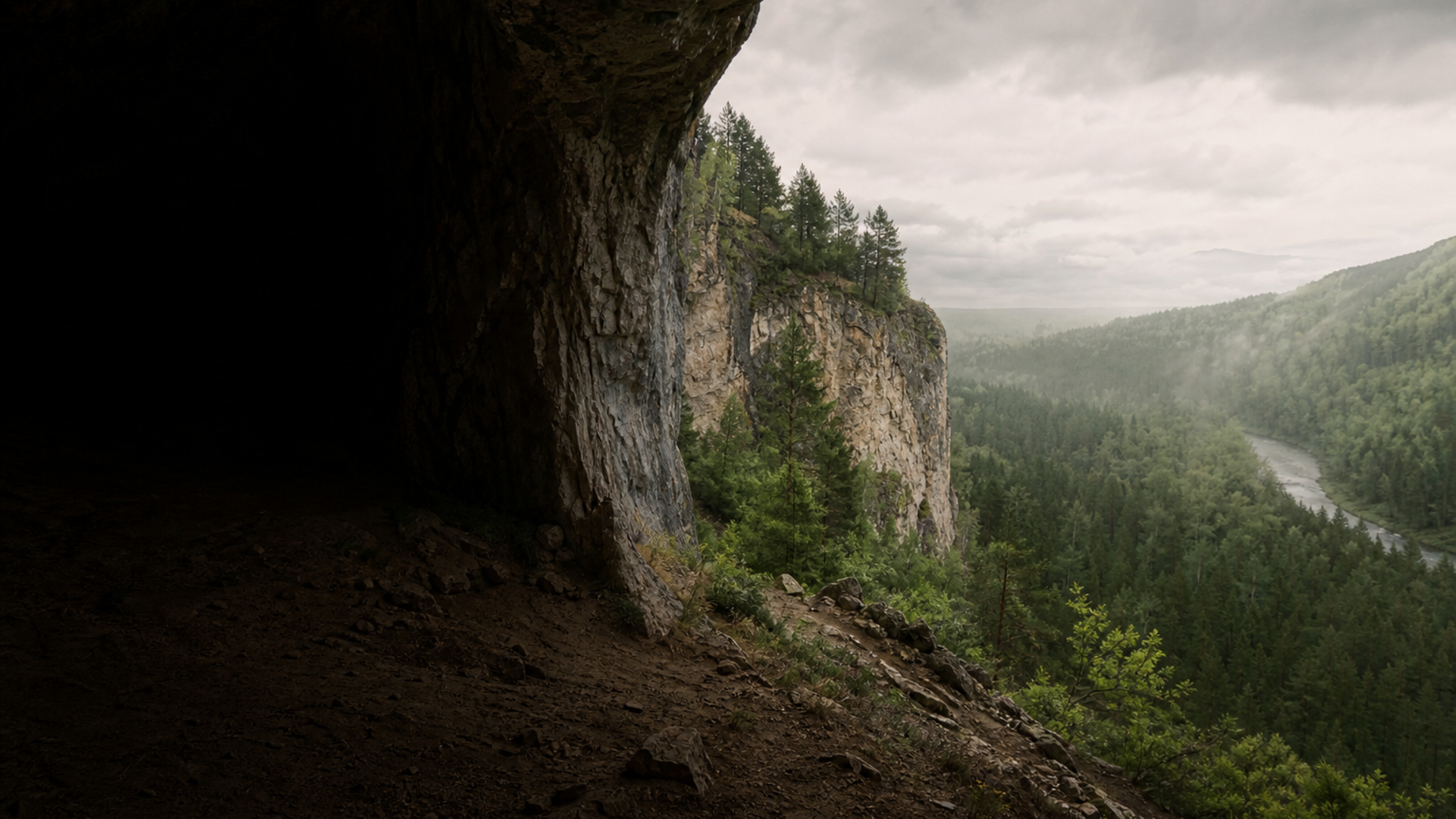
The Mezhovskaya horizon occupies a shadowed edge of Bronze Age Eurasia — a zone where forest, steppe and riverine corridors meet. Archaeological data indicates human activity in the Kapova Cave area across the late second to early first millennium BCE, a period of shifting climates and mobile lifeways. Limited evidence suggests the Mezhovskaya cultural identity formed through interactions between local forest-steppe groups and broader steppe networks that transmitted metalwork styles, pottery types, and funerary rites.
Kapova Cave (Bashkortostan, southern Urals) preserves both material traces and skeletal remains that provide a cinematic, if fragmentary, view: charcoal-dark hearths, chipped tools, and burial deposits echoing seasonal movement. Radiocarbon-associated dates for the DNA-bearing individuals fall between 1531 and 800 BCE, situating these people within a dynamic Bronze Age landscape of herding, hunting, and long-distance exchange.
Caution is essential: with only three genomic samples, patterns remain provisional. Archaeological parallels link Mezhovskaya artifacts to neighboring horizons, but the degree to which this reflects migration, diffusion, or shared practice is unresolved. Ongoing excavation and larger genetic samplings are needed to transform evocative snapshots into a fuller picture of origins and cultural emergence.