דילוג לתוכן הראשי
תיקי DNA

Voices from San Nicolas Shore

Ancient islanders of San Nicolas Island, seen through archaeology and DNA

3700 BCE - 1300 CE
San Nicolas Island, California, USA

הסיפור

Archaeological and ancient-DNA evidence from San Nicolas Island (3700 BCE–1300 CE) reveals a maritime-adapted population with maternal lineages dominated by mtDNA C and B and Y-chromosome Q. Data are regionally focused (15 samples) and best read as a preliminary window into island life and ancestry.

Time Period

3700 BCE – 1300 CE

Region

San Nicolas Island, California, USA

Common Y-DNA

Q (3 of 15 sampled)

Common mtDNA

C (7), B (6), D1 (1), C1b (1)

ציר הזמן

3700 BCE

Earliest documented occupation

Radiocarbon-dated shell middens indicate human presence on San Nicolas Island beginning around 3700 BCE.

500 CE

Sustained maritime lifeways

Archaeological deposits show continued maritime adaptation, including dense shell middens and bone tool use.

1300 CE

Late prehistoric occupations

Evidence of later pre-Columbian occupations persists up to about 1300 CE, before historic-period disruptions.

Origins & Emergence

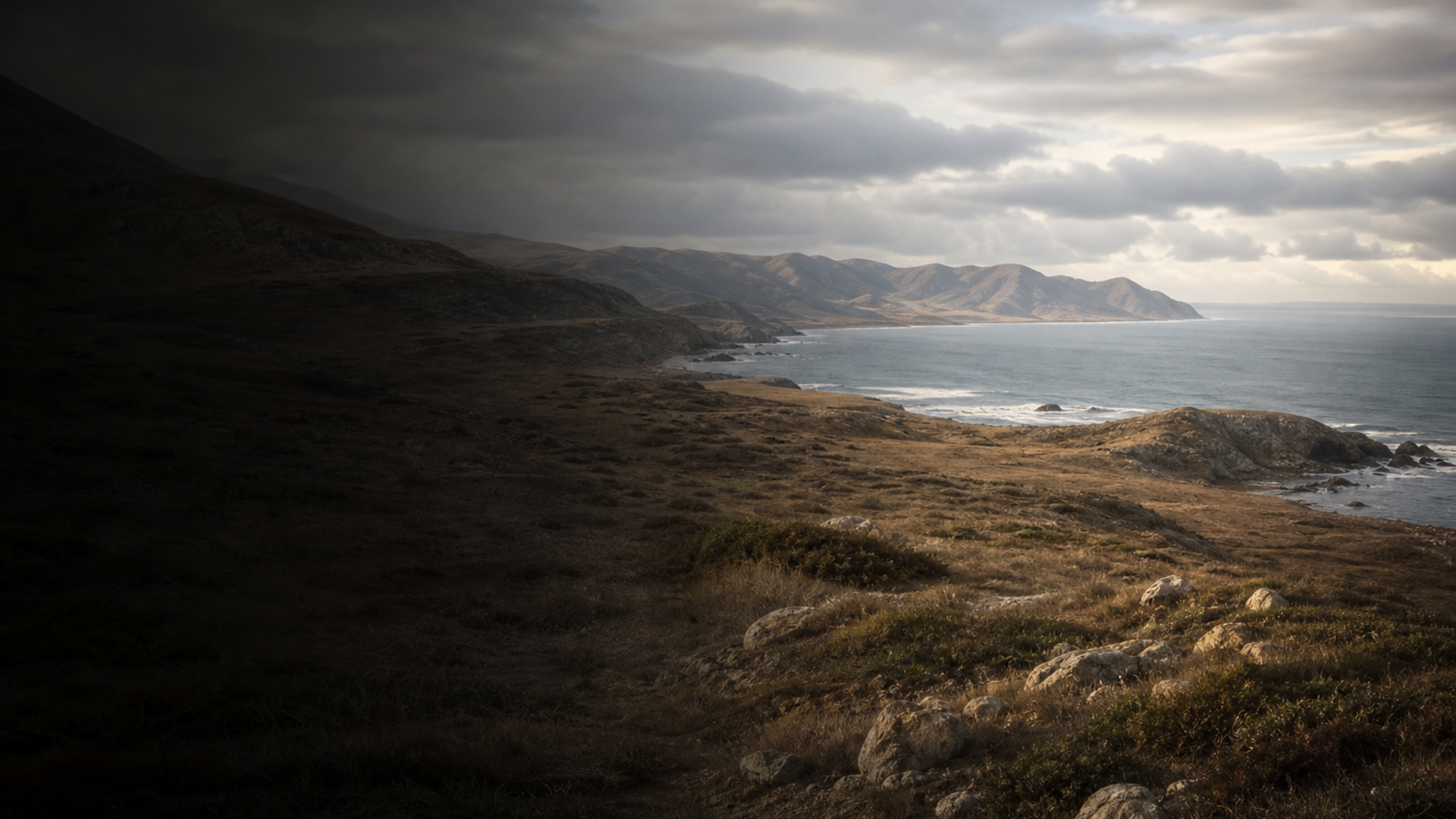
Along the wind-swept western edge of Southern California, San Nicolas Island preserves a long, layered record of human presence. Radiocarbon ages from shell middens and hearth features across the island indicate occupation beginning as early as 3700 BCE, with persistent use through the late first millennium CE and into the medieval period (up to about 1300 CE). Archaeological deposits—dense shell lenses, fish-bone concentrations, and carved bone and stone implements—point to a community shaped by the sea: seasonal and year-round exploitation of shellfish, fish, and seabirds.

Limited evidence suggests that these islanders participated in wider coastal networks: exotic lithic materials and artifact styles hint at contact with nearby Channel Islands and mainland California groups, but the intensity and direction of exchange remain uncertain. Island environments often amplify genetic drift and founder effects; thus, material culture and skeletal remains may represent both long-term continuity and episodes of demographic turnover.

Archaeological data indicates a slow, maritime-adapted emergence rather than a sudden colonization. However, because preservation and excavation are uneven across the island, and because only a limited number of human remains have been sampled for ancient DNA, interpretations of population continuity and migration should be treated as provisional.

  • Radiocarbon-dated occupations from ~3700 BCE to ~1300 CE
  • Evidence from shell middens, hearths, and bone/stone tools
  • Signs of coastal exchange with nearby islands and mainland

Daily Life & Society

Life on San Nicolas Island unfolded against a dramatic maritime stage: low ridgelines, gusting sea breezes, and cliffs dotted with seabird rookeries. Archaeological assemblages—thick shell middens, fish-bone concentrations, and worked bone and shell artifacts—evoke rhythms of harvesting, processing, and communal consumption. People made bone points and shell fishhooks, likely used from small watercraft or shoreline fishing; carved bone and stone tools reflect both subsistence needs and skilled craft traditions.

Seasonal cycles would have structured labor: spring and summer seabird nesting, year-round intertidal foraging, and episodic fishing of pelagic species. Hearths and lens features show on-site processing and cooking, while storage strategies (e.g., shell middens as refuse and possible midden caching) hint at planning and social organization. Burial evidence on the island is sparse and fragmentary, limiting confident reconstructions of social hierarchy, ritual life, or demographic composition.

Archaeological data indicates adaptability and deep ecological knowledge, but many details of social structure remain hidden in the archaeological record. Ethnographic parallels with other Southern California island and coastal groups can inform hypotheses, yet caution is needed when projecting ethnographic models onto ancient contexts.

  • Maritime subsistence: shellfish, seabirds, and nearshore fishing
  • Bone points, shell hooks, and dense middens reflect craft and diet

Genetic Profile

Fifteen ancient individuals from San Nicolas Island provide a modest but informative genetic glimpse into island prehistory. Y-chromosome data are limited but show haplogroup Q in three individuals, a lineage widely associated with Indigenous populations of the Americas. Maternal lineages are dominated by mtDNA C (7 counts) and B (6 counts), with single occurrences of D1 and C1b.

This distribution—strong representation of C and B—aligns with patterns seen across much of coastal and interior North America, supporting continuity of founding Native American maternal lineages in this insular context. The presence of D1 (rare in some regions) and C1b suggests either local diversity or limited incoming lineages over time. Island populations are prone to drift and founder effects, so haplogroup frequencies on San Nicolas may differ from mainland patterns even if ancestry derives from similar source populations.

Genetic data here can be read two ways: as evidence for long-term continuity of Native American maternal lineages on the island, and as a reminder of the island’s demographic dynamics—small population size, potential sex-biased migration, and genetic drift. Because the sample size is 15 and spatially limited to one island, conclusions about broader Southern California population history remain preliminary. Integrating ancient DNA with archaeological stratigraphy, radiocarbon dates, and regional comparative samples will refine models of migration, contact, and isolation.

  • Y-DNA: haplogroup Q present (3 of 15)
  • mtDNA dominated by C (7) and B (6); D1 and C1b are rare

Legacy & Modern Connections

The material and genetic traces from San Nicolas Island resonate with living Indigenous histories of Southern California. Historically, the island is associated with the Nicoleño people; today, cultural connections and stewardship involve a range of Native communities from the region. Ancient DNA contributes a new line of evidence to deepen understanding of ancestry and population relationships, but such work must be pursued in partnership with descendant communities and with respect for ethical and repatriation concerns.

Genetic findings here do not map one-to-one onto modern tribal identities; instead, they illuminate biological lineages that intersect with cultural histories, migration stories, and island-specific adaptations. Archaeology and ancient DNA together enrich narratives of coastal resilience, maritime skill, and long-term human engagement with island ecosystems. Continuing research—conducted collaboratively—can help situate San Nicolas Island within the broader tapestry of Indigenous California history while honoring contemporary community priorities.

  • Connections to Nicoleño and regional Indigenous communities should be approached collaboratively
  • Ancient DNA offers lineage insights but does not replace cultural and oral histories

עוזר הבינה המלאכותית

עוזר הבינה המלאכותית מאת DNA Genics

פתיחת התכונה הזו
שאלו שאלות על תרבות Voices from San Nicolas Shore. העוזר יכול להסביר ממצאים גנטיים, הקשר היסטורי, ראיות ארכאולוגיות וקשרים לעת המודרנית.
דוגמה לניתוח בבינה מלאכותית

מבט על תרבות Voices from San Nicolas Shore

דגימות DNA קדום עוזרות לחוקרים לחקור דפוסי נדידה וקשרים גנטיים בין אוכלוסיות קדומות.

זו תצוגה מקדימה של הניתוח. העוזר המלא מאפשר לעיין בנושאים הבאים:

  • הרכב גנטי ודמיון גנטי
  • דפוסי נדידה ומקורות
  • חיי יומיום ומנהגים תרבותיים
  • קשרים גנטיים בני זמננו