Saltar para o conteúdo principal
Cultura de destaque

Echoes of the Armenian Plateau

Early Iron Age communities (1150–420 BCE) revealed through graves, pottery, and maternal lineages

1150 CE - 420 BCE
Armenian Plateau (Armenia)

A História

Archaeological and genetic data from 14 individuals across five Armenian sites (1150–420 BCE) trace a mosaic of local traditions and Near Eastern maternal lineages. Limited sample size tempers conclusions but highlights continuity and regional connections on the Armenian Plateau.

Time Period

1150–420 BCE

Region

Armenian Plateau (Armenia)

Common Y-DNA

Not reported / limited data

Common mtDNA

T2b (2), K (2), H (1), U3c (1), U7a (1)

Cronologia

1150 BCE

Early Iron Age identities coalesce

Cultural horizons on the Armenian Plateau consolidate new burial practices and material styles across sites such as Bover and Bragdzor, marking the start of the Armenia_EIA interval.

Origins & Emergence

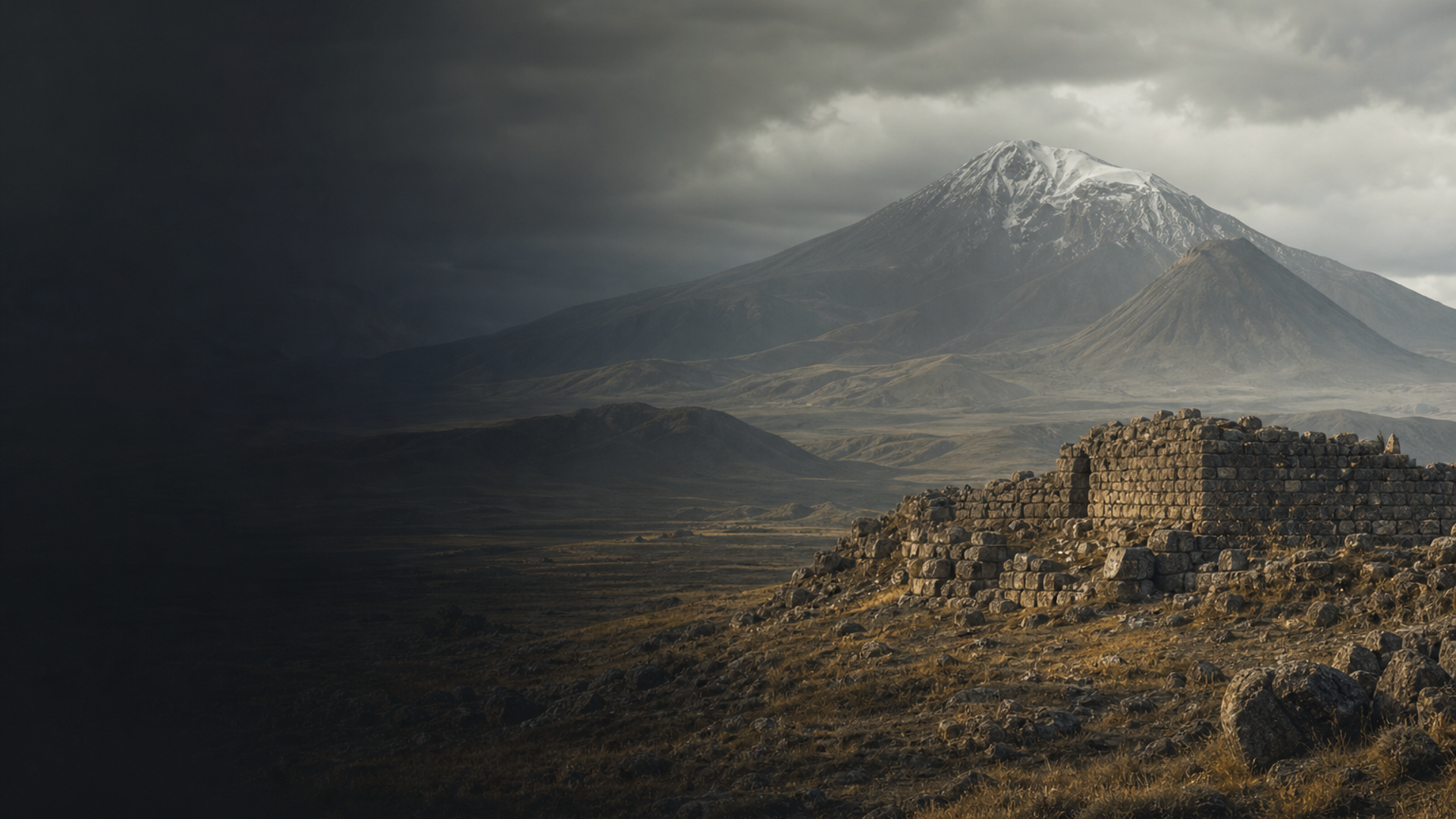
On the high, wind-cut ridges of the Armenian Plateau, between the final throes of the Late Bronze Age and the consolidation of Iron Age polities, communities re-forged daily life around new mortuary practices, craft traditions, and local power centers. Archaeological excavations at Bover Cemetery, the Pijut Archaeological Complex, Bragdzor, Noratus, and Sarukhan document graves, ceramic styles, and metallurgical debris that mark a cultural horizon dated roughly 1150–420 BCE.

Material culture points to a blend of continuity with earlier Bronze Age traditions and novel elements—variations in burial orientation, grave goods, and pottery temper that suggest local evolution rather than abrupt replacement. Limited evidence suggests interaction with neighboring regions to the south and west; trade networks likely carried raw materials and stylistic influences across the plateau. While archaeological patterns are coherent across several sites, the picture remains partial: the preserved record favors burials and durable goods, leaving ephemeral aspects such as spoken languages and many social practices invisible.

The assemblages at these cemetery sites therefore capture a people negotiating local heritage and wider regional currents, a chorus of material traces whose full story is only partly audible.

  • Sites: Bover Cemetery, Pijut, Bragdzor, Noratus, Sarukhan
  • Dates: ca. 1150–420 BCE, Early Iron Age Armenia
  • Evidence suggests local continuity with external influences

Daily Life & Society

Archaeological remains evoke a textured daily world: households organized around hearths, woven textiles implied by loom weights, and a material economy shaped by animal husbandry, cereal cultivation, and metalworking. Excavations uncovered pottery types ranging from coarse storage jars to finely burnished vessels, suggesting differential usage and social display. Graves at Bragdzor and Bover include personal ornaments and tools that reflect individual identities and craft specialization.

The funerary record offers particularly rich social clues. Variability in grave goods—some richly furnished, others sparse—points to ranking or role distinctions within communities. Funerary positions, presence of animal offerings, and spatial clustering of graves imply family plots or kin-based neighborhoods. However, preservation bias favors stone and ceramic; perishable objects and organic remains are often missing, so reconstructions of diet, clothing, and smaller-scale ritual practice remain provisional.

Archaeobotanical and zooarchaeological sampling at some sites indicates mixed agriculture and pastoralism typical of the plateau environment. Together, these strands portray communities resilient in a challenging landscape, where craft, ritual, and exchange shaped daily rhythms.

  • Economy: mixed agriculture, pastoralism, local metalworking
  • Social markers visible in varied grave furnishings and burial practices

Genetic Profile

Fourteen individuals sampled from the five Armenian sites provide a modest but valuable window into maternal lineages on the plateau during the Early Iron Age. Mitochondrial DNA haplogroups recovered include T2b (2 samples), K (2), H (1), U3c (1), and U7a (1). These maternal lineages are informative in broad terms: T2 and K are often associated with Neolithic farmer expansions and long-standing Near Eastern–European maternal continuity; H is widespread across Eurasia; U3c and U7a have stronger affinities to Near Eastern and south Caucasian populations.

No consistent Y-chromosome profile is available from this dataset to assess paternal line continuity or mobility—therefore inferences about male-mediated migrations are constrained. Autosomal patterns are not reported here, so discussion must rely on regional archaeogenetic trends: comparative studies from the wider Caucasus and adjacent steppe often show admixture between local Neolithic-derived groups and incoming Steppe-related ancestry during the Bronze-to-Iron Age transitions. Whether the Armenia_EIA individuals reflect similar autosomal mixtures requires more data.

Given the moderate sample size (14 individuals) and uneven geographic coverage, conclusions are provisional. Nonetheless, the mtDNA diversity points to strong Near Eastern maternal continuity with connections across the plateau and beyond, consistent with archaeological indications of enduring local traditions and regional exchange.

  • mtDNA diversity: T2b, K, H, U3c, U7a; suggests Near Eastern maternal links
  • Y-DNA: not reported here—limits interpretation of male-driven movements

Legacy & Modern Connections

The archaeological and genetic traces of the Armenia_EIA horizon form threads in the longer tapestry of the Armenian Plateau. Material continuities visible in craft traditions and burial customs suggest local cultural resilience; mitochondrial lineages recorded here overlap with haplogroups still observed in modern Near Eastern and Caucasian populations, hinting at deep-rooted maternal continuity.

That said, direct lines from these Early Iron Age individuals to present-day Armenians cannot be asserted definitively from this dataset alone. The sample set is geographically focused and numerically limited, and population histories include subsequent migrations, cultural shifts, and demographic events. Future studies combining larger ancient sample sets, Y-chromosome data, and genome-wide analyses will better resolve how these Early Iron Age communities contributed to the genetic and cultural heritage of later populations on the plateau.

  • mtDNA overlap suggests some maternal continuity with modern Near Eastern/Caucasian groups
  • Larger ancient and genome-wide samples needed to confirm long-term ancestry links

Assistente de IA

Assistente de IA por DNAGENICS

Desbloquear esta função
Pregunta sobre la cultura Echoes of the Armenian Plateau. El asistente con IA puede explicar hallazgos genéticos, contexto histórico, pruebas arqueológicas y conexiones modernas, con sus límites de interpretación.
Exemplo de análise com IA

La cultura Echoes of the Armenian Plateau representa un capítulo de la historia humana...

A análise genética permite estudar semelhanças com populações anteriores e possíveis adaptações. As amostras de DNA antigo fornecem informações para investigar padrões migratórios e relações entre populações, com limites que dependem do estudo e do contexto arqueológico.

Esta é uma antevisão da análise com IA. Aceder ao assistente completo para explorar informações sobre:

  • Composição e similaridade genética
  • Padrões migratórios e origens
  • Vida cotidiana e práticas culturais
  • Contexto genético moderno