Saltar para o conteúdo principal
Cultura de destaque

Falköping People: Sweden LN–EBA

Eight genomes from Falköping (2140–1621 BCE) hint at local roots and early Bronze Age connections.

2140 CE - 1621 BCE
Västra Götalands län, Falköping, Sweden

A História

Genome data from eight individuals at Falköping-5 (Västra Götalands län) spanning 2140–1621 BCE reveal a picture of local Scandinavian lineages (I1/I) alongside incoming R-lineages and diverse maternal haplogroups. Limited sample size makes conclusions preliminary.

Time Period

2140–1621 BCE (Late Neolithic–Early Bronze Age)

Region

Västra Götalands län, Falköping, Sweden

Common Y-DNA

I1 (3), I (1), R (1) — small sample

Common mtDNA

H (3), W (1), HV6 (1), U (1), I3d (1)

Cronologia

1700 BCE

Nordic Bronze Age influences rise

Circa 1700 BCE, increased exchange brings bronze technology and new social practices into southern Scandinavia, influencing coastal and inland communities.

Origins & Emergence

Between the waning Late Neolithic and the dawn of the Early Bronze Age, the landscape around Falköping in southwestern Sweden was a stage of slow transformation. Archaeological data indicates continuing farming economies, seasonal mobility, and growing long-distance contacts across the North Sea and continental Europe. The dated range for the Falköping-5 samples (2140–1621 BCE) sits at a pivotal moment: local material traditions of the Late Neolithic persist even as bronze objects and metallurgical knowledge begin to circulate more widely in southern Scandinavia.

Limited evidence from this single site cannot map the full complexity of cultural change, but the genetic snapshot suggests a population rooted in northern Scandinavian lineages with signs of external influence. This pattern fits broader regional models in which local communities incorporated incoming ideas, goods, and people rather than being wholly replaced. The archaeological silence at many small rural sites means that genomes like those from Falköping-5 are cinematic glimpses—fragments of lives lived between waves of continuity and connectivity.

  • Samples dated 2140–1621 BCE from Falköping-5 (Västra Götalands län).
  • Period marks transition from Late Neolithic traditions to early Bronze Age contacts.
  • Archaeology indicates local continuity with increasing long-distance exchange.

Daily Life & Society

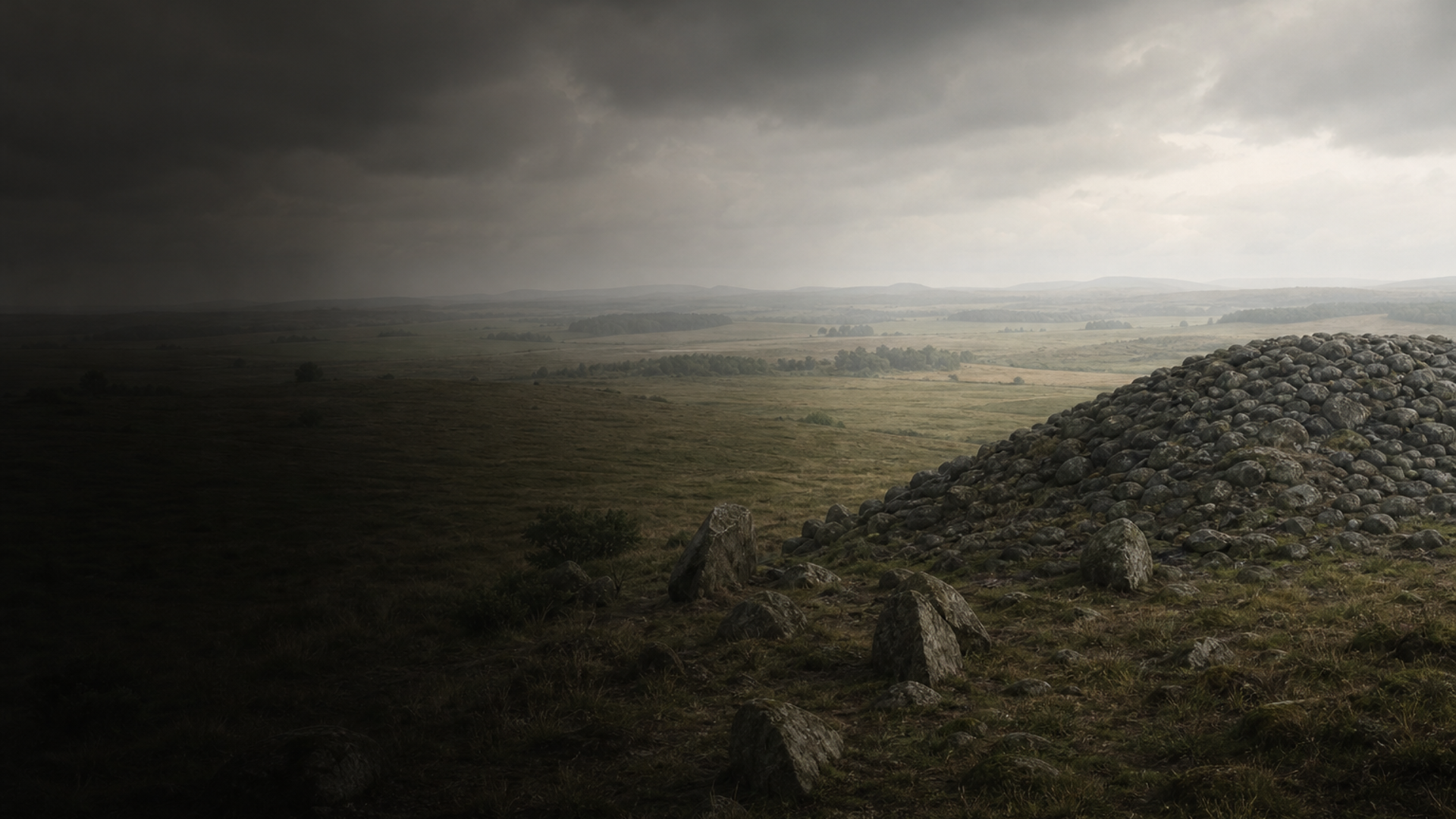
Picture windswept fields and sheltered farmsteads on the plains near Falköping: communities exploiting mixed agriculture, stock herding, freshwater fishing, and local woodland resources. Archaeological indicators across southwestern Sweden for this era suggest households with craft specialization—textile working, bone and antler tools, and adoption of early bronze objects—although direct artifact associations at Falköping-5 are limited in the published record.

Social life likely centered on kin groups and seasonal rhythms. Long-distance exchange networks could have introduced prestige items and new techniques to local leaders, subtly reshaping status displays without erasing local traditions. Mobility of people and ideas is compatible with the genetic picture: a core of local ancestry threaded with incoming lineages. However, with only eight genomes from a single location, reconstructing household organization, craft production, or social hierarchy remains tentative and should be treated as a working hypothesis rather than firm fact.

  • Mixed farming, herding, fishing likely shaped subsistence.
  • Early signs of craft specialization and long-distance exchange, though direct site evidence is limited.

Genetic Profile

The genetic palette from Falköping-5 is compact but informative. Among eight individuals, paternal lineages include I1 (3), a broadly Scandinavian-associated branch, a generic I (1), and a single R lineage (1). Maternal lineages are diverse: H (3), W (1), HV6 (1), U (1), and I3d (1). These results point toward a mix of local northern European ancestry and traces of broader continental influence.

Interpretations must be cautious: n = 8 is small, and several individuals lack reported Y data (likely females or unreadable Y profiles). The frequency of I1 is interesting because I1 becomes common in later Scandinavian populations, suggesting continuity of at least some paternal lines. The presence of an R lineage is consistent with the known expansion of steppe-derived Y-haplogroups into northern Europe during the 3rd–2nd millennia BCE, but a single R sample cannot resolve timing or source. Maternal haplogroups such as H and U reflect deep European lineages—H is widespread in Neolithic and later Europe, while U often links to more ancient hunter-gatherer ancestry.

Overall, the Falköping-5 genomes suggest local continuity with admixture from incoming groups. Because the sample count is low (<10), these patterns are preliminary and should be tested with broader regional sampling and higher-resolution haplogroup assignment.

  • Y-DNA dominated by I1, consistent with later Scandinavian paternal continuity.
  • mtDNA diversity (H, U, W, HV6, I3d) suggests mixed maternal ancestries and some hunter-gatherer continuity.

Legacy & Modern Connections

The echoes of Falköping-5 reach into the gene pools of modern Scandinavia. Haplogroup I1, well represented in these Bronze Age samples, becomes the emblematic paternal lineage of later Swedish populations. Maternal lineages like H remain common in present-day Europe, reflecting deep female-mediated continuity. Yet the story is not one of unbroken inheritance: the Early Bronze Age is a period of admixture, trade, and shifting social landscapes that reshaped genetic and cultural landscapes over centuries.

Because the dataset is small, these genomes act as evocative fragments rather than definitive proof. They remind us that modern populations are palimpsests—layers of local persistence and distant encounters. Expanding ancient DNA sampling across Sweden and neighboring regions will clarify how typical Falköping’s pattern was and how these early Bronze Age threads were woven into the tapestry of later Scandinavian identity.

  • I1 presence aligns with later Scandinavian paternal continuity.
  • Findings are preliminary; larger regional datasets are needed to confirm patterns.

Assistente de IA

Assistente de IA por DNAGENICS

Desbloquear esta função
Pregunta sobre la cultura Falköping People: Sweden LN–EBA. El asistente con IA puede explicar hallazgos genéticos, contexto histórico, pruebas arqueológicas y conexiones modernas, con sus límites de interpretación.
Exemplo de análise com IA

La cultura Falköping People: Sweden LN–EBA representa un capítulo de la historia humana...

A análise genética permite estudar semelhanças com populações anteriores e possíveis adaptações. As amostras de DNA antigo fornecem informações para investigar padrões migratórios e relações entre populações, com limites que dependem do estudo e do contexto arqueológico.

Esta é uma antevisão da análise com IA. Aceder ao assistente completo para explorar informações sobre:

  • Composição e similaridade genética
  • Padrões migratórios e origens
  • Vida cotidiana e práticas culturais
  • Contexto genético moderno