Saltar para o conteúdo principal
Cultura de destaque

Lucy Islands Coastal Foragers

A single ancient genome illuminates a 6,500‑year‑old maritime lifeway on the BC coast

4678 CE - 44536500 BCE
Lucy Islands, Chatham Sound, British Columbia, Canada

A História

Archaeological and genetic evidence from a 4678–4453 BCE individual on Lucy Islands (Chatham Sound, BC) suggests maritime hunter‑gatherer adaptations and a maternal mtDNA D lineage. Conclusions are preliminary given a single sample.

Time Period

4678–4453 BCE (c. 6500 BP)

Region

Lucy Islands, Chatham Sound, British Columbia, Canada

Common Y-DNA

Unknown (no Y data)

Common mtDNA

D (1 sample)

Cronologia

4565 BCE

Lucy Islands individual dated

Radiocarbon dating places the individual between 4678 and 4453 BCE, providing a rare ancient genome from the Chatham Sound coast.

Origins & Emergence

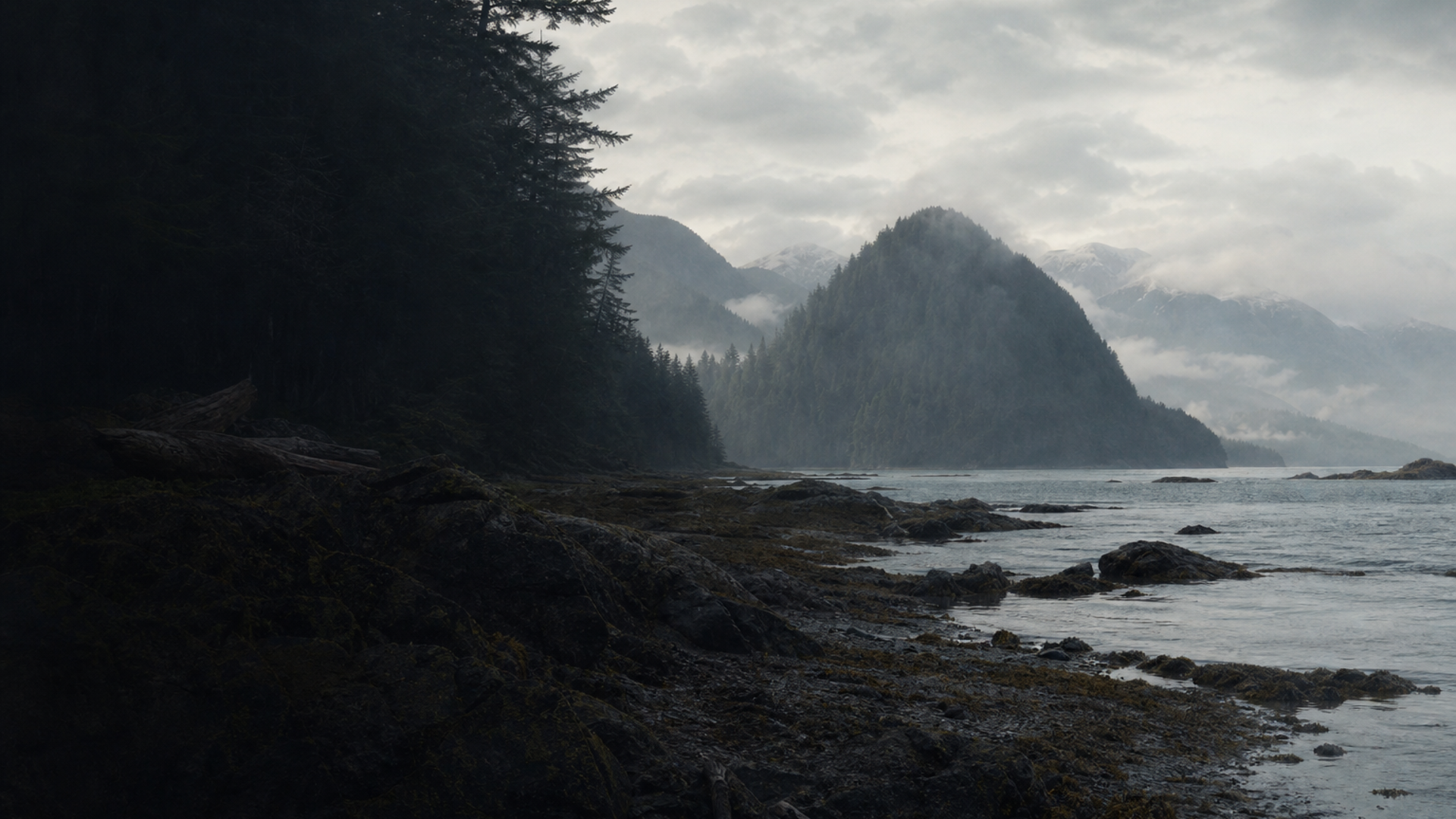
The Lucy Islands individual lived during the late Holocene along the rugged shores of Chatham Sound (modern British Columbia) between 4678 and 4453 BCE. Archaeological data indicates this stretch of coast supported rich intertidal and nearshore resources — shellfish, fish, sea mammals and seabirds — enabling dense, mobile maritime occupations. Limited evidence from nearby coastal sites dated to this era hints at repeated seasonal use of small offshore islands and headlands for harvesting and processing marine foods.

Genetically, the preserved mitochondrial lineage (mtDNA D) connects this person to maternal lineages widespread among ancient and modern First Nations in the Pacific Northwest and across northern Asia and the Americas. While this single ancient genome offers a window into one individual life, it does not by itself define a population. Archaeological patterns suggest continuity of coastal lifeways across centuries, but questions remain about migratory pulses, local adaptation, and social networks connecting islands, fjords and interior valleys. Interpreting emergence requires combining artefacts, faunal assemblages, and more ancient DNA to test whether islands like Lucy were seasonal processing stations, long‑term camps, or nodes in wider maritime exchange.

  • Lucy Islands dated to 4678–4453 BCE; late Holocene coastal context
  • Coastal resources likely supported seasonal or persistent occupation
  • mtDNA points to maternal continuity with North Pacific lineages

Daily Life & Society

The archaeological imagination of life on the Lucy Islands conjures wind, rocky benches and the smell of smoke over drying racks. Coastal hunter‑gatherers exploited tidal flats for shellfish, set weirs and hooks for fish, and hunted marine mammals and seabirds. Lithic scatters, fire‑cracked rock and midden deposits at comparable Pacific Northwest sites indicate tool repair, food processing and onsite consumption. Limited on‑island space favors the interpretation of small kin groups or task‑specific camps, with seasonal movement to sheltered river mouths and estuaries.

Socially, the technologies necessary for successful maritime life — boats or rafts, compound fishing gear, and specialized hafted tools — imply shared knowledge and cooperative labor. Exchange of stone tools, raw materials and finished items likely connected islanders to inland groups, facilitating gene flow and cultural transmission. Burial and ritual practices are poorly known from Lucy Islands itself; where coastal burials exist elsewhere in the region they suggest landscape memory and territorial ties. However, the paucity of direct excavation data at Lucy demands caution: everyday behaviors are inferred from ecological context and analogies with better‑studied Pacific Northwest sites rather than from extensive on‑site assemblages.

  • Maritime subsistence: shellfish, fish, seabirds, marine mammals
  • Likely small, mobile groups with seasonal shore‑based camps

Genetic Profile

Only a single ancient genome is available from the Lucy Islands context; therefore genetic conclusions must be framed as provisional. The individual carries mitochondrial haplogroup D, a maternal lineage common across northern Asia and many Indigenous peoples of the Americas. Archaeogenetic studies show mtDNA D lineages were part of the founding genetic diversity of the Americas and can persist regionally for millennia. The presence of haplogroup D in a ~6,500‑year‑old coastal individual is consistent with genetic continuity along the North Pacific rim, but by itself it cannot resolve migration timing, population size, or fine‑scale relationships to later or neighboring groups.

No common Y‑DNA haplogroup is reported for this sample, so paternal affiliations remain unknown. With n = 1, population‑level inferences — such as whether this community was genetically distinct or part of a broader coastal metapopulation — are not supported. Future ancient DNA from nearby sites, combined with radiocarbon dates and archaeological context, could reveal patterns of maternal and paternal line continuity, sex‑biased mobility, and connections between island and mainland groups. For now, the mtDNA result is a tantalizing genetic thread that must be woven together with additional samples and community collaboration to form a broader picture.

  • mtDNA D detected — ties to North Pacific and Indigenous American lineages
  • Single sample (n=1): interpretations are preliminary and require more data

Legacy & Modern Connections

The Lucy Islands individual provides a poignant, if singular, genetic encounter with deep coastal histories. Archaeological and genetic threads together suggest long‑standing human use of this maritime landscape and potential maternal continuity with later coastal peoples. However, establishing direct links to contemporary Indigenous communities requires careful, collaborative research, respectful consultation, and far more comparative data.

Ancient DNA here functions as one line of evidence among many: it helps trace ancestral lineages and population dynamics, but it cannot replace oral histories or community knowledge. The legacy of the Lucy Islands sample is best seen as an invitation — to expand sampling across the region, to integrate archaeological, paleoecological and genomic data, and to work closely with Indigenous partners so that scientific narratives of the past are grounded in community context and ethical stewardship.

  • Suggests possible maternal continuity along the North Pacific coast
  • Highlights need for more samples and collaborative research with Indigenous communities

Assistente de IA

Assistente de IA por DNAGENICS

Desbloquear esta função
Pregunta sobre la cultura Lucy Islands Coastal Foragers. El asistente con IA puede explicar hallazgos genéticos, contexto histórico, pruebas arqueológicas y conexiones modernas, con sus límites de interpretación.
Exemplo de análise com IA

La cultura Lucy Islands Coastal Foragers representa un capítulo de la historia humana...

A análise genética permite estudar semelhanças com populações anteriores e possíveis adaptações. As amostras de DNA antigo fornecem informações para investigar padrões migratórios e relações entre populações, com limites que dependem do estudo e do contexto arqueológico.

Esta é uma antevisão da análise com IA. Aceder ao assistente completo para explorar informações sobre:

  • Composição e similaridade genética
  • Padrões migratórios e origens
  • Vida cotidiana e práticas culturais
  • Contexto genético moderno