דילוג לתוכן הראשי
תיקי DNA

Alalakh at Dusk

A coastal Anatolian city-state where pottery, palaces and genomes meet

2115 CE - 1301 BCE
Hatay Province, Turkey (Tell Atchana/Alalakh)

הסיפור

Tell Atchana (Alalakh) in Hatay Province was a bustling Middle–Late Bronze Age center (2115–1301 BCE). Archaeology and 28 ancient genomes reveal a primarily Near Eastern genetic profile with traces of wider connections. Evidence points to local continuity with regional interactions across the Levant and Anatolia.

Time Period

2115–1301 BCE

Region

Hatay Province, Turkey (Tell Atchana/Alalakh)

Common Y-DNA

J (9), H (1), T (1), L (1)

Common mtDNA

H (7), K (3), N (2), X (2), J (2)

ציר הזמן

2000 BCE

Middle Bronze Age urban expansion

Alalakh grows into a fortified urban center, establishing administrative and craft districts seen archaeologically at Tell Atchana.

1600 BCE

Palatial activity and regional ties

Palace structures and sealings indicate regional diplomacy and trade with Anatolia and the Levant during the MLBA.

1301 BCE

Late Bronze Age horizon

The latest sampled individuals date near the end of this genetic sequence, capturing final MLBA biological signals at Alalakh.

Origins & Emergence

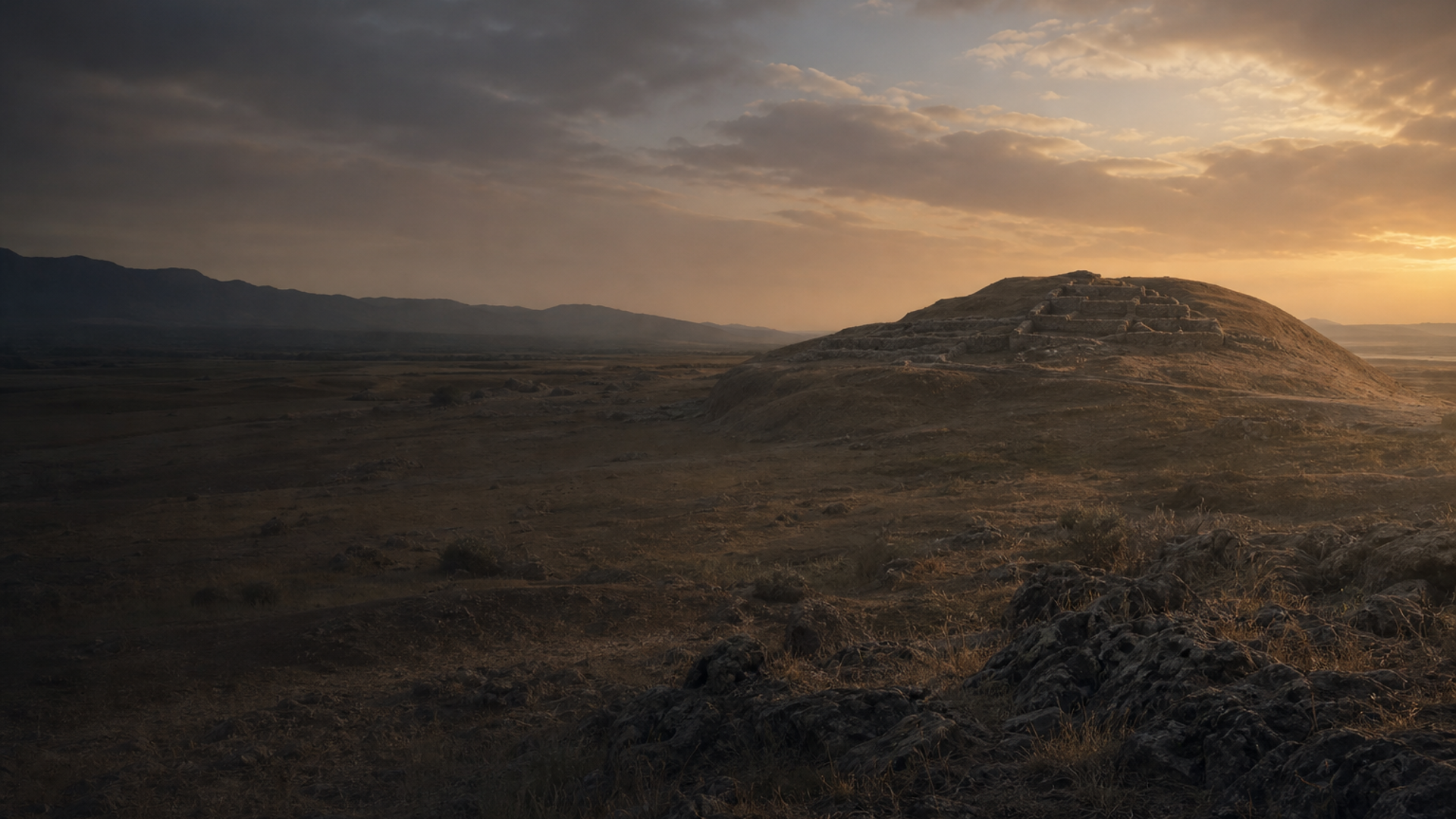
Alalakh (modern Tell Atchana) sits like a cliffside beacon on the eastern approaches to the Mediterranean. By the Middle Bronze Age it had evolved into a fortified urban center with palaces, administrative archives and rich domestic neighborhoods. Excavations in Hatay Province have revealed layered occupation from the Early Bronze through the Late Bronze Age; the window represented by the genetic dataset (2115–1301 BCE) captures a period of political reorganization across Anatolia and the northern Levant.

Archaeological data indicates sustained interaction with inland Anatolia, the Levantine coast and Cyprus—seen in ceramic styles, imported objects and administrative seals. Palatial architecture and written records recovered at the site suggest elite administration and regional diplomacy. Genetically, the assemblage shows a dominant Near Eastern signature, consistent with archaeological indicators of long-term local development rather than wholesale population replacement. Limited evidence suggests episodic ties beyond Anatolia—trade and individual mobility rather than massive population turnovers—though more data is needed to resolve short-term movements versus deeper ancestry.

  • Tell Atchana is a major Middle–Late Bronze Age city in Hatay Province
  • Material culture shows links to Anatolia, Levant and Cyprus
  • Genetic data points to regional continuity with signs of external contacts

Daily Life & Society

Walking the streets of Alalakh would have been a chorus of trade, craft and ceremony. Houses and courtyards excavated at Tell Atchana reveal pottery workshops, storage facilities and domestic rooms where food preparation and textile work likely took place. Excavations have uncovered elite compounds and public architecture that indicate hierarchical social organization alongside more modest artisan quarters.

Burial contexts from the city and its cemeteries suggest varied mortuary practice; grave goods and burial architecture show social differentiation. Archaeological finds—animal remains, cereal storage, and tool kits—point to a mixed economy of agriculture, animal husbandry and specialized crafts, supplemented by maritime and overland trade. Administrative tablets and sealings recovered at the site hint at bureaucratic record-keeping and long-distance exchange networks, helping explain how objects and people moved through Alalakh’s social landscape. While archaeology reconstructs everyday routines, ancient DNA adds a second dimension: it reveals which people formed households, migrated, or maintained biological ties across generations.

  • Evidence for craft specialization, storage and agriculture
  • Burials and archives indicate social hierarchy and long-distance exchange

Genetic Profile

The dataset from Turkey_Alalakh_MLBA comprises 28 genomes dated between 2115 and 1301 BCE—large enough to outline broad patterns but still limited in resolving fine-grained substructure. Y-chromosome haplogroup J is the most frequent (9/28), a lineage commonly associated with Near Eastern male ancestry in the Bronze Age. Less frequent Y-lineages (H, T, L) appear in single individuals each; these rare types may reflect individual mobility, marriage networks, or low-frequency local diversity rather than major demographic shifts.

Maternal lineages are dominated by mtDNA H (7), with notable counts of K (3), and smaller numbers of N, X and J. This mixture of mtDNA clades is consistent with a Near Eastern and Mediterranean maternal pool observed across Anatolia and the Levant in the Bronze Age. Importantly, the dataset shows little evidence for a large introduction of Steppe-associated Y-haplogroups in these samples, suggesting continuity of local male lineages during this period at Alalakh. However, absence of evidence is not evidence of absence: allele frequencies and haplogroup representation can be shaped by sampling, burial practices and social structure. Future larger and spatially varied sampling—with isotopic mobility data—will refine interpretations of kinship, migration and social dynamics.

  • Predominant Y-haplogroup J reflects Near Eastern male ancestry
  • Maternal lineages (H, K, N, X, J) indicate a mixed Anatolian–Levantine maternal pool

Legacy & Modern Connections

The people of Alalakh left an imprint that ripples into the genetic landscape of the eastern Mediterranean. Archaeological continuity at Tell Atchana and the genetic profile recovered suggest that many ancestral components present in the Middle–Late Bronze Age persisted into later populations of Anatolia and the Levant. The prominence of Y-haplogroup J and mtDNA types common across the region aligns with broader patterns seen in ancient Near Eastern datasets.

Caution is essential: the 28-sample assemblage provides valuable signals but does not capture the full demographic mosaic of the era. Ongoing aDNA research, integrated with archaeology and isotope studies, will better reveal how Alalakh’s inhabitants connected across kingdoms and seas, and which strands of their biology survive in modern populations of southern Turkey and the Levant.

  • Genetic continuity suggests enduring regional ancestry components
  • Further integrated studies will clarify connections to modern Near Eastern populations

עוזר הבינה המלאכותית

עוזר הבינה המלאכותית מאת DNA Genics

פתיחת התכונה הזו
שאלו שאלות על תרבות Alalakh at Dusk. העוזר יכול להסביר ממצאים גנטיים, הקשר היסטורי, ראיות ארכאולוגיות וקשרים לעת המודרנית.
דוגמה לניתוח בבינה מלאכותית

מבט על תרבות Alalakh at Dusk

דגימות DNA קדום עוזרות לחוקרים לחקור דפוסי נדידה וקשרים גנטיים בין אוכלוסיות קדומות.

זו תצוגה מקדימה של הניתוח. העוזר המלא מאפשר לעיין בנושאים הבאים:

  • הרכב גנטי ודמיון גנטי
  • דפוסי נדידה ומקורות
  • חיי יומיום ומנהגים תרבותיים
  • קשרים גנטיים בני זמננו