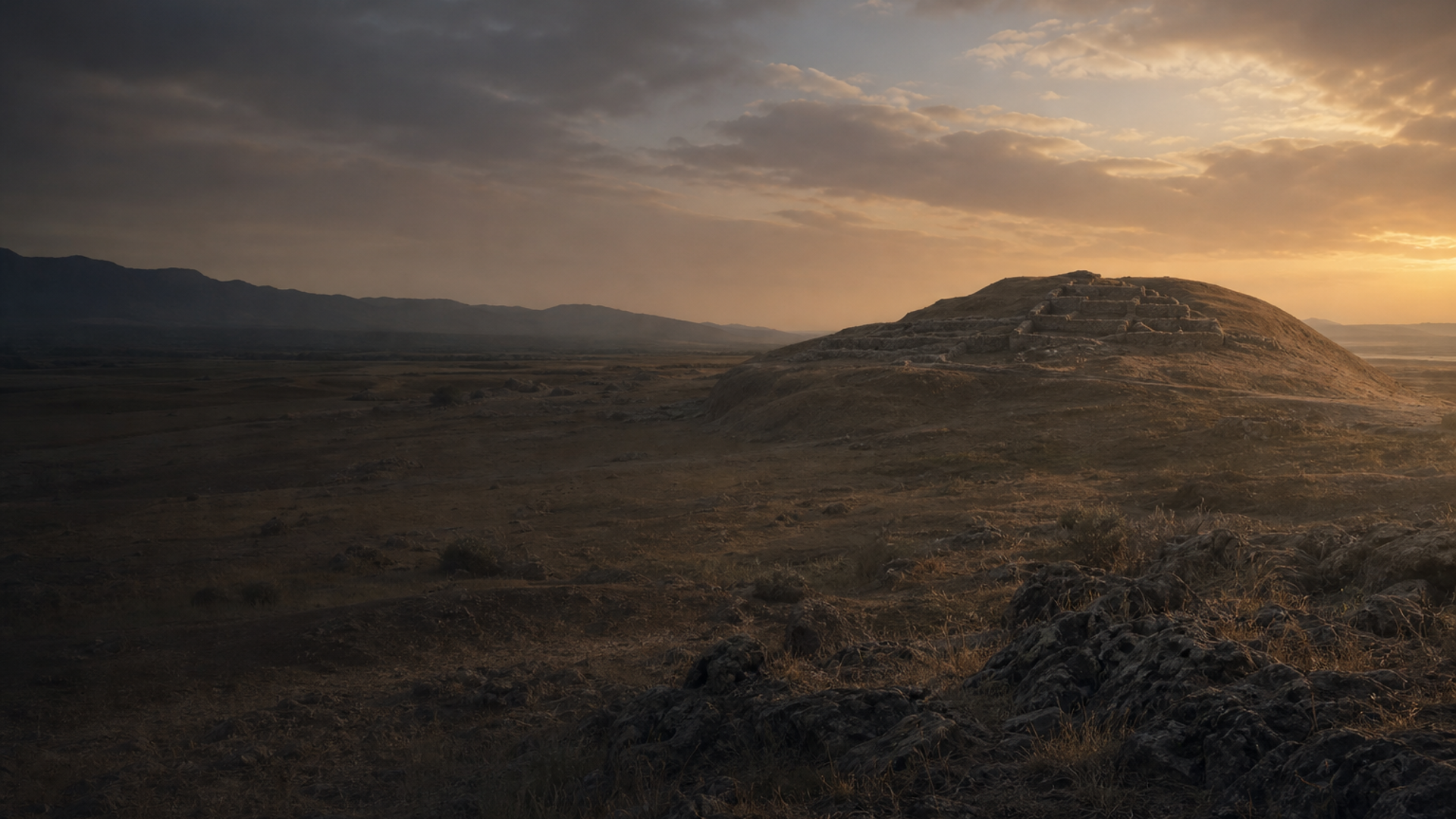
The dataset from Turkey_Alalakh_MLBA comprises 28 genomes dated between 2115 and 1301 BCE—large enough to outline broad patterns but still limited in resolving fine-grained substructure. Y-chromosome haplogroup J is the most frequent (9/28), a lineage commonly associated with Near Eastern male ancestry in the Bronze Age. Less frequent Y-lineages (H, T, L) appear in single individuals each; these rare types may reflect individual mobility, marriage networks, or low-frequency local diversity rather than major demographic shifts.
Maternal lineages are dominated by mtDNA H (7), with notable counts of K (3), and smaller numbers of N, X and J. This mixture of mtDNA clades is consistent with a Near Eastern and Mediterranean maternal pool observed across Anatolia and the Levant in the Bronze Age. Importantly, the dataset shows little evidence for a large introduction of Steppe-associated Y-haplogroups in these samples, suggesting continuity of local male lineages during this period at Alalakh. However, absence of evidence is not evidence of absence: allele frequencies and haplogroup representation can be shaped by sampling, burial practices and social structure. Future larger and spatially varied sampling—with isotopic mobility data—will refine interpretations of kinship, migration and social dynamics.