דילוג לתוכן הראשי
תיקי DNA

Sierra Gorda Echoes

Medieval communities of Querétaro seen through ruins and genomes

671 CE - 1400 CE
Sierra Gorda, Querétaro, Mexico

הסיפור

Archaeological and genetic glimpses from Ranas and Toluquilla (671–1400 CE) reveal small, fortified Highland communities in Querétaro's Sierra Gorda. Limited aDNA (4 samples) links local lineages to founding Native American haplogroups but conclusions remain tentative.

Time Period

671–1400 CE (Medieval)

Region

Sierra Gorda, Querétaro, Mexico

Common Y-DNA

Q (observed, n=1)

Common mtDNA

D1m, A2d, B2l, B2c (each n=1)

ציר הזמן

671 CE

Earliest sampled burial

One of the aDNA-dated individuals from the Sierra Gorda falls around 671 CE, anchoring medieval occupation at Ranas/Toluquilla.

1100 CE

Regional exchange visible

Archaeological material shows non-local obsidian and stylistic exchange during the late first and early second millennium CE.

1400 CE

Latest sampled occupation

The most recent aDNA date reaches circa 1400 CE, marking the end of the sampled sequence for these sites.

Origins & Emergence

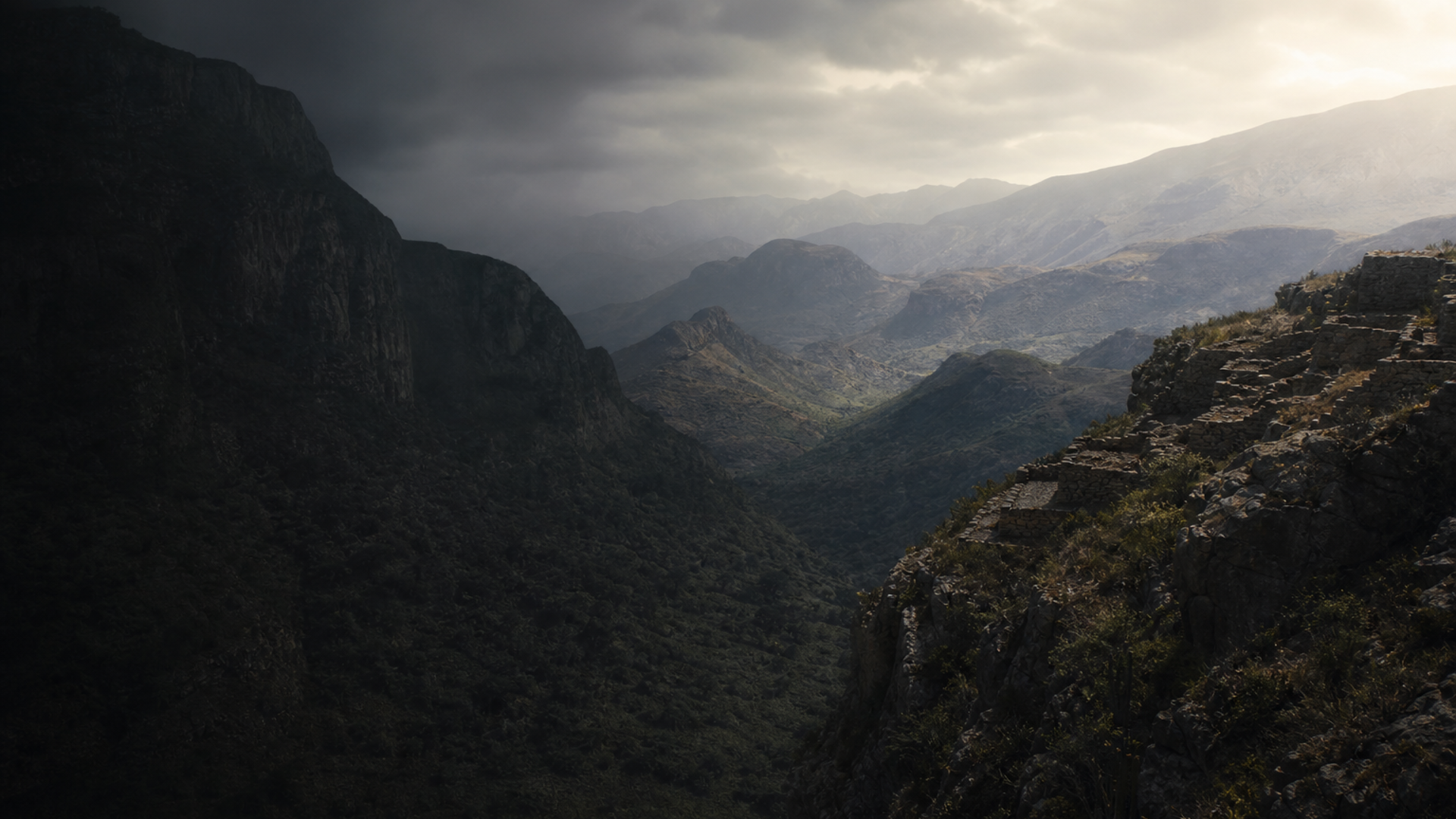
Carved into limestone slopes, the medieval communities of Querétaro’s Sierra Gorda—excavated at Ranas and Toluquilla—appear as resilient pockets of highland life between the classic lowland polities and the northern deserts. Archaeological data indicates occupation across the later first millennium into the second millennium CE (samples here span 671–1400 CE). Stone terraces, masonry platforms and local ceramic traditions suggest incremental local growth rather than sudden colonization. Limited evidence suggests these sites functioned as agricultural hamlets and local ceremonial centers with defensive architecture adapted to steep terrain.

Material culture—obsidian tools, hand-made and painted wares, and house foundations—speaks to daily adaptation to cliffs and seasonal water scarcity. Trade connections are visible in non-local obsidian and stylistic echoes of broader central Mexican motifs, indicating intermittent exchange without unequivocal signs of political conquest. Archaeobotanical remains and terraces point toward intensified cultivation of maize, beans and squash adapted to highland microclimates. Given the small sample set and gaps in regional survey, models of origin remain provisional; future excavations and larger aDNA datasets are needed to clarify population continuity versus movement.

  • Occupied in the medieval period (samples 671–1400 CE)
  • Sites include Ranas and Toluquilla in Sierra Gorda, Querétaro
  • Evidence for terrace agriculture, masonry platforms, and limited regional exchange

Daily Life & Society

Life in the Sierra Gorda medieval hamlets would have balanced subsistence ingenuity with communal ritual. Excavations at Toluquilla and Ranas reveal compact domestic compounds, storage pits, and hearths—signs of family-based households relying on terrace farming and wild-resource gathering. Archaeological data indicates a diet dominated by maize complemented by beans, squash and seasonal wild plants; animal remains show hunting and small domesticate use rather than large-scale animal husbandry.

Ceramics and small ritual caches suggest continuity of local belief practices and occasional regional symbolic styles. Defensive walls and lookout platforms at some sites imply periodic conflict or need for surveillance, perhaps to protect fields and trade routes. Craft production—flake debris from obsidian knapping, groundstone tools, and simple textile impressions—points to household-based manufacture rather than specialized urban workshops. Social organization likely centered on kin groups and seasonal cooperation, with ceremonial activities anchored in small plazas: a quiet, watchful existence shaped by steep hills, thin soils and shifting alliances.

  • Households centered on terrace agriculture, storage, and local craft
  • Evidence for small communal rituals and occasional defensive structures

Genetic Profile

Ancient DNA from four individuals associated with Ranas and Toluquilla provides a slender but informative genetic window. All paternal and maternal lineages observed belong to Native American founding clades: one Y-chromosome Q lineage and four mitochondrial haplogroups (D1m, A2d, B2l, B2c), each represented by a single sample. These haplogroups are consistent with long-standing genetic lineages across much of the Americas, suggesting local ancestry ties that trace back to continental founder populations.

Because the dataset is small (n=4), genetic inferences must be framed as preliminary. The diversity of mtDNA haplogroups across only four samples hints at maternal-line heterogeneity within a small community, but low sample numbers preclude robust demographic modelling. The single Y-Q observation aligns with the dominant Native American paternal signature but cannot resolve paternal diversity or kinship patterns. Archaeological-geographic evidence (endemic site use, limited long-distance material inflow) together with these aDNA signatures tentatively supports population continuity in Sierra Gorda through the medieval centuries. Larger sample sizes and comparative genomic data from neighboring regions will be essential to test hypotheses about migration, marriage networks, and genetic continuity with modern Indigenous communities.

  • Observed Y-DNA: Q (n=1); mtDNA: D1m, A2d, B2l, B2c (each n=1)
  • Sample size is low (4); genetic conclusions are provisional and require more data

Legacy & Modern Connections

The stone footprints of Ranas and Toluquilla speak to enduring human adaptation in Querétaro’s highlands. Genetic signals from the four medieval individuals are consistent with lineages still present among many Indigenous populations of Mexico, suggesting threads of biological continuity, though direct ancestry links remain tentative with such a small dataset. Archaeological continuity in building methods, agricultural strategies and local ritual forms points to cultural resilience that likely influenced later highland lifeways.

For modern DNA ancestry platforms, these finds illustrate how even limited ancient genomes enrich narratives: they anchor identity claims to places and practices, and they frame questions about mobility, marriage networks and community survival. However, caution is essential—archaeological context and larger comparative genetic samples are needed before asserting direct descent from these medieval individuals to any specific contemporary group.

  • Archaeological and aDNA signals suggest possible continuity with Indigenous highland lineages
  • Small sample size limits direct ancestry claims; more comparative data required

עוזר הבינה המלאכותית

עוזר הבינה המלאכותית מאת DNA Genics

פתיחת התכונה הזו
שאלו שאלות על תרבות Sierra Gorda Echoes. העוזר יכול להסביר ממצאים גנטיים, הקשר היסטורי, ראיות ארכאולוגיות וקשרים לעת המודרנית.

דוגמה לניתוח בבינה מלאכותית

מבט על תרבות Sierra Gorda Echoes

דגימות DNA קדום עוזרות לחוקרים לחקור דפוסי נדידה וקשרים גנטיים בין אוכלוסיות קדומות.

זו תצוגה מקדימה של הניתוח. העוזר המלא מאפשר לעיין בנושאים הבאים:

  • הרכב גנטי ודמיון גנטי
  • דפוסי נדידה ומקורות
  • חיי יומיום ומנהגים תרבותיים
  • קשרים גנטיים בני זמננו