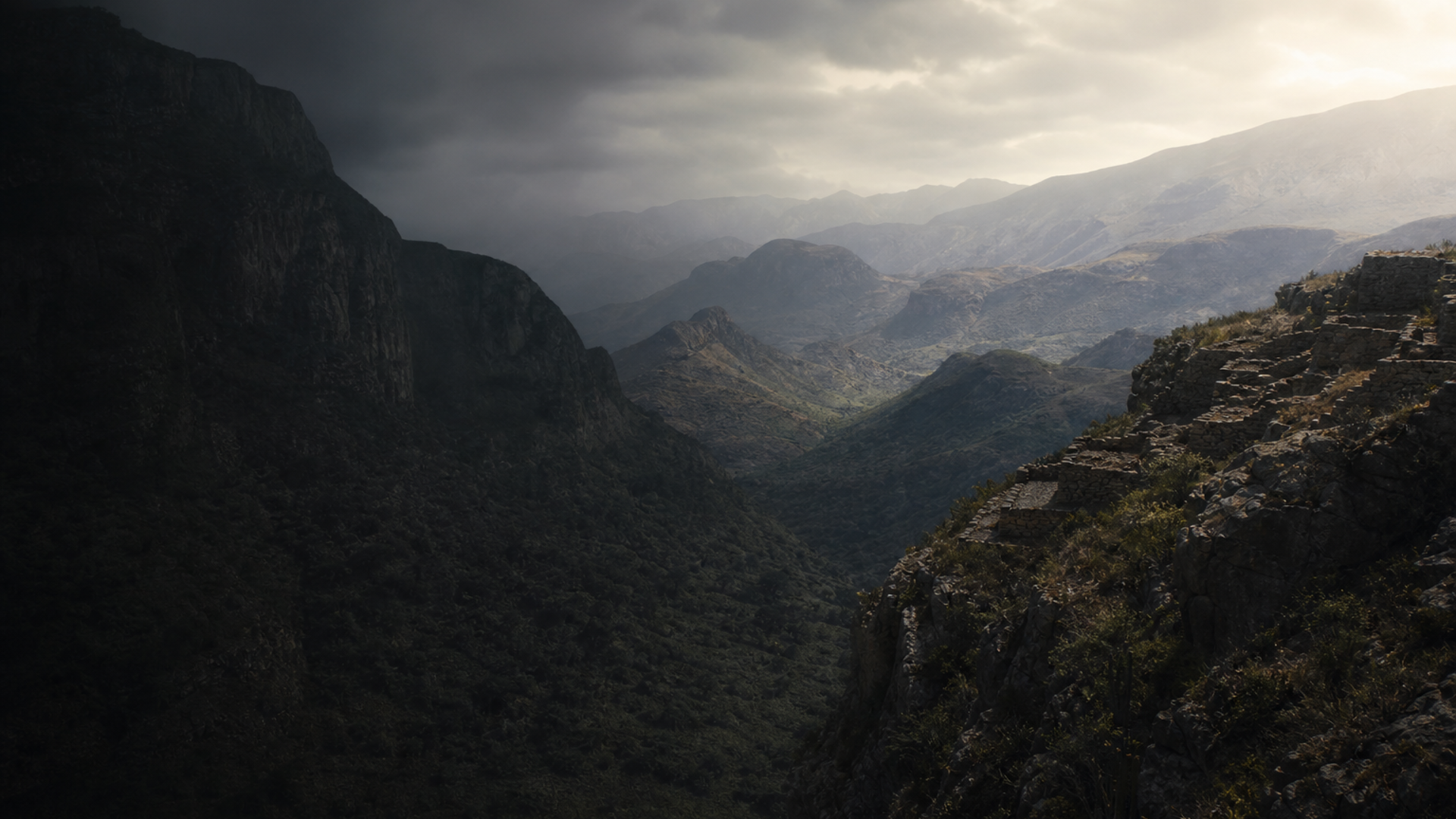
Ancient DNA from four individuals associated with Ranas and Toluquilla provides a slender but informative genetic window. All paternal and maternal lineages observed belong to Native American founding clades: one Y-chromosome Q lineage and four mitochondrial haplogroups (D1m, A2d, B2l, B2c), each represented by a single sample. These haplogroups are consistent with long-standing genetic lineages across much of the Americas, suggesting local ancestry ties that trace back to continental founder populations.
Because the dataset is small (n=4), genetic inferences must be framed as preliminary. The diversity of mtDNA haplogroups across only four samples hints at maternal-line heterogeneity within a small community, but low sample numbers preclude robust demographic modelling. The single Y-Q observation aligns with the dominant Native American paternal signature but cannot resolve paternal diversity or kinship patterns. Archaeological-geographic evidence (endemic site use, limited long-distance material inflow) together with these aDNA signatures tentatively supports population continuity in Sierra Gorda through the medieval centuries. Larger sample sizes and comparative genomic data from neighboring regions will be essential to test hypotheses about migration, marriage networks, and genetic continuity with modern Indigenous communities.