انتقل إلى المحتوى الرئيسي
ملفات الحمض النووي

Angara River Neolithic Echoes

Three genomes from Cis‑Baikal reveal a riverine hunter‑gatherer lifeway with deep Siberian roots

3705 CE - 2876 BCE
Cis‑Baikal, Angara River, Russia

القصة

Archaeological remains and three ancient genomes (3705–2876 BCE) from the Angara River (Gorodische N 1, Kirpichnyj Saraj, Chastaja Padi) illuminate a Neolithic Cis‑Baikal population with Siberian Y‑DNA Q lineages and mtDNA A, C, D — preliminary but evocative links to wider northern Eurasian ancestries.

Time Period

3705–2876 BCE

Region

Cis‑Baikal, Angara River, Russia

Common Y-DNA

Q (2), Q1a (1)

Common mtDNA

A (1), D (1), C (1)

الموضوعات

الخط الزمني

2500 BCE

Riverine specialization attested

Archaeological assemblages indicate intensified riverine fishing and seasonal aggregation along the Angara by ca. 2500 BCE. Genetic samples from nearby sites fall within this broader pattern.

Origins & Emergence

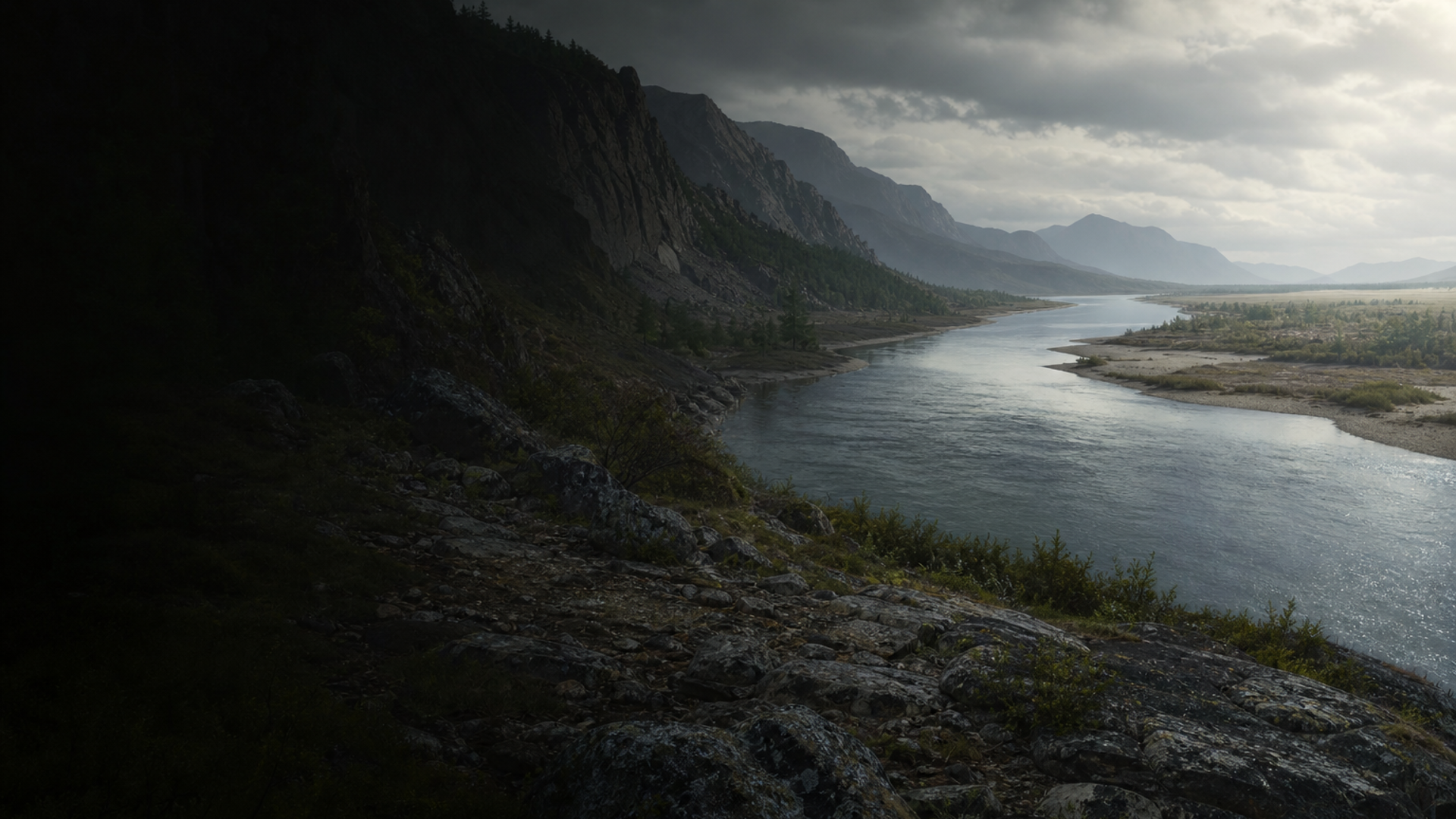
The peoples sampled from the Angara River valley occupied a liminal landscape where dense taiga meets the open water of the upper Lena basin. Archaeological data indicates occupation in the Cis‑Baikal corridor during the late 4th to early 3rd millennium BCE (sample dates 3705–2876 BCE). Sites such as Gorodische N 1, Kirpichnyj Saraj and Chastaja Padi preserve lithic scatters, fish bone concentrations and hearth features that point toward a riverine hunter‑gatherer economy adapted to seasonal resources.

Cinematic shorelines and strandlines visible in the archaeological record speak to a people shaped by water: fishing, riverine transport and the exploitation of riparian marshes. Limited evidence suggests localized continuity with earlier Neolithic Angara River traditions rather than abrupt replacement, but the small sample set constrains firm population‑level conclusions. The presence of Y‑DNA haplogroup Q in two individuals (and Q1a in one) aligns with broader northern Eurasian lineages known from later Siberian contexts; mtDNA A, C and D mirror maternal lineages common across Siberia and into Beringia.

Taken together, the material culture and genetics offer a picture of an emergent watchfulness between land and water — a community whose lifeways were deeply tied to the Angara’s seasonal generosity. However, with just three genomes, any narrative of demographic origin remains provisional and should be tested with further sampling.

  • Occupied Cis‑Baikal Angara corridor, 3705–2876 BCE
  • Archaeological indicators of riverine hunter‑gatherer economy
  • Preliminary genetic continuity with northern Eurasian lineages

Daily Life & Society

Archaeological deposits at Gorodische N 1, Kirpichnyj Saraj and Chastaja Padi evoke daily rhythms governed by ice, meltwater and fish runs. Bone and fish remains dominate midden layers, while fragmented microliths and ground stone hint at hunting, fish processing and plant use. Hearths and small activity areas suggest families or small groups practiced a mobile‑sedentary cycle: seasonal aggregation for fishing and dispersal during other resource peaks.

Social life likely revolved around kin groups operating within extended river networks. The distribution of tool types and hearths suggests cooperative processing of large fish and shared knowledge of riverine resources. Burial evidence in the broader Cis‑Baikal area reveals varied mortuary practices, but at these Angara sites funerary data are sparse; limited burials prevent clear statements about social hierarchy or ritual complexity. Material culture indicates resilience and adaptability — portable toolkits, specialized fish‑processing implements and ephemeral occupation structures suited to a cold, productive environment.

Archaeological data indicates a community bound to seasonal cycles rather than long‑distance trade hubs. Artistic or ornament evidence is limited at these three sites, so interpretations of identity and symbolism must remain cautious until more contexts are excavated.

  • Specialized in fishing and riverine resource processing
  • Seasonal aggregation and small kin‑based groups

Genetic Profile

Genetic data from three individuals provides the first molecular window into the Angara River Neolithic population. Two Y‑chromosome samples belong to haplogroup Q and one to Q1a, lineages widely distributed across northern Eurasia and known to have deep antiquity in Siberia. On the maternal side, the trio carries mtDNA haplogroups A, C and D — clades that are common across Siberia and are also among the founding lineages of Native American groups. These patterns are consistent with a northern Eurasian genetic substrate in the Cis‑Baikal region during the late 4th–3rd millennium BCE.

Caveats are essential: the sample count is three (below 10), so these findings are preliminary and should not be taken as comprehensive of population diversity. Limited sampling increases the chance that rare lineages are missed and that allele frequency estimates are unstable. Nevertheless, the concordance of paternal Q lineages and maternal A/C/D haplogroups supports archaeological inferences of long‑term regional continuity and biogeographic connections with wider Siberian gene pools.

Genomic data can help address questions of mobility, kinship and sex‑biased gene flow when combined with isotopic and broader ancient DNA datasets. Future sampling across time and space in the Cis‑Baikal and Angara drainage will be necessary to move from evocative snapshots to robust demographic narratives.

  • Y‑DNA dominated by haplogroup Q (Q, Q1a); maternal lineages A, C, D
  • Sample size (n=3) limits population‑level conclusions — results are preliminary

Legacy & Modern Connections

The genetic signatures from these Angara River individuals resonate with broader northern Eurasian ancestries that persisted across millennia. Haplogroup Q and mtDNA A/C/D are part of a genetic tapestry that ties ancient Siberian populations to later groups across Eurasia and, via Beringia, to the peopling of the Americas. Archaeological continuity in material traits and riverine subsistence strategies suggests cultural threads that feed into later Cis‑Baikal and Baikal‑adjacent communities.

That said, modern population histories include migrations, admixture and dramatic cultural change; direct lines of descent cannot be assumed from three genomes alone. What these data do provide is a cinematic, grounded glimpse of life along the Angara in the Neolithic — a people oriented to water, fish and woodlands — and a clear signal that the Cis‑Baikal was an active participant in northern Eurasia’s deep human story. Continued integration of archaeology, isotopes and larger ancient DNA samples will clarify how these Neolithic riverine communities contributed to later genetic and cultural landscapes.

  • Genetic ties to broader northern Eurasian and Beringian lineages
  • Preliminary data hint at long‑term regional continuity, pending more samples

مساعد الذكاء الاصطناعي

مساعد الذكاء الاصطناعي من DNA Genics

فتح هذه الميزة
اطرح أسئلة عن ثقافة Angara River Neolithic Echoes. يمكن للمساعد شرح النتائج الجينية والسياق التاريخي والأدلة الأثرية والصلات بالعصر الحديث.
مثال على تحليل بالذكاء الاصطناعي

لمحة عن ثقافة Angara River Neolithic Echoes

تساعد عينات الحمض النووي القديم الباحثين على دراسة أنماط الهجرة والعلاقات الجينية بين المجموعات السكانية القديمة.

هذه معاينة للتحليل. يتيح المساعد الكامل استكشاف الموضوعات التالية:

  • التركيب الجيني والأصول
  • أنماط الهجرة والأصول
  • الحياة اليومية والممارسات الثقافية
  • الإرث الجيني المعاصر