انتقل إلى المحتوى الرئيسي
ملفات الحمض النووي

Echoes from Karagash

A Mid–Late Bronze Age steppe presence on the Kazakh plains, seen through bones and genomes

1881 CE - 1538 BCE
Karagash 2, Kazakhstan (Central Steppe)

القصة

Karagash (1881–1538 BCE) is a Mid–Late Bronze Age burial horizon from Karagash 2, Kazakhstan. Three ancient genomes show male-line R haplogroups and diverse maternal lineages (K, U, H7b), offering a preliminary glimpse into steppe mobility and mixing during the second millennium BCE.

Time Period

1881–1538 BCE

Region

Karagash 2, Kazakhstan (Central Steppe)

Common Y-DNA

R (3 samples)

Common mtDNA

K, U, H7b (one each)

الخط الزمني

1881 BCE

Oldest dated burial at Karagash 2

Radiocarbon dates anchor the Karagash horizon to 1881–1538 BCE, marking its place in the Mid–Late Bronze Age steppe mosaic.

Origins & Emergence

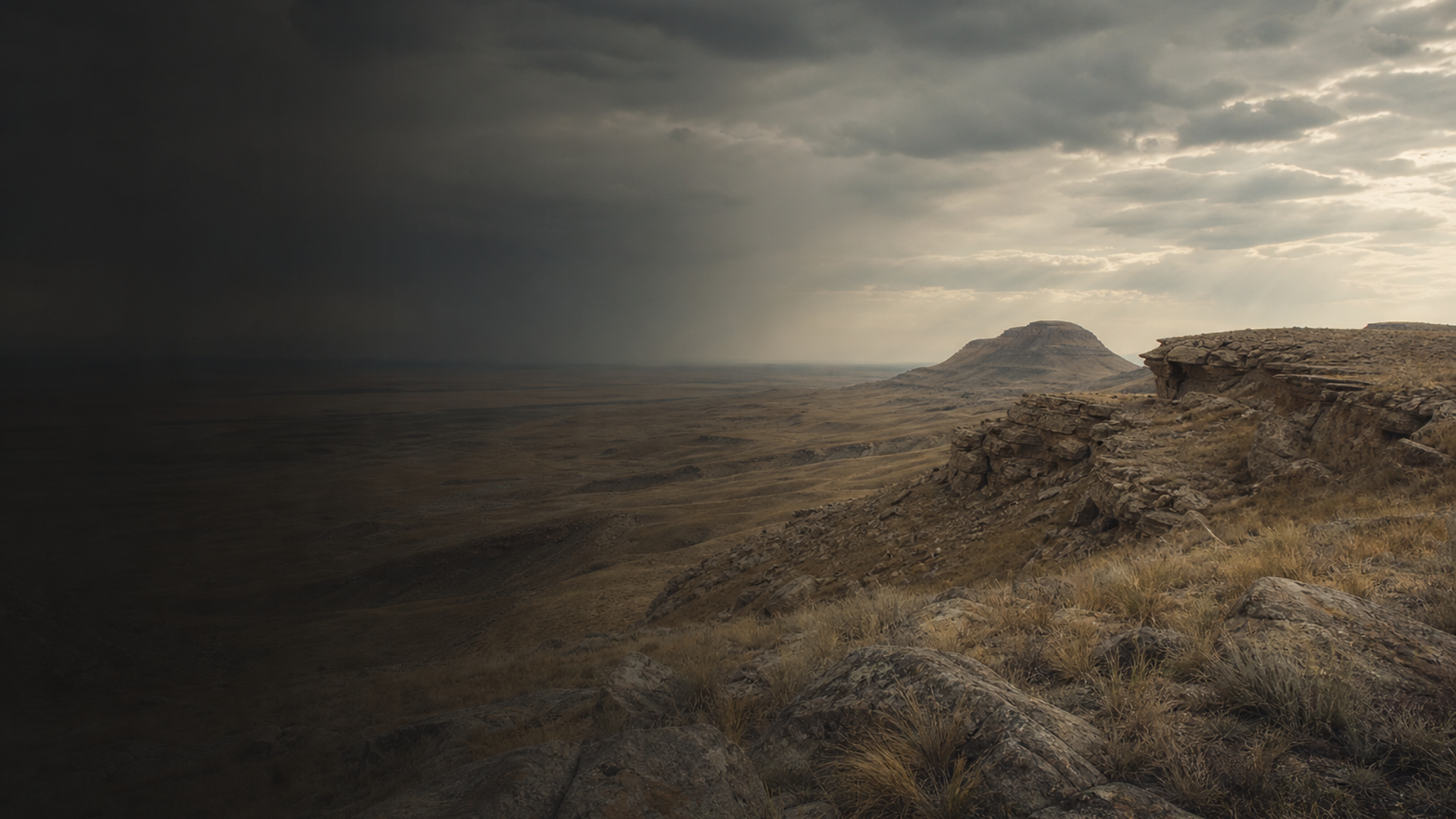
Set on the broad Kazakh steppe, the Karagash assemblage emerges in the cinematic sweep of the Mid–Late Bronze Age. Dated between 1881 and 1538 BCE at the Karagash 2 locality, the material footprint speaks of communities living at the crossroads of mobility and exchange. Archaeological data indicates that Karagash belongs to a regional constellation often grouped under Mid–Late Bronze Karagash—an expression contemporaneous with, and sometimes overlapping, the wider Sintashta-Andronovo cultural horizon.

Limited evidence suggests these people participated in long-distance networks: parallels in metalwork styles, animal economies, and burial orientations hint at interaction across the steppe. At the local scale, Karagash 2 provides the stratified contexts that anchor radiocarbon dates and permit tentative cultural attribution. Yet the record is fragmentary; a few well-dated graves illuminate a landscape otherwise known through scattered finds. This paucity means origin narratives must remain cautious. Rather than a single origin story, Karagash likely represents a tapestry of mobile pastoralists, local lineages, and newcomers who together produced a distinct regional signature during the later Bronze Age.

  • Karagash 2 dated 1881–1538 BCE; Mid–Late Bronze Karagash expression
  • Archaeological parallels link Karagash to broader steppe networks
  • Evidence is limited—interpretations remain provisional

Daily Life & Society

The imagined life at Karagash unfolds through traces: ephemeral hearths, animal bones, and funerary placements. Archaeological data indicates a pastoralist economy dominated by sheep, goats, and cattle across the Central Asian steppe during this period; seasonally mobile herding would have shaped settlement patterns and social rhythms. Mobility implies a social world organized around kin groups and landscape markers—river terraces, wintering grounds, and salt licks—that structured seasonal movements.

Material culture at Karagash 2 is sparse in the published record, so everyday scenes must be inferred from regional analogies. Nearby Sintashta and Andronovo contexts preserve evidence for specialized metallurgy, horse use, and wagon-related technologies; at Karagash direct proof for these practices is limited or absent. Burial contexts, where preserved, offer the clearest social signals: placement of the dead, associated objects, and body treatment can mark status, gender roles, and beliefs. The funerary evidence from Karagash 2 hints at a community negotiating local tradition with broader steppe trends—practical adaptations of pastoral life rendered with intermittent material splendor.

  • Pastoral, mobile lifeways likely dominated subsistence
  • Burials at Karagash 2 provide primary social information; household evidence is limited

Genetic Profile

Three sequenced individuals from Karagash 2 provide an intimate but narrow genetic window into this Mid–Late Bronze Age community. All three males carry broad Y-DNA haplogroup R—an umbrella lineage that includes the R1a and R1b subclades commonly found across Bronze Age Eurasian steppe males. This uniformity in the paternal line suggests patrilineal continuity at the burial site, or the burying of closely related males, but with only three Y-chromosomes the pattern is preliminary.

Mitochondrial diversity is greater: one individual carries mtDNA K, another U, and a third H7b. These maternal lineages are widespread across Eurasia: K and H sublineages are frequent in Neolithic and Bronze Age Europe and the Near East, while U is often associated with earlier European hunter–gatherer and mixed Bronze Age ancestries. The coexistence of R paternal lineages with diverse maternal haplogroups at Karagash echoes regional processes of male-driven expansions and local or exogenous female lineages integrating into steppe groups.

Archaeogenetic interpretation must emphasize limits: three samples cannot resolve population structure, migration routes, or the proportion of ancestry components. Autosomal data, larger sample sizes, and comparisons with contemporaneous Sintashta, Andronovo, and neighboring groups are needed to test hypotheses about genetic continuity, admixture, and language spread. For now, the Karagash genomes offer a cinematic hint: a strongly steppe-associated paternal signal overlaying a mosaic of maternal inputs.

  • All three males: Y-DNA haplogroup R (broad lineage)
  • mtDNA: K, U, H7b — maternal diversity suggesting mixed Eurasian connections

Legacy & Modern Connections

Karagash sits in the deep palimpsest of the Eurasian steppe; its genetic echoes ripple into later populations but must be traced with caution. Modern Kazakh groups carry a complex admixture of Western Eurasian, East Eurasian, and local lineages formed over millennia. The persistence of Y-DNA R in many Eurasian male lineages today provides a thread linking Bronze Age steppe communities to later populations, but continuity is not simple or direct: repeated migrations, social turnovers, and admixture events have reshaped gene pools.

The Karagash dataset, while tantalizing, is too small to claim direct descent lines to modern populations. Instead, it contributes to a growing chorus of ancient genomes that together map patterns of mobility, male-biased gene flow, and maternal diversity across the steppe. As sampling increases, Karagash may become a key stanza in the larger epic of how Bronze Age movements structured the genetic landscape of Central Asia and beyond.

  • Shared Y-DNA R echoes broader steppe paternal continuity, but continuity is complex
  • Small sample size prevents direct links to modern populations; results are provisional

مساعد الذكاء الاصطناعي

مساعد الذكاء الاصطناعي من DNA Genics

فتح هذه الميزة
اطرح أسئلة عن ثقافة Echoes from Karagash. يمكن للمساعد شرح النتائج الجينية والسياق التاريخي والأدلة الأثرية والصلات بالعصر الحديث.
مثال على تحليل بالذكاء الاصطناعي

لمحة عن ثقافة Echoes from Karagash

تساعد عينات الحمض النووي القديم الباحثين على دراسة أنماط الهجرة والعلاقات الجينية بين المجموعات السكانية القديمة.

هذه معاينة للتحليل. يتيح المساعد الكامل استكشاف الموضوعات التالية:

  • التركيب الجيني والأصول
  • أنماط الهجرة والأصول
  • الحياة اليومية والممارسات الثقافية
  • الإرث الجيني المعاصر