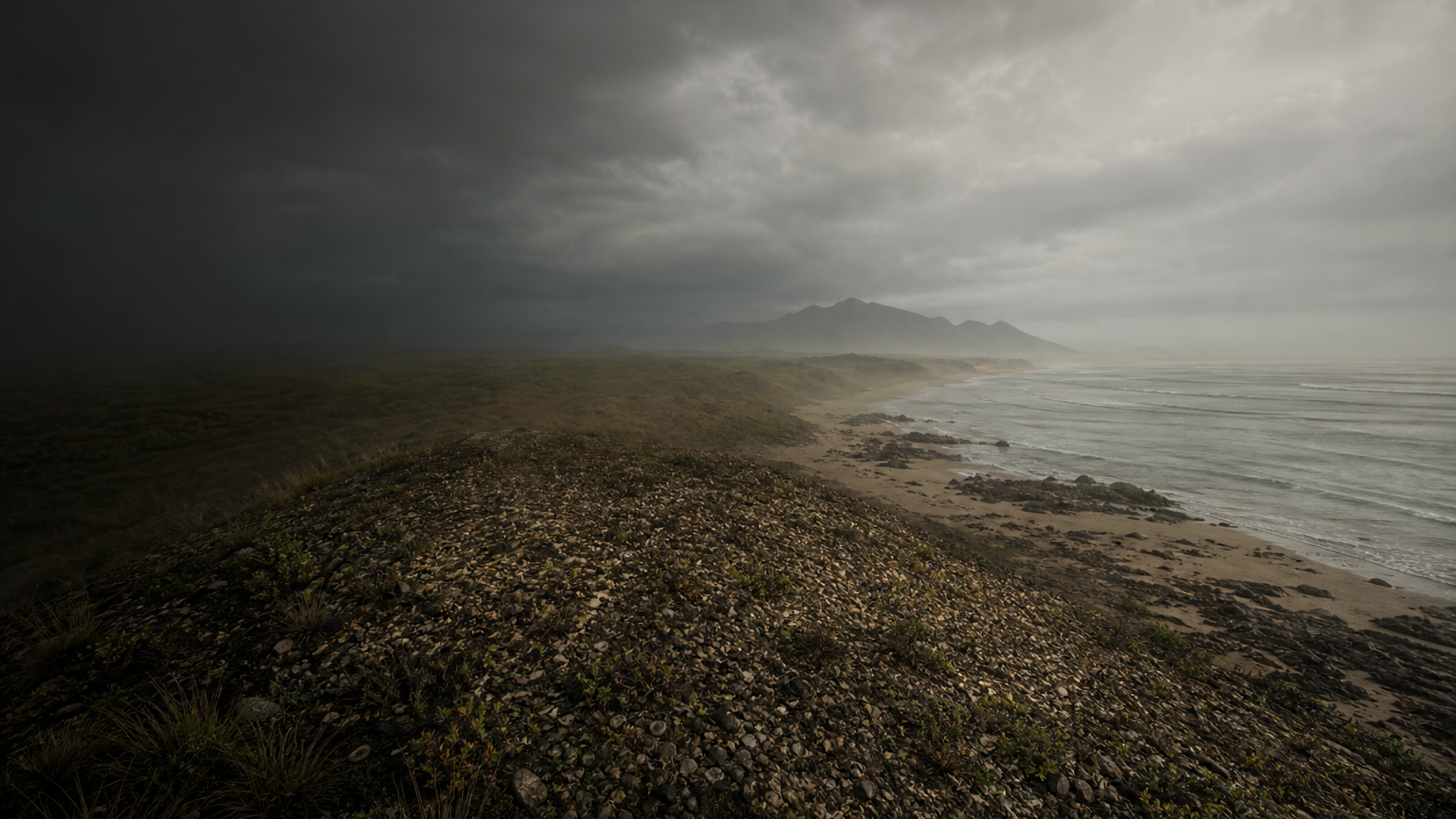
Life around Galheta IV would have been shaped by the pulse of the sea. Archaeological data indicates intensive exploitation of intertidal and nearshore resources — mollusks, fish, crustaceans — supplemented by coastal plants and occasional terrestrial hunting. Shell mounds accumulated as refuse and as deliberate construction, creating raised living platforms and memorial spaces where people lived, worked, and buried the dead.
Material culture recovered from sambaqui contexts often includes stone and shell tools, groundstone implements, and personal ornaments crafted from shell, bone and occasionally exotic materials. The construction of substantial mounds implies coordination and sustained labor, suggesting social arrangements capable of organizing group activities across generations. Burials within sambaquis range from simple interments to more elaborate placements; at Galheta IV the association of human remains with midden deposits indicates mortuary practices integrated with everyday refuse landscapes.
Ethnographic analogy and archaeological inference hint at seasonal mobility patterns, exchange along the coast, and knowledge systems tied to tide, fish migrations, and weather. Yet many aspects of household composition, social hierarchy, and ritual life remain obscured by time — archaeological evidence provides evocative glimpses rather than complete portraits.