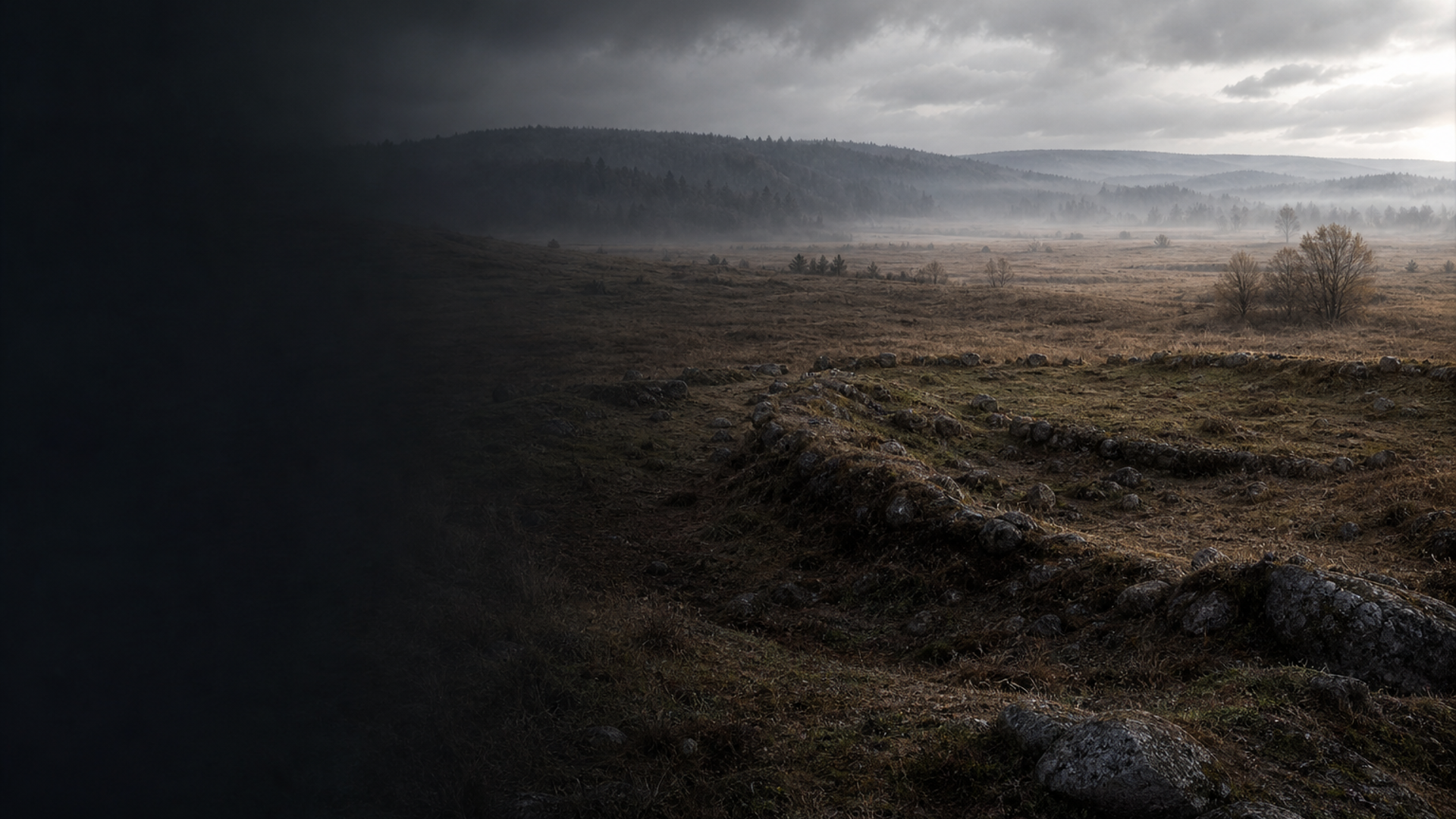
Material traces from tarand burial deposits and surrounding settlement layers evoke a coastline-adapted lifeway. Archaeological data indicates economies combining fishing, hunting, small-scale agriculture, and craft production, with stone-built tarands marking communal rituals of remembrance. Grave assemblages from similar Ingrian contexts often include worked bone, fragments of pottery and traces of organic materials; in the Kerstovo I and Malli deposits the emphasis is on inhumation positions and the architecture of enclosures rather than ostentatious metal wealth.
Socially, tarands may reflect kin-based groups using shared enclosures across generations — a cinematic image of families returning to the same stony rectangles on the marshy shore. Funerary variability between horizons at the sampled squares (horizon 2, horizon 3, and bedrock contexts) hints at chronological layering or shifting practices through the first centuries CE. Seasonal mobility along rivers and the Gulf of Finland likely structured household calendars, networks of exchange, and the movement of ideas. Yet archaeological preservation in wet northern soils is uneven; absence of certain artifact types should not be taken as proof they never existed.