انتقل إلى المحتوى الرئيسي
ملفات الحمض النووي

Marzyn Khutul: Northern Mongolia Neolithic

Early Neolithic burials on the Egiin-Gol — voices from 5600 BCE revealed in bone and gene

5632 CE - 5418 BCE
Bulgan province, northern Mongolia (Egiin-Gol valley)

القصة

Six Early Neolithic burials from Bulgan (Marzyn Khutul, Kharuulyn Gozgor) (5632–5418 BCE) link archaeological context with DNA: dominant Y haplogroup C and mtDNA D. Limited sample size makes conclusions preliminary, but patterns illuminate northern Mongolian population history.

Time Period

5632–5418 BCE (Early Neolithic)

Region

Bulgan province, northern Mongolia (Egiin-Gol valley)

Common Y-DNA

Haplogroup C (4/6 samples)

Common mtDNA

Haplogroups D (4), F (1), C (1)

الخط الزمني

5600 BCE

Early Neolithic burials at Marzyn Khutul

Multiple interments in Tomb 1-055-1 and nearby tombs mark a clustered cemetery use in the Egiin-Gol valley.

Origins & Emergence

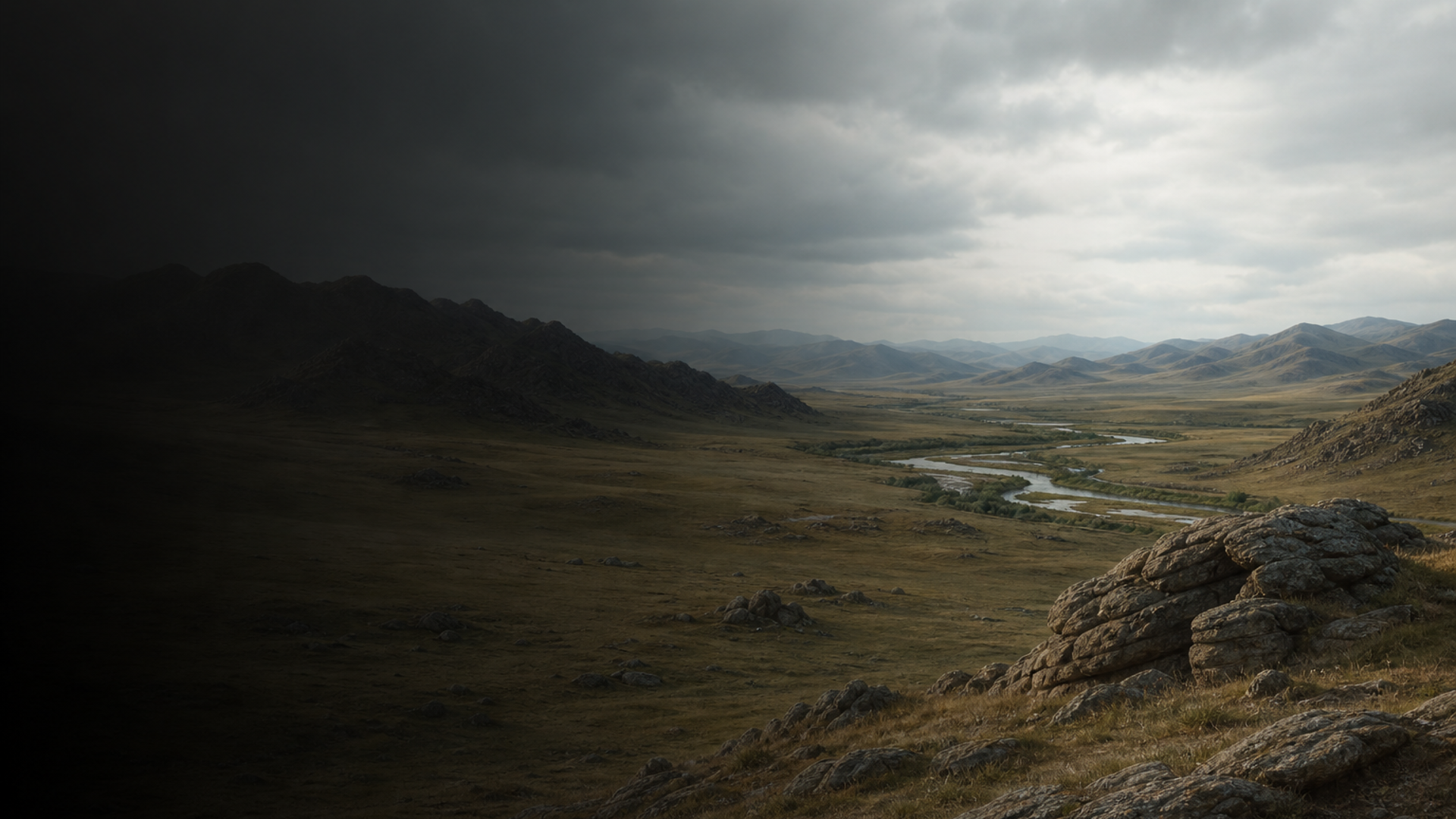
Set against the broad sweep of the Egiin-Gol river valley, the burials at Marzyn Khutul and Kharuulyn Gozgor (Bulgan, Khutag-Undur sum) offer a rare glimpse into northern Mongolia's Early Neolithic world (5632–5418 BCE). Archaeological data indicates small, buried communities using discrete tomb pits (notably Tombs 1-055-1, 1-116, 1-117-1) where multiple individuals were interred. The funerary contexts—primary inhumations with limited grave goods—suggest local traditions distinct from contemporaneous farming complexes to the south and west.

Limited evidence suggests these people were part of long-standing hunter-gatherer networks in the greater Amur–Egiin corridor rather than fully sedentary agriculturalists. Lithic scatters and faunal remains in nearby sites support a mixed subsistence economy focused on riverine fish, wild ungulates, and seasonally exploited plants. The archaeological horizon at Marzyn Khutul therefore appears as a regional expression of Neolithic lifeways in northern Mongolia, where mobility and local resource knowledge shaped social organization.

Because only six genome-wide samples are available, the emerging picture of origin and demographic continuity is tentative. Nonetheless, the concordance of burial practice, landscape use, and genetic markers begins to outline a localized Early Neolithic population whose roots are embedded in the northern steppe-forest ecotone.

  • Burials from Marzyn Khutul and Kharuulyn Gozgor (Tombs 1-055-1, 1-116, 1-117-1)
  • Early Neolithic date range: 5632–5418 BCE
  • Archaeological indicators of riverine/hunter-gatherer subsistence

Daily Life & Society

Archaeological traces at the Marzyn Khutul cemetery evoke a life attuned to the pulse of the Egiin-Gol: seasonal fishing, tracking of red deer and wild horses, and collecting edible plants from river terraces. Skeletal remains and associated fauna from nearby loci indicate diets heavily reliant on freshwater resources and game. Toolkits recovered in the region emphasize fine flaked stone tools, bone implements, and expedient gear suited to mobile households.

Burial variability—single versus multiple interments in the same tomb—hints at kin-based burial spaces and remembered places across generations. The modest nature of grave assemblages suggests social differentiation was present but subtle, likely organized around family groups rather than hierarchical elites. The landscape itself, a cinematic sweep of river, floodplain and forest, structured movement: seasonal camps in summer, dispersed activity loci in colder months.

Archaeological data indicates flexibility in settlement patterns. Combined with the DNA evidence (see Genetics), this paints a portrait of tight-knit groups with durable local roots and wide-ranging seasonal mobility across northern Mongolia’s river valleys.

  • Riverine subsistence: fish and hunted game dominate faunal assemblages
  • Likely kin-based burial practices with modest grave goods

Genetic Profile

Genetic data from six individuals recovered at Marzyn Khutul and Kharuulyn Gozgor provide a first, cautious window into Early Neolithic populations of northern Mongolia. Y-chromosome data are dominated by haplogroup C (4 of 6 males), a lineage widely associated with ancient and modern populations across East Asia and Siberia. On the maternal side, mtDNA is primarily haplogroup D (4 individuals), with single occurrences of F and C, lineages also common in East Asia.

These patterns suggest strong genetic continuity with broader northeast Asian ancestries rather than influxes from distant agricultural source populations during this early phase. However, with only six genome-wide samples, any demographic inference must be labeled preliminary: small numbers can miss rare lineages and obscure admixture events. The prominence of haplogroup C in males, combined with D-lineage mitochondria, is consistent with a population shaped by local survival strategies and regional gene flow across river corridors.

When integrated with archaeological context, the DNA hints that northern Mongolia’s Early Neolithic communities were genetically tied to East Asian hunter-gatherer networks and may have contributed ancestry to later Mongolian and Siberian groups. Future sampling across time and space is essential to resolve the timing and scale of continuity versus incoming influences.

  • Predominant Y haplogroup C (4/6) — suggests ties to broader East Asian/Siberian lineages
  • mtDNA dominated by D (4), with single F and C — consistent with northeast Asian maternal ancestries

Legacy & Modern Connections

The Marzyn Khutul burials form an intimate bridge between deep prehistory and the genetic landscape of later northern Asia. Archaeological signals and early genetic evidence hint that these Early Neolithic groups contributed strands to the mosaic of populations that inhabit Mongolia and adjacent Siberia today. Their lifeways — seasonal mobility, river-focused economies, and kin-centered burial places — resonate with ethnographic patterns recorded millennia later.

Caution is crucial: with only six samples, assertions about wide-ranging genetic continuity remain provisional. Nevertheless, the combination of archaeological context and DNA provides a cinematic, humanizing image: people living in a braided river landscape, leaving traces in bone and gene that modern science can begin to read. As more genomes and archaeological data emerge, the voice of northern Mongolia’s first farmers-foragers will be heard with richer nuance.

  • Early genetic contributions to later Mongolian and Siberian population structures are plausible but tentative
  • Burial and subsistence traditions indicate long-term adaptation to river-valley environments

مساعد الذكاء الاصطناعي

مساعد الذكاء الاصطناعي من DNA Genics

فتح هذه الميزة
اطرح أسئلة عن ثقافة Marzyn Khutul: Northern Mongolia Neolithic. يمكن للمساعد شرح النتائج الجينية والسياق التاريخي والأدلة الأثرية والصلات بالعصر الحديث.
مثال على تحليل بالذكاء الاصطناعي

لمحة عن ثقافة Marzyn Khutul: Northern Mongolia Neolithic

تساعد عينات الحمض النووي القديم الباحثين على دراسة أنماط الهجرة والعلاقات الجينية بين المجموعات السكانية القديمة.

هذه معاينة للتحليل. يتيح المساعد الكامل استكشاف الموضوعات التالية:

  • التركيب الجيني والأصول
  • أنماط الهجرة والأصول
  • الحياة اليومية والممارسات الثقافية
  • الإرث الجيني المعاصر