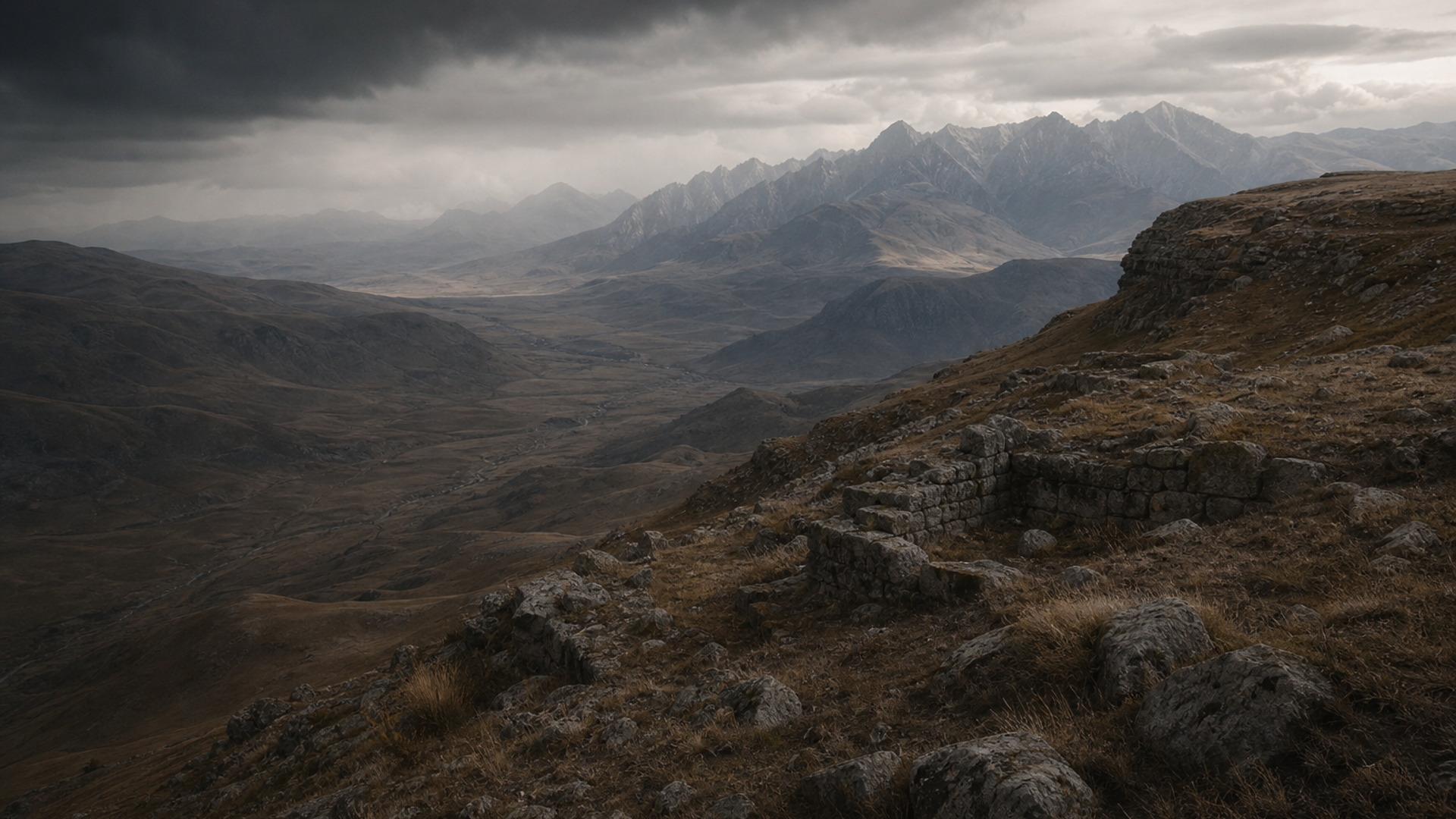
Archaeological finds from Middle Bronze Age North Caucasus sites evoke a life shaped by altitude and horizon. Herding of sheep, goats, and cattle likely dominated subsistence, with seasonal movement between lower pastures and upland grazing. Persisting archaeological traces—stone foundations, hearths, and scattered pottery fragments—suggest small hamlets and temporary encampments rather than dense urban centers.
Grave assemblages from the region, where preserved, provide intimate glimpses: personal ornaments, simple metal objects, and pottery accompany burials, implying social identities encoded through dress and grave furnishing. Landscape use favored passes and river valleys for communication; exchange networks probably carried metals, crafted goods, and stylistic motifs from both the steppe and southern Caucasus.
The material record hints at social flexibility. Kin groups may have organized pasture rights and reciprocal exchange, while leaders or lineages negotiated access to routes linking the plains with mountain pastures. However, the archaeological record in Kabardinka and Kudachurt is fragmentary. Limited excavation and poor preservation in some contexts mean many aspects of household organization, ritual practice, and economy remain shadowed, awaiting more systematic study.