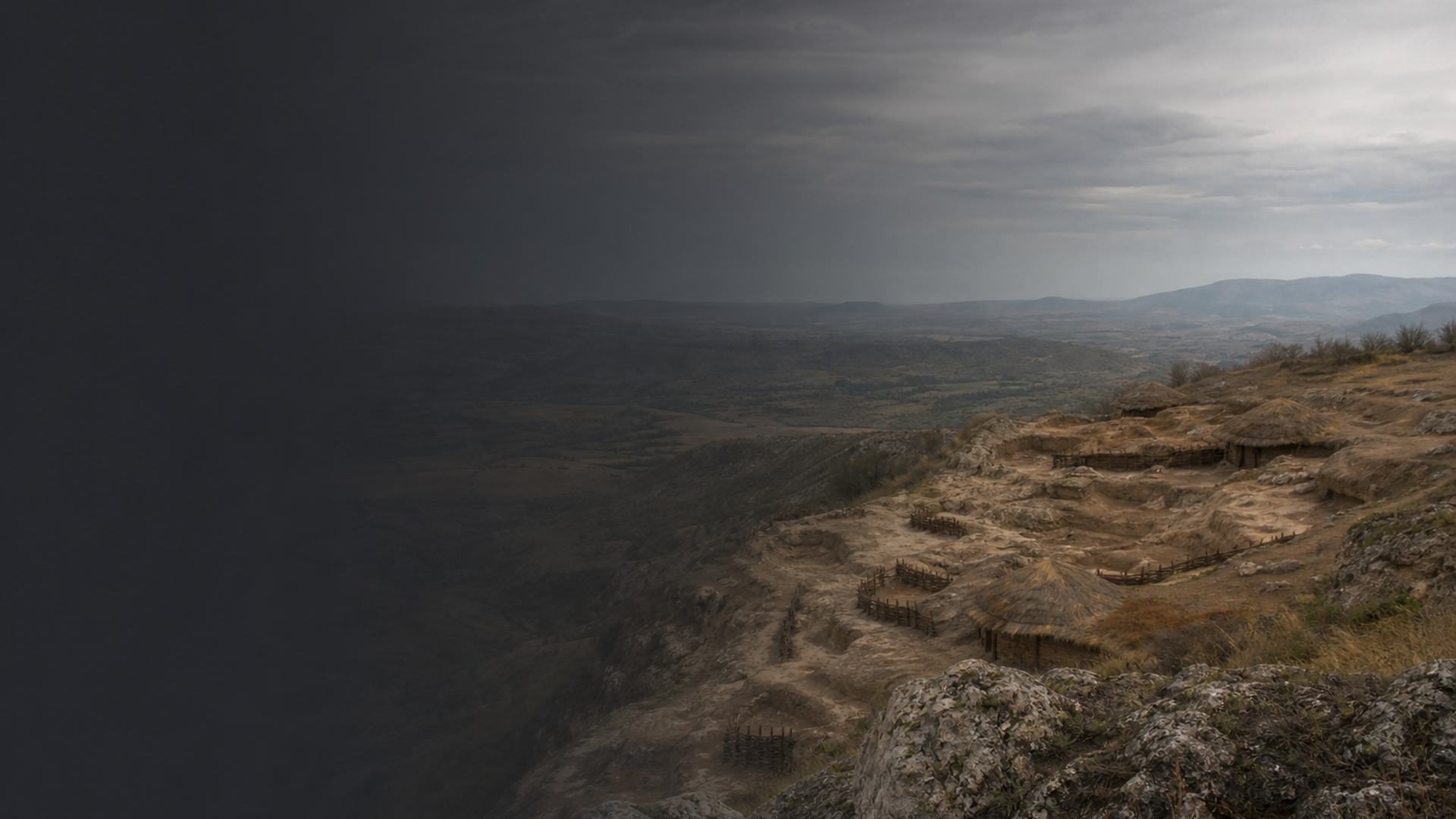
Archaeological traces at Petko Karavelovo evoke a day-to-day world of cultivation, craft, and social ritual. Soil chemistry and plant remains from nearby Chalcolithic sites in the region indicate mixed farming—wheat, barley and pulses—paired with animal husbandry of sheep, goats and cattle. Domestic buildings were likely timber and daub structures set in small clusters rather than dense urban cores.
Ceramic assemblages show both local styles and decorative motifs that resonate with neighboring communities, suggesting exchange of ideas or goods. Small copper tools and ornaments—often found in hoards or burials at contemporaneous sites—signal the growing value of metal as both practical technology and social marker. Burial practices, where preserved, range from extended inhumations to secondary deposits; this variability points to complex kinship and ritual behaviors.
Craftspeople working in bone, stone and metal would have been central to daily economy, while seasonal mobility for grazing or exchange along river routes likely supplemented locally produced food. Archaeological data indicates households were embedded in wider networks of trade and alliance, but the scale and intensity of such contact remain incompletely documented for Petko Karavelovo itself.
The human remains sampled for DNA were recovered from contexts consistent with these domestic and funerary activities, allowing us to pair lived experience with genetic signatures—albeit from a very small number of individuals.