انتقل إلى المحتوى الرئيسي
ملفات الحمض النووي

Zevakinskiy Late Bronze Horizon

Stone fences, steppe horizons and a DNA glimpse into Kazakhstan's Late Bronze Age

1216 CE - 900 BCE
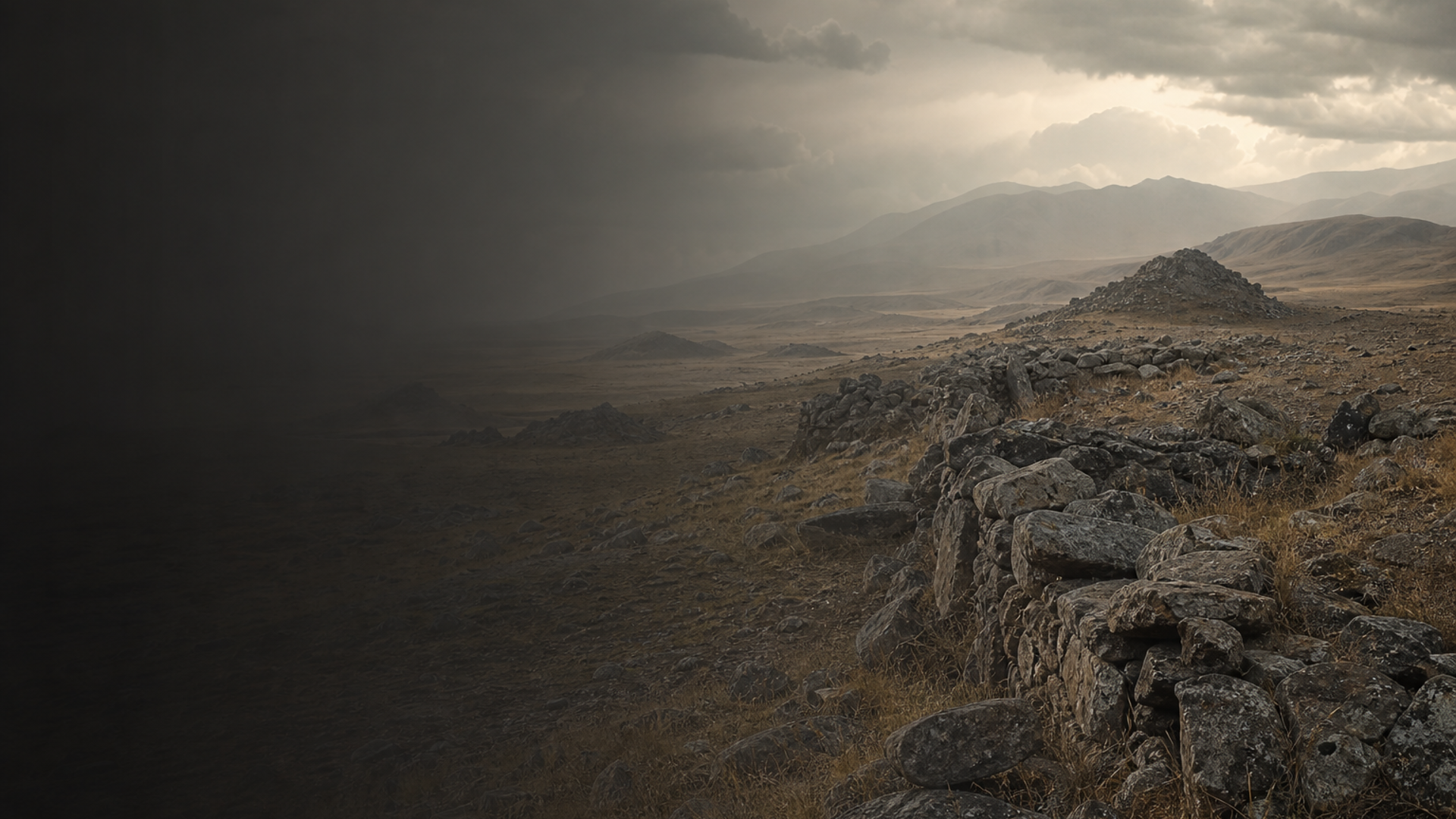
Zevakinskiy stone fence, Kazakhstan

القصة

Archaeological remains from the Zevakinskiy stone fence (1216–900 BCE) offer a cinematic snapshot of Late Bronze Age life on the Kazakh steppe. Six genome samples reveal a predominance of Y haplogroup R and mixed maternal lineages, hinting at west–east connections. Conclusions remain preliminary.

Time Period

1216–900 BCE

Region

Zevakinskiy stone fence, Kazakhstan

Common Y-DNA

R (4), Q (1) — mainly R lineages

Common mtDNA

U (2), W, K1, I2, A

الخط الزمني

1216 BCE

Earliest radiocarbon date at Zevakinskiy

Calibrated radiocarbon dates begin around 1216 BCE, marking the earliest secure occupation or burial contexts at the stone fence site.

Origins & Emergence

The Zevakinskiy assemblage sits at the edge of the vast Kazakh steppe during the Late Bronze Age (1216–900 BCE). Archaeological data from the Zevakinskiy stone fence site — stone enclosures and associated burial features — indicate pastoral lifeways shaped by seasonal movement, metalworking contacts, and long-distance exchange. The stone fence itself anchors people to place: a visible, built landscape that structured herding corridors and ritual activity.

Material culture echoes broader Late Bronze steppe networks: bronze tools, ornaments, and animal remains that signal mobility and specialized pastoral economies. However, the archaeological record at Zevakinskiy is fragmentary. Limited evidence suggests continuity with earlier steppe traditions while also incorporating new items whose origins lie to the west and east. Radiocarbon-calibrated dates cluster between 1216 and 900 BCE, placing Zevakinskiy within a period of changing social complexity across Central Asia.

Because only six ancient genomes are available from the site, any reconstruction of population origins must remain cautious. Genetic signals (described below) hint at a primary steppe-derived ancestry with admixture threads that reflect the steppe’s role as a corridor rather than an isolated stage. Archaeology frames these people as pastoralists negotiating landscape, kinship, and exchange under an open sky — but the picture is partial and provisional.

  • Site: Zevakinskiy stone fence, Kazakhstan (Late Bronze Age)
  • Material culture links to broader steppe exchange networks
  • Evidence is limited; genetic sample size is small (n=6)

Daily Life & Society

At Zevakinskiy, daily life can be imagined as a rhythm of herding, craft, and seasonal movement. Archaeological traces — animal bone assemblages, hearth features, and metalworking debris — point to an economy centered on sheep, cattle, and horses, with periodic stays near stone enclosures that marked communal or ritual space. The stone fence may have corralled animals, demarcated family plots, or served as a focus for social gatherings.

Burials at or near enclosures contain modest grave goods: personal ornaments, worked bone, and fragments of bronze. These suggest status differences that were meaningful but not extravagant. Craft specialization appears present at a small scale: evidence for on-site sharpening, repair, and ornament production aligns with a mobile pastoral household economy where durable, portable items mattered.

Socially, kin networks likely structured movement and resource access, with alliances formed through exchange of animals, metal, and marriage. The presence of diverse maternal haplogroups hints at female mobility or exogamous marriage practices, though this inference is tentative. Seasonal cycles, the choreography of herds across grasslands, and the intimate architecture of stone enclosures together create a cinematic portrait of a community adapting to a shifting Bronze Age world.

  • Pastoral economy: sheep, cattle, horses; seasonal transhumance likely
  • Modest graves and craft debris indicate household production and social differentiation

Genetic Profile

Genetic data from six individuals at Zevakinskiy provide a rare molecular window into Late Bronze Age Kazakhstan, but the small sample size (n=6) makes conclusions preliminary. Y-chromosome results show a predominance of haplogroup R in four males and one male with haplogroup Q. Haplogroup R is broadly associated with steppe pastoralist populations across Eurasia; its dominance here is consistent with archaeological indications of steppe-derived male lineages. The single Q lineage may represent local or eastern genetic inputs commonly found across Central Asia and Siberia.

Mitochondrial diversity is relatively high: two individuals carry haplogroup U, and single occurrences of W, K1, I2, and A are present. U and W are typically West Eurasian maternal lineages, while haplogroup A is associated with eastern Eurasian populations. This mixed maternal picture suggests that women at Zevakinskiy may have derived from several genetic pools, consistent with mobility or exogamous marriage practices recorded ethnographically across pastoral societies.

Archaeogenetic interpretation must emphasize uncertainty. With only six genomes, observed frequencies could shift with more sampling. Nevertheless, the combination of predominantly R Y-lineages with mixed mtDNA mirrors a broader steppe pattern: male-mediated continuity with detectable maternal gene flow from diverse directions, reflecting the steppe’s role as a conduit between West and East.

  • Predominant Y-DNA: R (4 of 5 male samples reported), with one Q lineage
  • Diverse mtDNA (U, W, K1, I2, A) suggests mixed maternal origins and possible female mobility

Legacy & Modern Connections

Archaeologically and genetically, Zevakinskiy stands as a fragmentary but evocative chapter in the long history of the Kazakh steppe. The predominance of Y haplogroup R connects these Late Bronze Age individuals to a widespread steppe genetic legacy that contributed to later populations across Eurasia. At the same time, the presence of eastern-linked mtDNA (haplogroup A) underlines the steppe’s intermediary role: not a barrier, but a highway of genes, goods, and ideas.

For modern populations of Central Asia, the Zevakinskiy data suggest threads of continuity and admixture that characterize the region’s complex ancestry. Yet because the dataset is small (six genomes), any ties to present-day groups must be drawn cautiously. Future sampling from Zevakinskiy and neighboring sites will be essential to test whether the patterns seen here are local quirks or reflect wider demographic processes during the Late Bronze Age. For now, the site offers a cinematic vignette: communities making lives on an open landscape, leaving stone fences and genetic echoes that invite deeper inquiry.

  • Y-lineage continuity links to broader Eurasian steppe ancestry
  • Mixed maternal lineages highlight steppe connections between West and East; conclusions remain tentative

مساعد الذكاء الاصطناعي

مساعد الذكاء الاصطناعي من DNA Genics

فتح هذه الميزة
اطرح أسئلة عن ثقافة Zevakinskiy Late Bronze Horizon. يمكن للمساعد شرح النتائج الجينية والسياق التاريخي والأدلة الأثرية والصلات بالعصر الحديث.
مثال على تحليل بالذكاء الاصطناعي

لمحة عن ثقافة Zevakinskiy Late Bronze Horizon

تساعد عينات الحمض النووي القديم الباحثين على دراسة أنماط الهجرة والعلاقات الجينية بين المجموعات السكانية القديمة.

هذه معاينة للتحليل. يتيح المساعد الكامل استكشاف الموضوعات التالية:

  • التركيب الجيني والأصول
  • أنماط الهجرة والأصول
  • الحياة اليومية والممارسات الثقافية
  • الإرث الجيني المعاصر