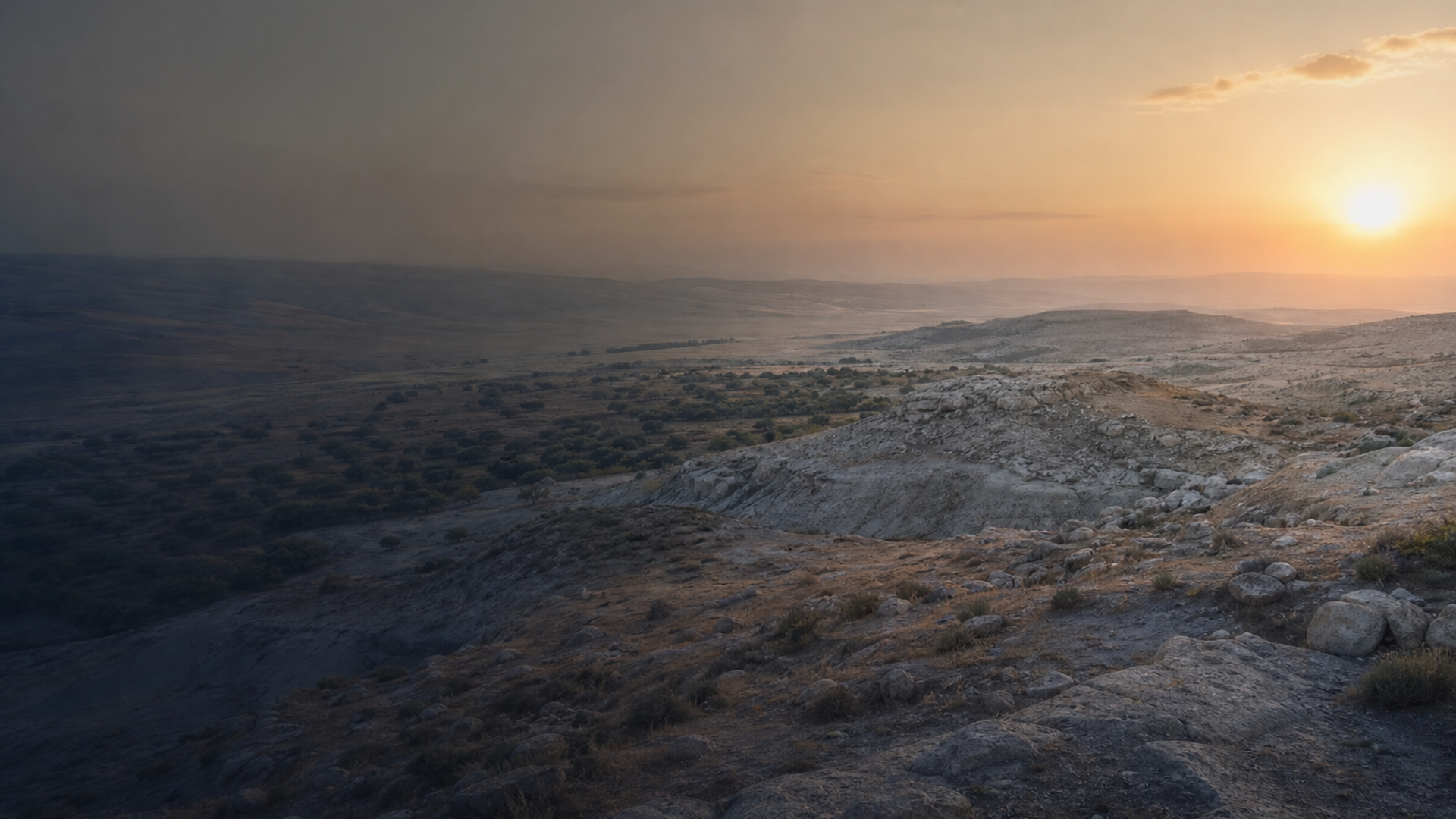
Ain Ghazal Dawn: Jordan's PPNB Communities

下载的 PDF 是图像副本。如需可选中文本及更好的辅助技术支持,请使用打印功能。

Ain Ghazal Dawn: Jordan's PPNB Communities

揭开一个失落的文明

正在加载考古记录……

正在收集古代记录

跳转到主内容
Ain Ghazal Dawn: Jordan's PPNB Communities
文明焦点

Ain Ghazal Dawn: Jordan's PPNB Communities

Plastered houses, monumental figures, and emerging farming along the Jordanian plateau

8400 CE - 7056 BCE
Jordan (Ain Ghazal, Amman/Sahab)
滚动开始
Chapter I

剧情

了解 Ain Ghazal Dawn: Jordan's PPNB Communities 文化

Archaeological and genetic evidence from 11 samples (8400–7056 BCE) at Ain Ghazal, Jordan, reveal a diverse PPNB community. Y and mtDNA lineages point to Near Eastern maternal continuity and heterogeneous paternal inputs; interpretations remain tentative given sample size.

Time Period

8400–7056 BCE (PPNB)

Region

Jordan (Ain Ghazal, Amman/Sahab)

Common Y-DNA

E (3), F (1), T (1), H (1) — 11 samples

Common mtDNA

T (4), T1a (2), K (2), R0a (1), U (1)

Chapter II

时间线

这种文化历史上的关键时刻

8400 BCE

Early PPNB occupation at Ain Ghazal

Earliest phase of village life with plastered architecture and emerging craft specializations documented in radiocarbon contexts.

Chapter III

Origins & Emergence

The Pre-Pottery Neolithic B (PPNB) occupation at Ain Ghazal on the eastern margin of the Jordan Valley is one of the clearest archaeological windows into early village life in the southern Levant. Radiocarbon-calibrated contexts that bracket the available genetic samples fall between roughly 8400 and 7056 BCE. Excavations at Ain Ghazal (Amman/Sahab) have revealed multiroom mudbrick and plastered structures, elaborate plastered human and bustiform figures, and persistent refuse deposits that indicate long-term settlement rather than short-term camps.

Archaeological data indicates increasing sedentism, investment in built space, and the development of communal architecture and ritual imagery during this phase. Material evidence — including ground stone for cereal processing, early domestic animal bones, and imported obsidian fragments — points to intensified cultivation, herd management, and long-distance connections across the Levant and Anatolia. Limited evidence suggests social complexity beyond nuclear households: public features and repeated plastering episodes imply coordinated communal labor.

In combining archaeological and genetic perspectives, Ain Ghazal stands as a regional node where material innovation and biological exchanges intersect. However, while the cultural record is robust, the genetic sample set is still modest and requires careful, probabilistic interpretation when reconstructing population history.

  • Long-term occupation with mudbrick and plaster architecture
  • Plastered human figures and communal ritual contexts
  • Evidence for early cultivation, herding, and long-distance exchange
Chapter IV

Daily Life & Society

Daily life at PPNB Ain Ghazal would have been shaped by built space, seasonal tasks, and craft specialization. Houses with multiple rooms suggest households organized around processing, storage, and sleeping areas; built hearths and grinding installations indicate cereals were routinely processed. Zooarchaeological remains from PPNB contexts in Jordan point to caprines (goats and sheep) and cattle appearing alongside wild prey, consistent with a mixed subsistence economy.

Archaeological traces of craft — plaster manufacture, ochre use, and stone tool production — indicate both domestic and specialist activities. The striking plastered figures and repeated repair of communal spaces imply ritual practices woven into everyday life, where mortuary treatments and ancestor imagery may have reinforced social bonds. Spatial patterns at Ain Ghazal show neighborhoods and activity areas rather than tightly aggregated single-room shelters.

Household sizes, demographic structure, and social ranking remain difficult to quantify precisely. Bioarchaeological and aDNA evidence can help reconstruct kin networks and mobility, but with eleven genetic samples available from the site, demographic inferences should be treated as preliminary. Isotopic and paleobotanical analyses, where available, complement DNA to reveal diet, seasonality, and land use.

  • Mixed farming economy: cereals, caprines, and wild resources
  • Crafts and ritual practices integrated into domestic spaces
Chapter V

Genetic Profile

Eleven ancient DNA samples attributable to Jordan PPNB contexts at Ain Ghazal provide a first-order view of genetic variation during the mid-Holocene transition to village life. Y-chromosome lineages observed include E (3 individuals), F (1), T (1), and H (1). Mitochondrial diversity is dominated by haplogroup T (4), with T1a (2), K (2), R0a (1), and U (1) present. These maternal haplogroups are commonly found across the Near East today and have been reported in other Neolithic contexts, suggesting a substantial Near Eastern maternal ancestry component.

The presence of multiple Y-haplogroups indicates paternal heterogeneity; lineage E appears recurrent in the sample set, while F, T, and H point to additional paternal inputs or retained diversity within local male lines. Archaeogenetic interpretations must be cautious: autosomal genome-wide data would strengthen inferences about population structure, admixture, and continuity with preceding Epipaleolithic groups (e.g., Natufians) or contemporaneous Neolithic communities elsewhere.

Because the sample count is 11 — modest but above single-digit thresholds — conclusions are suggestive rather than definitive. Patterns seen here are consistent with a PPNB population characterized by Near Eastern maternal continuity and mixed paternal signals, but expanded sampling across sites and time slices will be needed to resolve migration, kinship systems, and sex-biased mobility.

  • mtDNA dominated by T lineages, suggesting Near Eastern maternal continuity
  • Y-DNA shows paternal diversity (E, F, T, H), indicating heterogeneous male lineages
Chapter VI

Legacy & Modern Connections

Ain Ghazal's material legacy — monumental plaster figures, long-occupied houses, and signs of regional exchange — echoes in the cultural landscapes of the Levant. Genetically, some maternal haplogroups recorded at Ain Ghazal (notably T and K) persist at varying frequencies in modern Near Eastern populations, suggesting threads of biological continuity across millennia. The recurrence of haplogroup E among male lineages highlights connections that span the eastern Mediterranean and African margins, but the specific historical routes remain debated.

Archaeology and genetics together offer a nuanced legacy: cultural innovations such as village life and ritual imagery are local achievements with regional reach, while genetic data point to a population that was neither isolated nor simply replaced. Given the modest size of the current aDNA dataset, claims about direct descent to specific modern groups should be tentative. Future sampling in Jordan and neighboring regions will clarify how PPNB communities contributed to the genetic and cultural tapestry of the Levant.

  • Material culture at Ain Ghazal influenced later Levantine traditions
  • Some maternal lineages persist in the modern Near East; paternal signals are more mixed
AI 电源

AI 助手

就 Ain Ghazal Dawn: Jordan's PPNB Communities 文化提问

AI 助手 由DNAGENICS公司制作

解锁此特性
Ask questions about the Ain Ghazal Dawn: Jordan's PPNB Communities culture. Our AI assistant can explain genetic findings, historical context, archaeological evidence, and modern connections.
AI 样本分析

Ain Ghazal Dawn: Jordan's PPNB Communities 文化是人类历史中值得了解的一章……

遗传分析揭示了与早期种群的联系,同时显示了独特的适应和文化创新的证据。 古代DNA样本提供了对迁徙模式、社会结构以及古代种群之间的生物关系的深刻见解。

这是人工智能分析的预览。 解锁全AI 助手, 以探索关于:

  • 遗传组成和祖先
  • 移徙模式和起源
  • 日常生活和文化习俗
  • 现代遗传遗产

探索更古老的文化

揭开古代世界文明的故事

使用优惠码 可减免 35% • 11月12日 到期