Akapana: Voices of Tiwanaku

下载的 PDF 是图像副本。如需可选中文本及更好的辅助技术支持,请使用打印功能。

Akapana: Voices of Tiwanaku

揭开一个失落的文明

正在加载考古记录……

正在收集古代记录

跳转到主内容
Akapana: Voices of Tiwanaku
文明焦点

Akapana: Voices of Tiwanaku

A cinematic glimpse into Akapana (Bolivia) tying monumental stones to ancient genomes

773 CE - 1047 CE
Akapana, Tiwanaku basin, Bolivia
滚动开始
Chapter I

剧情

了解 Akapana: Voices of Tiwanaku 文化

Archaeological evidence from Akapana, the central mound of Tiwanaku (Bolivia), paired with five ancient genomes (773–1047 CE) reveals Indigenous American Y-haplogroup Q dominance and diverse maternal lineages. Limited samples mean conclusions remain preliminary but signal continuity with Andean populations.

Time Period

773–1047 CE (samples)

Region

Akapana, Tiwanaku basin, Bolivia

Common Y-DNA

Q (3 of 5 samples)

Common mtDNA

C1b, B2, D1, B2b, C1c (each in single samples)

Chapter II

时间线

这种文化历史上的关键时刻

600 CE

Rise of Tiwanaku monumentalism

Akapana and other civic-ceremonial constructions grow into a regional focal point, marking Tiwanaku's ascendancy on the Lake Titicaca basin.

Chapter III

Origins & Emergence

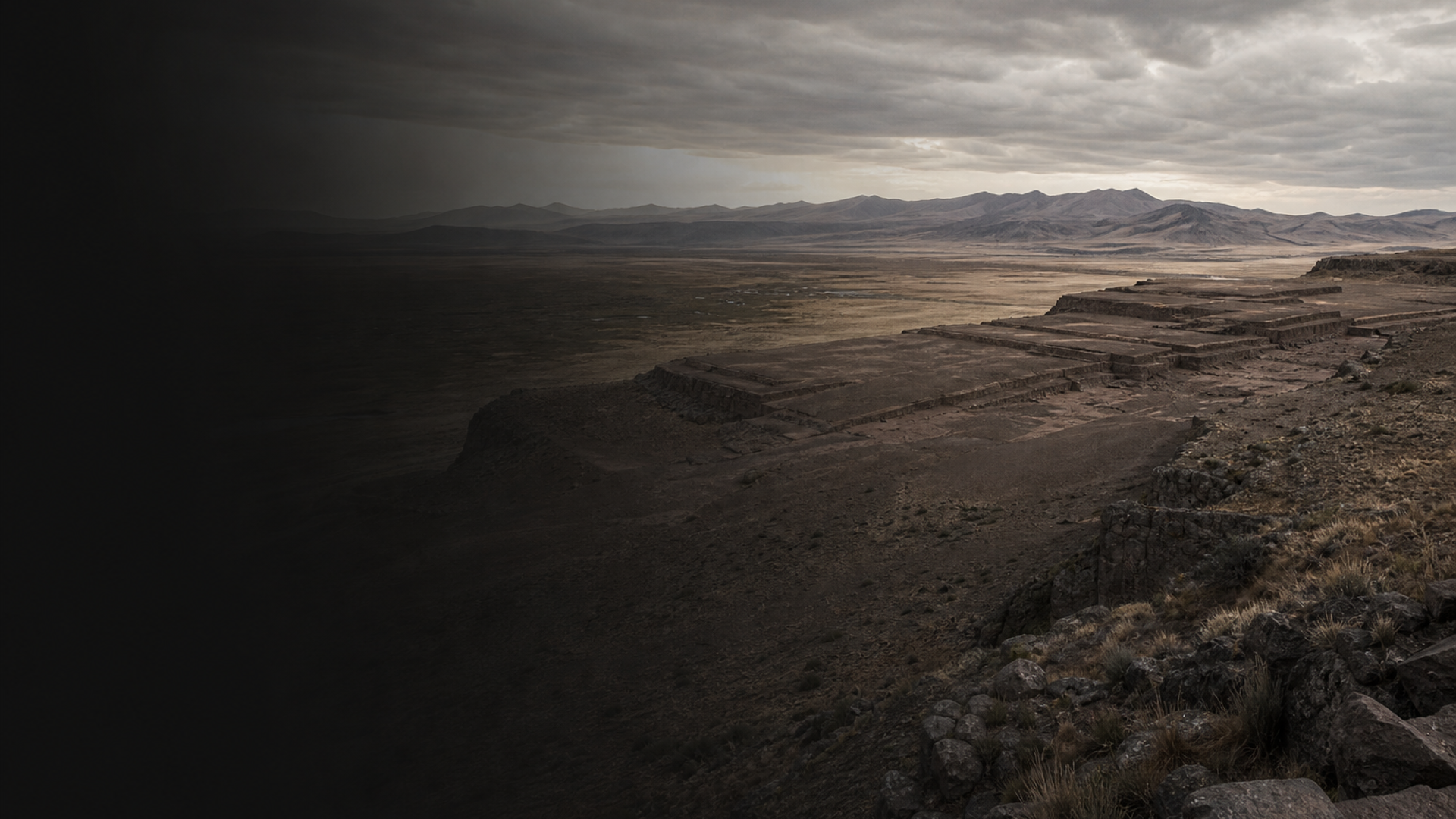
Rising above the windswept altiplano, the Akapana platform at Tiwanaku (near modern-day Lake Titicaca, Bolivia) stands as a silhouette of ritual and statecraft. Archaeological data indicates that Tiwanaku became a major regional center by the Middle Horizon, with monumental construction and long-distance exchange evident by the 6th–8th centuries CE. Akapana itself is a massive stepped earth-and-stone platform whose construction and refurbishments were focal acts of communal labor and elite display at the site.

Excavations at Akapana have revealed stratified deposits of stone architecture, offerings, and human remains tied to ceremonial sequences. Radiocarbon-dated contexts and ceramic stratigraphy place intensive activity at the mound across the first millennium CE, overlapping with the sample range of 773–1047 CE used here. Archaeological evidence suggests a complex polity that integrated agriculture (raised fields and irrigation on the altiplano), craft specialization, and ritual performance.

Genetically, the individuals sampled from Akapana fall into patterns consistent with Indigenous Andean ancestry—anchoring the site culturally and biologically within the highlands of southern Peru and western Bolivia. However, the archaeology also records contacts and material exchange across the region, meaning cultural horizons and genetic signals may not align perfectly: mobility, pilgrimage, and long-distance trade could bring outsiders into the ceremonial core. Limited evidence suggests local continuity punctuated by episodic interactions with neighboring groups.

  • Akapana: stepped ceremonial platform at Tiwanaku (Lake Titicaca basin)
  • Major activity in the first millennium CE; sampled individuals dated 773–1047 CE
  • Archaeology shows ritual, agriculture, craft, and regional exchange
Chapter IV

Daily Life & Society

To imagine life around Akapana is to picture a landscape of shimmering salt pans and furrowed raised fields, where communities orchestrated the harsh highland environment into reliable harvests. Archaeological data indicates that the economy combined intensive wetland agriculture with herding of camelids, production of textiles and stone sculpture, and exchange networks reaching into the southern Andes and beyond. Houses and middens excavated in and around the broader Tiwanaku site show craft debris, pottery styles, and dietary remains that speak to both household livelihoods and specialized workshop zones.

Ceremony and civic performance were central. Akapana’s terraces and platforms served as stages for ritual feasts, offerings, and perhaps pilgrimages that drew people from across the basin. Human remains and offering deposits—interpreted cautiously—suggest that ritual specialists, elites, and participants all inhabited the same ceremonial landscape, even if their daily lives differed markedly. Social organization likely combined household-based production with broader communal obligations to maintain irrigation and sacred architecture.

Archaeological indicators of mobility—nonlocal goods, varied pottery types, and isotopic hints in some burials—suggest that people moved to and through Tiwanaku for labor, trade, and ritual. These flows would have shaped family networks and genetic diversity over generations.

  • Economy: raised-field agriculture, camelid herding, textiles, stone craft
  • Akapana used for communal ritual, feasting, and regional gatherings
Chapter V

Genetic Profile

Ancient DNA from five individuals recovered at Akapana (dated 773–1047 CE) provides a preliminary genetic snapshot of Tiwanaku’s ceremonial core. The Y-chromosome is dominated by haplogroup Q in three males—a lineage widely associated with Indigenous peoples of the Americas—suggesting continuity of paternal Indigenous ancestry in these samples. Maternal lineages are diverse: C1b, B2, D1, B2b, and C1c are each present in single individuals, reflecting a mosaic of mtDNA haplogroups commonly observed across Andean populations.

These findings align with broader Andean genetic patterns where haplogroup Q predominates on the paternal side and several Native American mtDNA clades persist on the maternal side. Archaeological data documenting regional exchange at Tiwanaku complicates simple demographic narratives: the presence of diverse mtDNA haplogroups could reflect local diversity, female mobility, or incoming lineages tied to marriage networks or ritual adoption.

Importantly, the sample count is small (N = 5). Limited evidence suggests patterns but cannot establish firm population-level conclusions. With fewer than ten genomes, observed frequencies are provisional; apparent male-line dominance by Q could be influenced by sampling bias or burial practice. Future sampling across broader temporal and spatial contexts at Tiwanaku and neighboring sites is necessary to test hypotheses about patrilineality, mobility, and genetic continuity.

Until then, the Akapana genomes offer cinematic but cautious windows into how stones and genes together tell the story of an Andean ceremonial polity.

  • Y-DNA dominated by haplogroup Q (3 of 5) consistent with Indigenous American paternal ancestry
  • mtDNA shows maternal diversity (C1b, B2, D1, B2b, C1c); small sample size means preliminary conclusions
Chapter VI

Legacy & Modern Connections

The stones of Akapana still anchor contemporary memory on the altiplano: Tiwanaku remains an emblem of highland identity and ingenuity. Archaeological data indicates cultural continuity in ritual practices and agricultural strategies that echo in modern Andean lifeways. Genetically, the haplogroups found at Akapana are part of lineages that persist among indigenous populations in Bolivia and the surrounding highlands, underlining long-term biological connections across centuries.

However, any direct line from a handful of ancient genomes to living communities must be drawn carefully. Limited ancient sampling and centuries of demographic change—post-contact disruptions, migrations, and admixture—mean that genetic continuity is complex rather than simple. Still, by pairing the evocative material culture of Akapana with DNA evidence, we gain a richer, more human portrait of Tiwanaku: a place where monumental architecture, everyday labor, and interregional ties shaped identities whose echoes remain in the Andes today.

  • Modern indigenous Andean populations share many genetic lineages seen at Akapana
  • Archaeology and genetics together highlight long-term cultural and biological ties to the Lake Titicaca basin
AI 电源

AI 助手

就 Akapana: Voices of Tiwanaku 文化提问

AI 助手 由DNAGENICS公司制作

解锁此特性
Ask questions about the Akapana: Voices of Tiwanaku culture. Our AI assistant can explain genetic findings, historical context, archaeological evidence, and modern connections.
AI 样本分析

Akapana: Voices of Tiwanaku 文化是人类历史中值得了解的一章……

遗传分析揭示了与早期种群的联系,同时显示了独特的适应和文化创新的证据。 古代DNA样本提供了对迁徙模式、社会结构以及古代种群之间的生物关系的深刻见解。

这是人工智能分析的预览。 解锁全AI 助手, 以探索关于:

  • 遗传组成和祖先
  • 移徙模式和起源
  • 日常生活和文化习俗
  • 现代遗传遗产

探索更古老的文化

揭开古代世界文明的故事

使用优惠码 可减免 35% • 11月12日 到期




