Albania (1400–1700): Maternal Threads

下载的 PDF 是图像副本。如需可选中文本及更好的辅助技术支持,请使用打印功能。

Albania (1400–1700): Maternal Threads

揭开一个失落的文明

正在加载考古记录……

正在收集古代记录

跳转到主内容
Albania (1400–1700): Maternal Threads
文明焦点

Albania (1400–1700): Maternal Threads

Late medieval–early modern Albanian communities seen through archaeology and maternal DNA

1400 CE - 1700 CE
Albania (Kukes District, Central sites)
滚动开始
Chapter I

剧情

了解 Albania (1400–1700): Maternal Threads 文化

Archaeological finds from Bardhoc and Pazhok (1400–1700 CE) combined with five mitochondrial genomes reveal dominant H lineages and a mosaic of European maternal ancestry. Limited sampling makes demographic conclusions tentative but suggests local continuity amid Ottoman-era change.

Time Period

1400–1700 CE

Region

Albania (Kukes District, Central sites)

Common Y-DNA

Not reported / limited data

Common mtDNA

H (2), U, T, J

Chapter II

时间线

这种文化历史上的关键时刻

1444 CE

League of Lezhë formed

Regional Albanian leaders, including Skanderbeg, unite in 1444—an event that shaped local political alliances during the period sampled.

Chapter III

Origins & Emergence

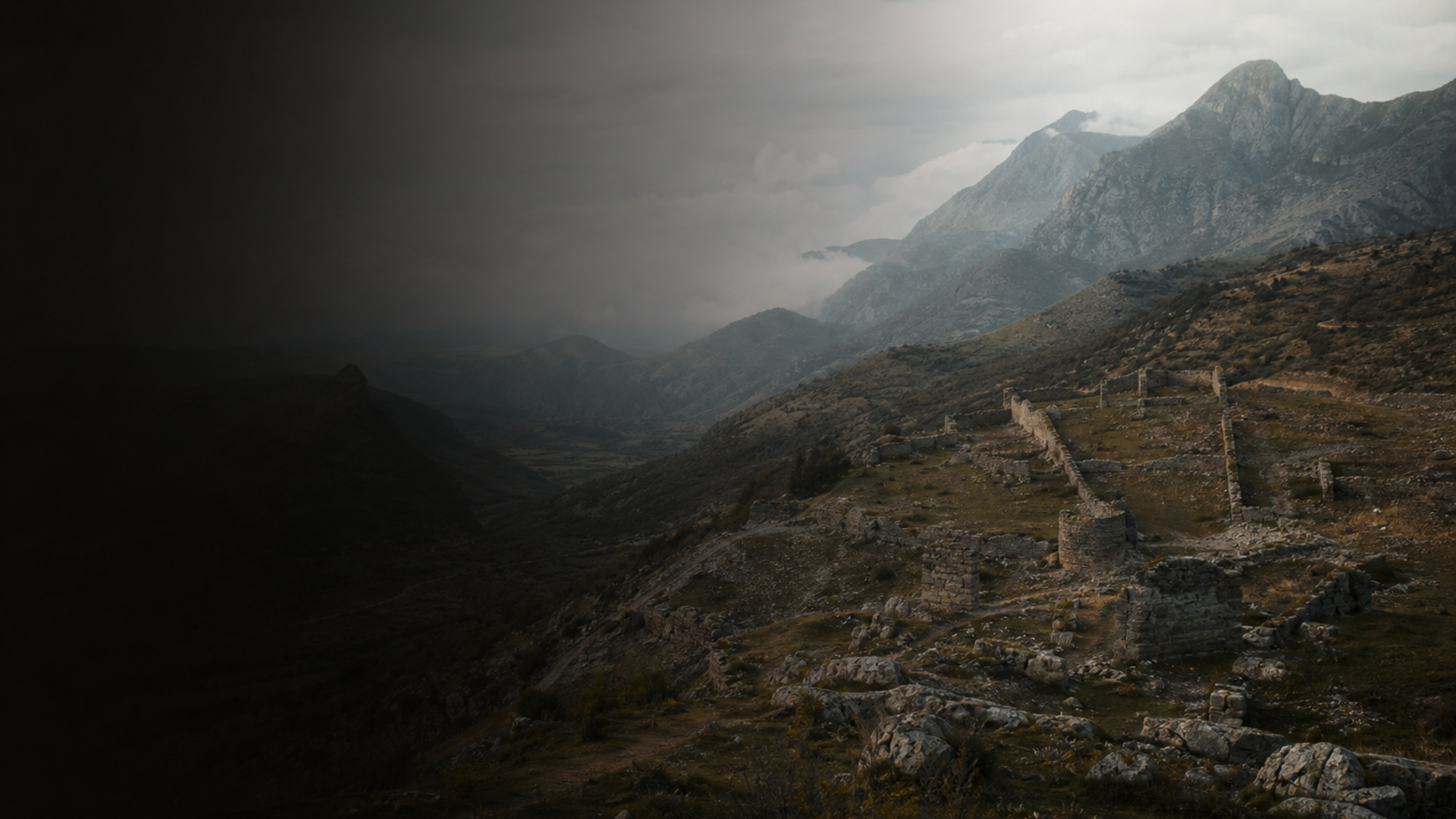
The samples attributed to Albania_Modern (1400–1700 CE) come from small rural and regional contexts — notably Bardhoc in the Kukes District and Pazhok in central Albania. Archaeological data indicates continuity of local settlement patterns during the late medieval and early modern periods, with material remains reflecting household economy, agrarian lifeways, and shifting trade connections as Ottoman institutions expanded across the Balkans.

Genetically, the suite of five mitochondrial genomes offers a snapshot of maternal ancestry rather than a complete demography. Two individuals carry haplogroup H — a broad European lineage common since the Neolithic and Bronze Ages — while single examples of U, T, and J point to a mixture of lineages typical of southeastern Europe. Limited evidence suggests these maternal lines were persistent in the region, but with only five samples the picture is fragmentary. Archaeological stratigraphy and artifact typologies place the human remains in contexts affected by both local traditions and broader Balkan movements of people and goods.

Interpreting emergence for this era therefore requires caution: the material culture shows both continuity and adaptation, while genetic data hint at longstanding European maternal ancestry overlain by historical mobility. Additional targeted sampling at Bardhoc, Pazhok, and nearby settlements is necessary to move from evocative snapshot to robust population history.

  • Samples from Bardhoc (Kukes District) and Pazhok dated 1400–1700 CE
  • Material culture indicates rural continuity amid Ottoman-era change
  • mtDNA suggests common European maternal lineages, but sample size is small
Chapter IV

Daily Life & Society

Archaeological traces associated with these sites evoke a landscape of terraced fields, small hamlets, and regional markets. Pottery fragments, building foundations, and isolated finds recovered in surveys and limited excavations suggest households oriented around mixed farming, pastoralism, and seasonal exchange. Bardhoc, in the mountainous Kukes District, would have experienced rugged highland subsistence strategies, while Pazhok in central Albania sat closer to trade routes and administrative centers.

Social life in this period was layered: family and kin networks structured labor and property, while Ottoman administrative ties and wartime pressures reshaped obligations and mobility. Coins, imported ceramics, and repairs to local dwellings point to economic links beyond village bounds. Funerary deposits and burial orientations recorded at some nearby cemeteries align with Christian and, later, mixed religious practices reflecting the region’s complex spiritual landscape.

Archaeological data indicates resilience: crafts and rural lifeways persisted, even as communities negotiated taxation, military demands, and market integration. Yet these reconstructions are grounded in material remains that are unevenly preserved. Limited excavations mean many aspects of everyday life — diet, health, household composition — remain inferential and would benefit from further bioarchaeological and isotopic study.

  • Rural households with mixed farming and pastoral practices
  • Material evidence for regional trade and administrative ties
Chapter V

Genetic Profile

The genetic portrait of Albania_Modern is anchored by five mitochondrial genomes dated to 1400–1700 CE: H (2), U (1), T (1), J (1). Haplogroup H is widespread across Europe and its presence here is consistent with long-standing maternal continuity in the Balkans. U, T, and J also have deep histories in Europe and West Eurasia and frequently appear in medieval and modern Balkan assemblages, pointing to a mosaic maternal ancestry rather than a single lineage.

Crucially, no consistent Y-DNA haplogroups are reported in this dataset, and autosomal coverage is limited or absent for these individuals — a gap that constrains inferences about paternal lines, sex-biased migration, and overall ancestry composition. With only five samples (below the n=10 threshold often used to support population-level claims), conclusions must be framed as preliminary. Limited evidence suggests continuity of European maternal lineages through the Ottoman contact period, but sample size and geographic clustering (multiple samples from Bardhoc) raise the risk that these genomes reflect local family groups rather than broader regional demographics.

Future work integrating larger sample sets, autosomal data, and comparative datasets from neighboring Balkan sites will clarify whether the patterns observed here reflect long-term continuity, localized kin groups, or more recent admixture events tied to medieval and early modern mobility.

  • mtDNA: H (2), U, T, J — indicative of European maternal diversity
  • No reported Y-DNA data; small sample size (n=5) limits population-level claims
Chapter VI

Legacy & Modern Connections

The threads seen in these five genomes connect to larger tapestries of Albanian and Balkan history. Maternal lineages common in the dataset parallel haplogroups observed across modern southeastern Europe, suggesting at least partial continuity on the maternal side between late medieval communities and present-day populations. Archaeological continuity in settlement and craft traditions reinforces a picture of resilient local lifeways that endured through political transitions.

However, the legacy must be described carefully: five mitochondrial genomes cannot map the full diversity of modern Albanian ancestries. Historical processes — Ottoman administrative restructuring, seasonal and long-distance migration, and intermarriage across the Adriatic and within the Balkans — all influence genetic landscapes and are only partly visible here. This dataset offers an evocative snapshot: a cinematic glimpse of mothers and households whose genetic echoes survive, inviting further excavation and sequencing to reveal the fuller story of continuity and change.

  • Maternal lineages align with broader southeastern European patterns
  • Findings are tantalizing but preliminary; larger datasets needed for firm links
AI 电源

AI 助手

就 Albania (1400–1700): Maternal Threads 文化提问

AI 助手 由DNAGENICS公司制作

解锁此特性
Ask questions about the Albania (1400–1700): Maternal Threads culture. Our AI assistant can explain genetic findings, historical context, archaeological evidence, and modern connections.
AI 样本分析

Albania (1400–1700): Maternal Threads 文化是人类历史中值得了解的一章……

遗传分析揭示了与早期种群的联系,同时显示了独特的适应和文化创新的证据。 古代DNA样本提供了对迁徙模式、社会结构以及古代种群之间的生物关系的深刻见解。

这是人工智能分析的预览。 解锁全AI 助手, 以探索关于:

  • 遗传组成和祖先
  • 移徙模式和起源
  • 日常生活和文化习俗
  • 现代遗传遗产

探索更古老的文化

揭开古代世界文明的故事

使用优惠码 可减免 35% • 11月12日 到期




