Amur River Bronze Age Echoes

下载的 PDF 是图像副本。如需可选中文本及更好的辅助技术支持,请使用打印功能。

Amur River Bronze Age Echoes

揭开一个失落的文明

正在加载考古记录……

正在收集古代记录

跳转到主内容
Amur River Bronze Age Echoes
文明焦点

Amur River Bronze Age Echoes

A riverine frontier where Bronze Age life met deep northern genetic lineages

1510 CE - 1425 BCE
Amur River Basin, China
滚动开始
Chapter I

剧情

了解 Amur River Bronze Age Echoes 文化

A provisional portrait of a Bronze Age individual (1510–1425 BCE) from the Amur River Basin, China. Archaeology and a single ancient genome hint at northern Eurasian Y-haplogroup N and East Asian mtDNA D, offering cautious insight into frontier lifeways and mobility.

Time Period

1510–1425 BCE

Region

Amur River Basin, China

Common Y-DNA

N (observed in 1 sample)

Common mtDNA

D (observed in 1 sample)

Chapter II

时间线

这种文化历史上的关键时刻

1500 BCE

Amur River Bronze Age burial (dated)

A burial in the Amur River Basin dated to 1510–1425 BCE provides the single ancient genome linking Y-haplogroup N and mtDNA D to this region.

Chapter III

Origins & Emergence

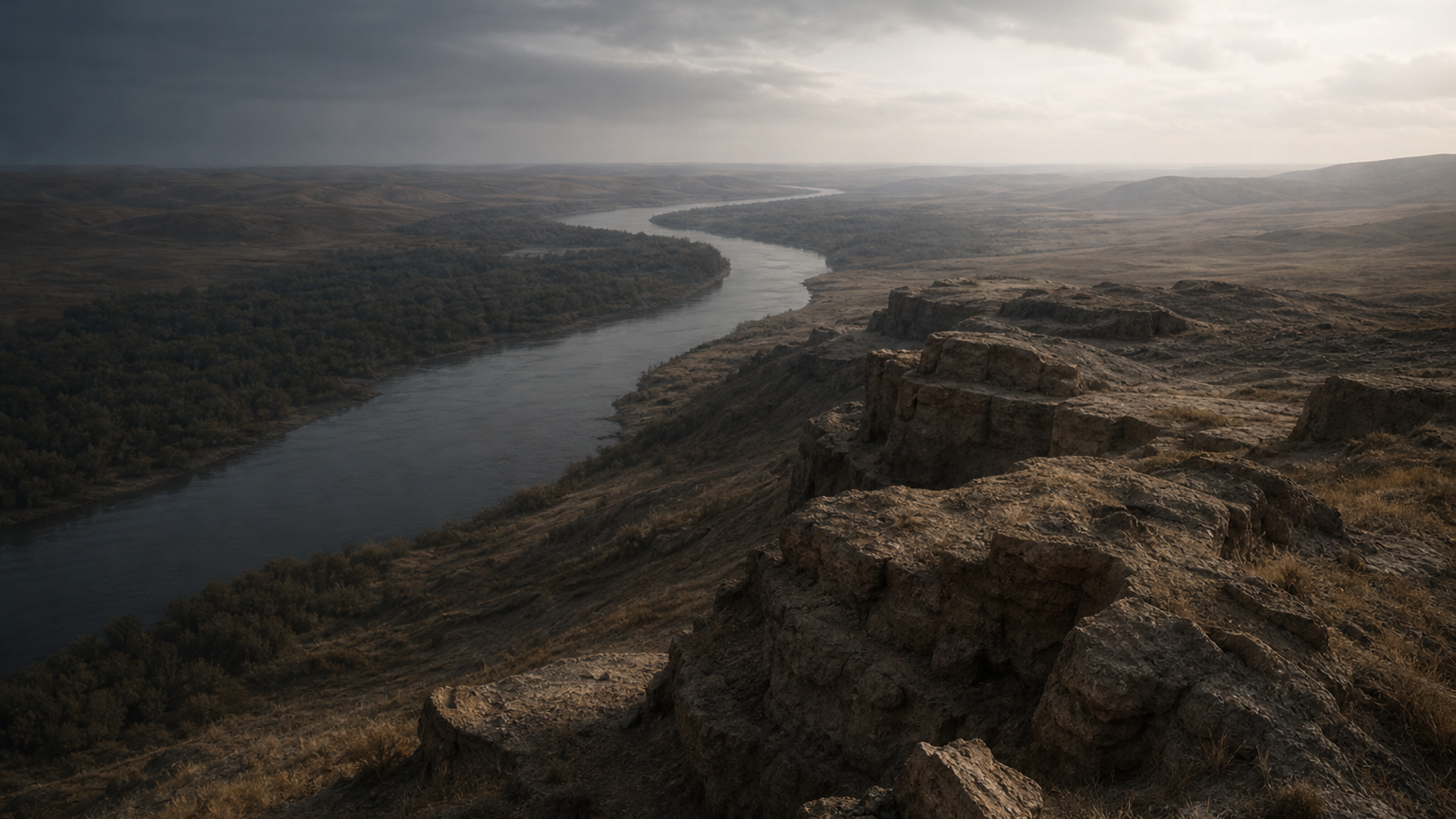
Beneath the silver ribbon of the Amur, human stories of the second millennium BCE unfold in fragmentary, atmospheric detail. Archaeological data indicates small, dispersed communities exploiting rich riverine resources and experimenting with Bronze Age technologies on the northeastern margins of what is broadly considered Bronze Age China. Environmental corridors along the Amur would have funneled people, ideas and commodities — fish, furs, and possibly early metal objects — across a landscape of mixed forests and wetlands.

The single ancient genome dated to 1510–1425 BCE anchors a human presence at this frontier. Limited evidence suggests continuity with earlier Neolithic hunter-fisher groups in the region but also hints at connections to wider northern Eurasian populations. The material record is still sparse: preserved burials and diagnostic artefacts are uncommon, and clear stratigraphic sequences are rare. That scarcity means interpretations must remain provisional. Yet the Amur Basin sits astride climatic and cultural gradients, a place where northerly genetic lineages and East Asian cultural packages could meet, producing a mosaic of lifeways rather than a single, unified culture.

In short: the archaeological emergence of this community appears as a riverine, adaptive phenomenon — an intimate interplay of environment, incremental technological change, and mobility — visible only in glimpses until more sites and samples are documented.

  • Riverine communities exploiting fish, fur, and wetland resources
  • Margins of Bronze Age China with sparse archaeological visibility
  • Evidence suggests local continuity with Neolithic groups and external contacts
Chapter IV

Daily Life & Society

Imagine dawn breaking over braided channels: canoes cut through mist while nets and traps harvest returning salmon. Archaeological indicators from the Amur region emphasize a mixed subsistence economy — fishing, seasonal hunting, and gathering — supplemented by small-scale cultivation where soils allowed. Pottery fragments and occasional metal objects point to craft traditions adapted to a riverine world: robust ceramics for storage and hearth use, and select bronze items that may have had status or practical roles.

Settlement patterns were likely mobile or semi-sedentary, with seasonal camps clustering near productive fishing locales. Social organization is difficult to reconstruct from current data, but burial practices found in nearby contexts suggest kin-based groups with differential access to exotic items. Trade and exchange probably followed rivers as highways: obsidian, lithic raw materials, and metal fragments could move long distances along watershed networks. Because surviving sites are few and aDNA samples are limited to one individual, reconstructions of household structure, craft specialization, and social hierarchy remain tentative. Still, the material imagination of daily life here is one of resilience — communities tuned to the pulse of the river and the rhythms of northern seasons.

  • Mixed subsistence: fishing, hunting, gathering, and limited cultivation
  • Seasonal or semi-sedentary settlements centered on productive river stretches
Chapter V

Genetic Profile

The genetic evidence from this cultural identifier is extremely limited: only one genome is reported for 1510–1425 BCE in the Amur River Basin. That single sample carries Y-chromosome haplogroup N and mitochondrial haplogroup D. Haplogroup N is widespread across northern Eurasia today and in prehistoric contexts and often associated with northern hunter-gatherer and later Tungusic-related groups; haplogroup D is common in East Asian and northeastern Siberian matrilines. Together, these markers suggest a genetic profile that reflects deep northern East Asian ancestry with affinities to regional populations along the Amur and adjacent Siberian landscapes.

Important caveats apply. With a sample count of one, any population-level inference is provisional. The observed haplogroups may represent individual ancestry rather than the full genetic diversity of contemporary communities. Moreover, uniparental markers (Y and mtDNA) trace only single ancestral lines and can be sensitive to drift, founder effects, or social practices affecting sex-biased mobility.

Nevertheless, the genetic signal coheres with archaeological expectations for a northeastern Eurasian frontier: continuity with long-term regional lineages and possible connections to broader north–south and east–west interaction networks. Future genomic sampling from additional burials and nearby sites will be essential to test whether the Y-N / mtDNA-D pattern is representative or anomalous, and to reveal detailed population dynamics such as admixture, migration pulses, or gene flow linked to Bronze Age technological shifts.

  • Single sampled individual carries Y-haplogroup N and mtDNA D
  • With n=1, conclusions are highly tentative — further sampling needed
Chapter VI

Legacy & Modern Connections

The Amur Basin sits at a crossroads of ancestry and culture. Modern populations in the Russian Far East, northeastern China, and adjacent regions retain genetic echoes — including haplogroup N and mtDNA D — that link diverse groups through deep time. Archaeological continuity in subsistence and settlement patterns suggests cultural resilience, even as networks of exchange shifted across millennia.

It is important to underline uncertainty: with only one ancient genome, direct links to specific modern ethnic groups cannot be drawn. What this lone sample does offer is a tantalizing snapshot — a genetic and archaeological whisper — that the Amur River remained a persistent corridor for people and their genes. Continued excavation and careful ancient DNA work will illuminate how Bronze Age riverine lifeways contributed to the genetic tapestry of northeastern Asia.

  • Genetic echoes in modern northeastern Asian populations (N and D lineages)
  • Current connections are tentative; more aDNA is needed to clarify continuity
AI 电源

AI 助手

就 Amur River Bronze Age Echoes 文化提问

AI 助手 由DNAGENICS公司制作

解锁此特性
Ask questions about the Amur River Bronze Age Echoes culture. Our AI assistant can explain genetic findings, historical context, archaeological evidence, and modern connections.
AI 样本分析

Amur River Bronze Age Echoes 文化是人类历史中值得了解的一章……

遗传分析揭示了与早期种群的联系,同时显示了独特的适应和文化创新的证据。 古代DNA样本提供了对迁徙模式、社会结构以及古代种群之间的生物关系的深刻见解。

这是人工智能分析的预览。 解锁全AI 助手, 以探索关于:

  • 遗传组成和祖先
  • 移徙模式和起源
  • 日常生活和文化习俗
  • 现代遗传遗产

探索更古老的文化

揭开古代世界文明的故事

使用优惠码 可减免 35% • 11月12日 到期