Anderten: Saxon Echoes in Bone

下载的 PDF 是图像副本。如需可选中文本及更好的辅助技术支持,请使用打印功能。

Anderten: Saxon Echoes in Bone

揭开一个失落的文明

正在加载考古记录……

正在收集古代记录

跳转到主内容
Anderten: Saxon Echoes in Bone
文明焦点

Anderten: Saxon Echoes in Bone

Fifteen medieval individuals from Anderten (Lower Saxony, 600–1000 CE) reveal local life and mixed ancestry.

600 CE - 1000 CE
Lower Saxony, Germany
滚动开始
Chapter I

剧情

了解 Anderten: Saxon Echoes in Bone 文化

Archaeological remains from Anderten (600–1000 CE) connect Saxon rural life to a mixed genetic profile: dominant maternal haplogroup H and a varied Y-chromosome record (R, J, I). Modest sample size points to intriguing regional continuity and long-distance links.

Time Period

600–1000 CE

Region

Lower Saxony, Germany

Common Y-DNA

R (5), J (4), I1 (1), I (1)

Common mtDNA

H (8), U (1), J (1), V (1), K (1)

Chapter II

时间线

这种文化历史上的关键时刻

800 CE

Active use of Anderten burial ground

Archaeological data indicate cemetery use at Anderten during the 8th–9th centuries CE, within the Saxon medieval period, reflecting local burial traditions and regional connections.

Chapter III

Origins & Emergence

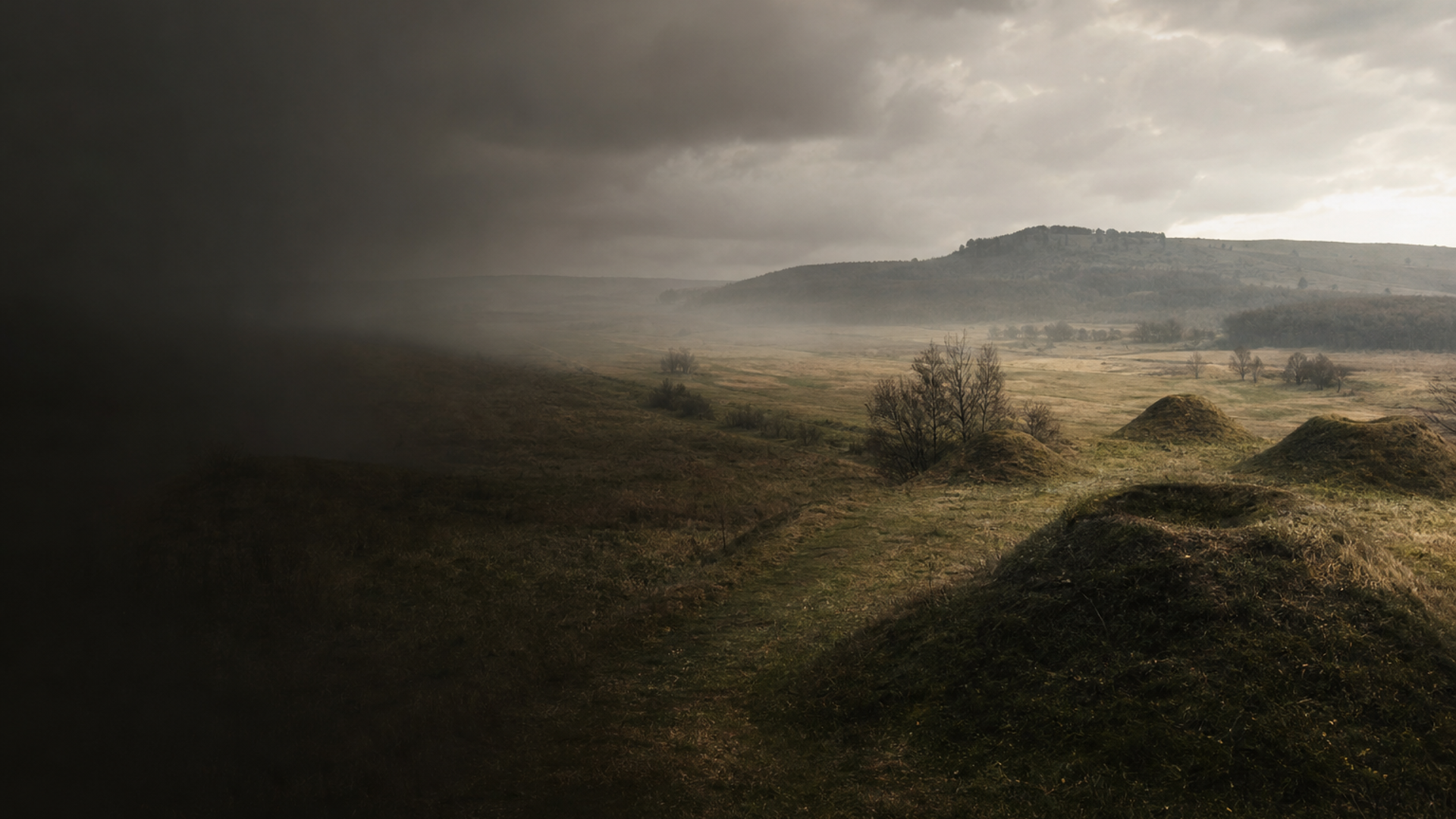
The Anderten assemblage sits in the cool, low-lying landscape of Lower Saxony, a region shaped by marshes, river corridors and long human itineraries. Archaeological data indicates funerary use at Anderten during the Saxon medieval horizon (roughly 600–1000 CE), a period when local communities were negotiating identity amid shifting political and religious frontiers. Material traces from this era across northern Germany show continuity with earlier Germanic lifeways but also new ties to broader North Sea and continental networks.

Genetically, the Anderten sample offers a snapshot rather than a full portrait. With 15 individuals analyzed, patterns begin to emerge—yet they remain provisional. The predominance of mitochondrial haplogroup H points toward maternal continuity with wider European populations, while the diversity of Y-chromosome haplogroups suggests more complex male-line histories. Archaeological evidence—cemetery layout, grave goods variability, and settlement traces—indicates households anchored to the land, but also connected by exchange and mobility.

Limited evidence suggests that Anderten’s community was neither isolated nor monocultural. Instead, a mosaic of local traditions and incoming influences shaped daily life and kinship. Ongoing excavation and targeted sampling will be required to test whether the patterns seen in these 15 individuals hold across the landscape and century.

  • Anderten cemetery use falls within 600–1000 CE (Saxon medieval period).
  • Archaeological remains indicate local rural households with regional connections.
  • Sample of 15 gives provisional but valuable insight into origins and mobility.
Chapter IV

Daily Life & Society

Archaeological traces paint a picture of everyday resilience framed by field, hearth and craft. Villages in Lower Saxony at this time were typically small nucleated settlements and dispersed farmsteads, where mixed agriculture—cereal cultivation, animal husbandry, and seasonal foraging—sustained communities. Grave assemblages from the Saxon medieval era often include modest personal items: iron tools, belt fittings, beads and occasional weaponry—objects that speak to gendered activities, status differentiation, and connections through trade.

At Anderten specifically, burial variability suggests households with diverse roles: some burials show accoutrements consistent with agricultural and craft activities, others hint at wider exchange networks through exotic beads or non-local metalwork styles. The period also witnesses the gradual spread of Christianity alongside older burial rites; archaeological data indicates both continuity and change in funerary practice rather than abrupt replacement.

Social organization likely centered on kin groups and local leaders whose authority was tied to control of land and clients. Seasonal cycles, communal labor, and shared ritual would have structured the year. While artifacts can suggest trade and long-distance ties, genetic data help reveal the human movements behind those objects—people who carried new lineages, memories and skills into Anderten’s fields and graves.

  • Economy based on mixed agriculture, animal husbandry and local crafts.
  • Burial variability indicates social differentiation and external contacts.
Chapter V

Genetic Profile

The genetic dataset from Anderten links osteological lives to ancestral threads. Among the reported Y-DNA results, haplogroup R appears most frequently (5 counts), with a substantial presence of J (4), and smaller counts of I1 (1) and I (1). Mitochondrial DNA is dominated by haplogroup H (8), with single occurrences of U, J, V and K. These counts derive from the 15-sample dataset; preservation and successful sequencing vary, so not every individual contributes to every marker class.

Interpretation requires caution. Haplogroup R is widespread in Europe and can represent several sublineages (for example R1b and R1a) with different prehistoric histories; the present data do not specify subclades, so exact origins remain ambiguous. The notable frequency of haplogroup J on the paternal side is striking for a northern German rural context and may reflect long-distance mobility, integration of individuals with Mediterranean or eastern connections, or historical complexities such as Roman-era or later trade and migration. However, J has diverse sublineages and ancient distributions, so multiple scenarios are possible.

The maternal predominance of H suggests substantial continuity with broader European maternal lineages. The contrast—relatively homogeneous mtDNA and more heterogeneous Y-DNA—can reflect sex-biased mobility (for instance, incoming males marrying local women) but with only 15 individuals this remains a plausible hypothesis rather than a confirmed pattern. Archaeogenetic interpretation should therefore remain provisional: the Anderten data open hypotheses about male-mediated movement and maternal continuity that further sampling can test.

  • Y-DNA diversity (R and J) suggests mixed paternal ancestries and potential long-distance links.
  • mtDNA dominated by H implies maternal continuity with broader European populations; conclusions are provisional given sample size.

Chapter VI

Legacy & Modern Connections

Anderten’s bones whisper across the centuries into modern genetic landscapes. The prevalence of mitochondrial H mirrors patterns seen widely in present-day western and northern Europeans, suggesting that maternal lines in this region show long-term continuity. The mixed Y-chromosome signal—especially the presence of both R and J lineages—reflects the dynamic human currents that shaped medieval northern Germany: local persistence, incoming individuals, and the long reach of trade and migration.

These findings caution against simplistic narratives of pure isolation or wholesale replacement. Instead, they point to communities that were rooted yet porous, where family networks absorbed newcomers and where cultural change often accompanied admixture. For modern populations in Lower Saxony and beyond, Anderten contributes a local chapter to a longer story of demographic layering.

Finally, because the dataset is modest, these connections are suggestive rather than definitive. Expanded sampling across burial grounds and settlements, combined with high-resolution haplogroup subtyping and isotope analyses, will clarify how the threads visible in Anderten fit into the broader tapestry of medieval northern Europe.

  • Maternal continuity aligns Anderten with broader European mtDNA patterns.
  • Mixed paternal lineages point to mobility and integration; larger datasets needed for confirmation.
AI 电源

AI 助手

就 Anderten: Saxon Echoes in Bone 文化提问

AI 助手 由DNAGENICS公司制作

解锁此特性
Ask questions about the Anderten: Saxon Echoes in Bone culture. Our AI assistant can explain genetic findings, historical context, archaeological evidence, and modern connections.
AI 样本分析

Anderten: Saxon Echoes in Bone 文化是人类历史中值得了解的一章……

遗传分析揭示了与早期种群的联系,同时显示了独特的适应和文化创新的证据。 古代DNA样本提供了对迁徙模式、社会结构以及古代种群之间的生物关系的深刻见解。

这是人工智能分析的预览。 解锁全AI 助手, 以探索关于:

  • 遗传组成和祖先
  • 移徙模式和起源
  • 日常生活和文化习俗
  • 现代遗传遗产

探索更古老的文化

揭开古代世界文明的故事

使用优惠码 可减免 35% • 11月12日 到期




