Aposelemis, Crete — Late Bronze Age Echoes

下载的 PDF 是图像副本。如需可选中文本及更好的辅助技术支持,请使用打印功能。

Aposelemis, Crete — Late Bronze Age Echoes

揭开一个失落的文明

正在加载考古记录……

正在收集古代记录

跳转到主内容
Aposelemis, Crete — Late Bronze Age Echoes
文明焦点

Aposelemis, Crete — Late Bronze Age Echoes

Three genomes from the Heraklion region illuminate an island at the crossroads of sea and story

1627 CE - 1506 BCE
Crete, Greece (Heraklion/Aposelemis)
滚动开始
Chapter I

剧情

了解 Aposelemis, Crete — Late Bronze Age Echoes 文化

Genomes from Aposelemis (1627–1506 BCE) offer a glimpse of Late Minoan Crete. Limited samples show Y haplogroup J and diverse maternal lineages (H, K, T2b), suggesting Mediterranean connections. Archaeological context and genetic data together hint at mobility and exchange across the Bronze Age Aegean.

Time Period

1627–1506 BCE

Region

Crete, Greece (Heraklion/Aposelemis)

Common Y-DNA

J (2 of 3)

Common mtDNA

H, K, T2b (each 1 of 3)

Chapter II

时间线

这种文化历史上的关键时刻

1627 BCE

Aposelemis Late Bronze Age burials (c.1627–1506 BCE)

Three sampled individuals from the Heraklion/Aposelemis area date between 1627 and 1506 BCE, placing them in the Late Minoan cultural horizon of Crete.

Chapter III

Origins & Emergence

The Aposelemis assemblage belongs to the Late Bronze Age horizon on Crete, broadly associated with Late Minoan phases. Archaeological data indicates occupation and funerary activity in the Heraklion region between c.1627 and 1506 BCE, a time when palatial social structures, maritime trade, and artistic florescence defined the island’s cultural landscape. The material record — pottery styles, sealings, and architectural remains across Crete — situates Aposelemis within networks that reached the Aegean islands, Anatolia, and the eastern Mediterranean.

Limited evidence suggests population movement and long-distance contacts continued during this era: goods and stylistic influences point to regular exchange, while climatic and seismic events in the broader region likely prompted demographic shifts. Genetically, the small sample set must be read cautiously: three genomes provide a narrow window, but they capture the imprint of people living amid Crete’s palaces, ports, and countryside. Archaeological context anchors these genomes in place and time, allowing us to begin tracing how bodies, objects, and ideas circulated across Bronze Age seas.

  • Late Minoan chronology: samples dated to 1627–1506 BCE
  • Located in the Heraklion/Aposelemis area of central Crete
  • Evidence of extensive Aegean and eastern Mediterranean exchange
Chapter IV

Daily Life & Society

Archaeological traces from Late Bronze Age Crete paint a cinematic picture: sun-bright courtyards, storage jars stacked in magazines, and coastal harbors bustling with amphorae and craft goods. People at Aposelemis would have participated in a mixed economy of agriculture (cereals, olives, grapes), animal husbandry, artisanal production, and maritime trade. Social life was organized around palatial and non-palatial centers; ritual practice and funerary customs varied locally, often expressed through tomb architecture and grave goods.
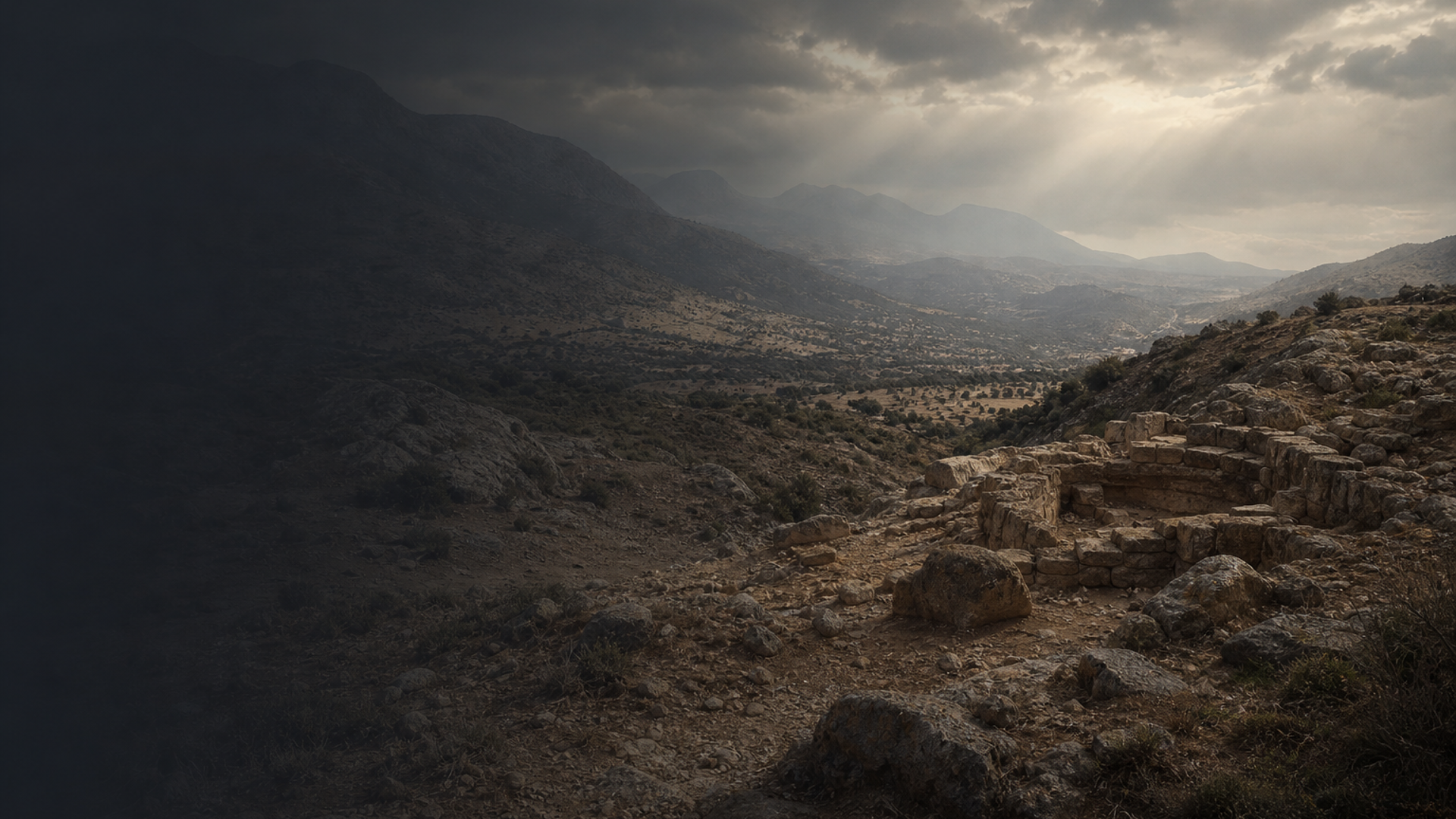

Bioarchaeological indicators from nearby sites suggest diets rich in cereals and marine resources, periodic mobility for trade or seasonal work, and communities skilled in pottery, metalwork, and textile production. Burial contexts can show personal adornment and imported items, signaling both local identity and far-reaching connections. At Aposelemis, archaeology provides the stage on which the genetic actors once lived: households, workshops, and ports where inherited lineages met the flow of people and objects.

  • Economy: agriculture, livestock, craft production, maritime trade
  • Material culture ties to wider Aegean and eastern Mediterranean networks
Chapter V

Genetic Profile

Three ancient genomes from the Aposelemis/Heraklion area reveal a compact but informative genetic snapshot. Two males carry Y-chromosome haplogroup J, a lineage common today across the Near East and parts of the Mediterranean; this pattern can reflect prehistoric connections between Crete and regions to the east, though haplogroup J also occurs in diverse local contexts. Mitochondrial lineages are heterogeneous: H, K, and T2b are each present once among the three individuals. These maternal haplogroups are widespread across Europe and the Near East in prehistoric and modern populations.

Taken together with archaeological signals of trade and interaction, the genetic results are consistent with Crete functioning as a crossroads where gene flow — from regional movement, marriage ties, and maritime contact — left detectable signatures. However, with only three samples the conclusions are preliminary. Small sample counts amplify the effect of chance, so observed frequencies (e.g., J in 2/3) may not reflect the broader population. Future, larger datasets will be essential to test whether these lineages represent local continuity, incoming groups, or a mixture of both. For now, the genetic data enrich the archaeological narrative by adding biological dimensions to stories of mobility and connection in the Late Bronze Age Aegean.

  • Y-DNA: J found in 2 of 3 individuals — suggestive of eastern Mediterranean links
  • mtDNA: H, K, T2b each present — diverse maternal ancestry consistent with regional interchange
Chapter VI

Legacy & Modern Connections

The Aposelemis genomes remind us that Crete’s Bronze Age was not isolated. Genetic affinities echo the island’s archaeological record of exchange: shared lineages and diverse maternal haplogroups parallel the movement of goods, ideas, and people across the Aegean and beyond. For modern inhabitants of Crete and the wider Mediterranean, these ancient signals contribute one thread to a long, complex tapestry of ancestry — but they do not define it. Centuries of migration, conquest, and cultural transformation have layered additional genetic and cultural histories onto the island.

Because the sample size here is small, statements about continuity between Bronze Age and modern populations must be cautious. Nonetheless, integrating ancient DNA with careful archaeological context allows museums and researchers to tell richer stories about identity, mobility, and the human lives behind artifacts — illuminating how a small set of genomes can open doors onto the larger human past.

  • Genetic signals align with archaeological evidence of long-distance interaction
  • Small sample size—caution needed before linking directly to modern populations
AI 电源

AI 助手

就 Aposelemis, Crete — Late Bronze Age Echoes 文化提问

AI 助手 由DNAGENICS公司制作

解锁此特性
Ask questions about the Aposelemis, Crete — Late Bronze Age Echoes culture. Our AI assistant can explain genetic findings, historical context, archaeological evidence, and modern connections.
AI 样本分析

Aposelemis, Crete — Late Bronze Age Echoes 文化是人类历史中值得了解的一章……

遗传分析揭示了与早期种群的联系,同时显示了独特的适应和文化创新的证据。 古代DNA样本提供了对迁徙模式、社会结构以及古代种群之间的生物关系的深刻见解。

这是人工智能分析的预览。 解锁全AI 助手, 以探索关于:

  • 遗传组成和祖先
  • 移徙模式和起源
  • 日常生活和文化习俗
  • 现代遗传遗产

探索更古老的文化

揭开古代世界文明的故事

使用优惠码 可减免 35% • 11月12日 到期




