Armenia LBA: Bronze Shadows

下载的 PDF 是图像副本。如需可选中文本及更好的辅助技术支持,请使用打印功能。

Armenia LBA: Bronze Shadows

揭开一个失落的文明

正在加载考古记录……

正在收集古代记录

跳转到主内容
Armenia LBA: Bronze Shadows
文明焦点

Armenia LBA: Bronze Shadows

Burials and genomes from Late Bronze Age Armenia (1439–805 BCE)

1439 CE - 805 BCE
Armenia (Caucasus)
滚动开始
Chapter I

剧情

了解 Armenia LBA: Bronze Shadows 文化

Armenia_LBA (1439–805 BCE): 47 archaeological and ancient DNA samples from cemeteries across Armenia link burial practices at Lori Berd, Karashamb and Keti with maternal lineages dominated by U, T, K, J and N and sparse Y‑lineage representation.

Time Period

1439–805 BCE

Region

Armenia (Caucasus)

Common Y-DNA

I, R, J (each observed, low counts)

Common mtDNA

U, T, K, J, N (U most frequent)

Chapter II

时间线

这种文化历史上的关键时刻

1439 BCE

Earliest Armenia_LBA sample

Oldest dated sample in the dataset (c. 1439 BCE) from cemetery contexts in Armenia.

1000 BCE

Regional exchange intensifies

Archaeological evidence indicates increased exchange across the South Caucasus and Near East during the Late Bronze Age.

805 BCE

Latest Armenia_LBA sample

Most recent dated sample in the series (c. 805 BCE), marking the dataset's terminal range.

Chapter III

Origins & Emergence

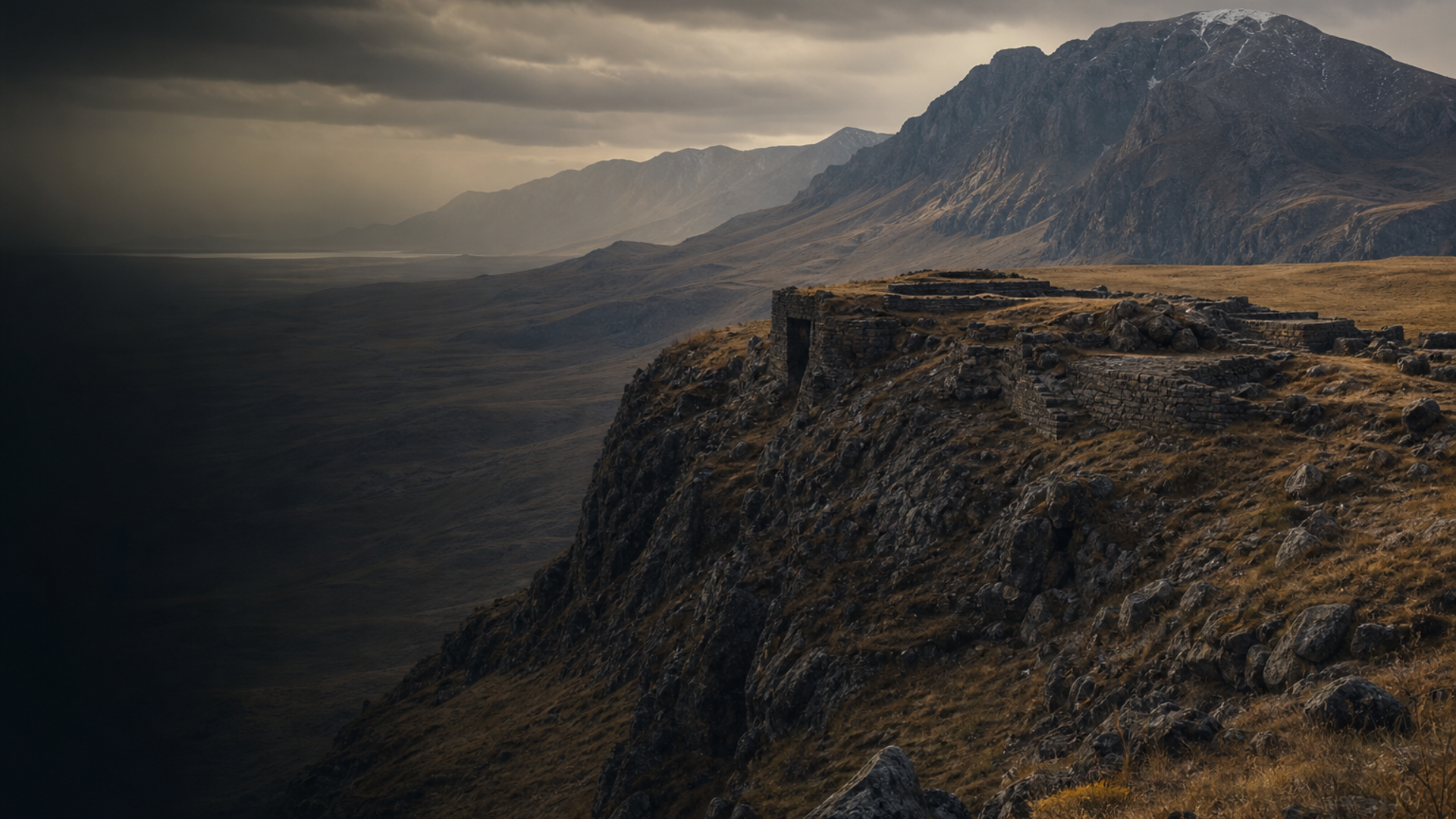
Amid the highland folds of the Armenian plateau, communities at sites such as Karashamb Cemetery, Lori Berd cemetery and Nerkin Getashen left a dense record of Late Bronze Age life between 1439 and 805 BCE. Archaeological data indicates a landscape of fortified settlements, cemetery fields and standing monuments — stone-lined graves, cist burials, and occasional rich grave goods of bronze and ceramics. These material signatures speak to long-standing local traditions that had been shaped by centuries of interaction across the South Caucasus and the Near East.

Genetically, the Armenia_LBA assemblage represents a snapshot of this dynamic frontier. Forty-seven samples provide moderate coverage across multiple sites; the mtDNA diversity suggests continuity with earlier regional maternal lineages, while the limited Y‑chromosome results point to heterogeneous male ancestry but require caution because counts are low. Limited evidence suggests that population networks — trade, marriage, and mobility along river valleys and mountain passes — knitted local highland communities into broader Bronze Age exchange systems. The cinematic image of smoke rising over basalt ramparts and the steady clink of bronze on anvil is matched in the genome by patterns of continuity and connection, though many questions remain open.

  • Sites include Karashamb, Lori Berd, Nerkin Getashen, Keti and others
  • Material culture: cist burials, bronze artifacts, funerary monuments
  • 47 samples provide moderate regional coverage but localized gaps remain
Chapter IV

Daily Life & Society

Archaeological excavations reveal a society shaped by highland agriculture, pastoral mobility and craft production. House foundations, storage pits and pottery assemblages recovered at settlement loci imply mixed farming of barley, pulses and herded sheep and goats. Cemetery evidence from Tekhut, Noratus and Pidjut Znganek monument shows varied funerary practice — single inhumations, grouped burials and occasional richer graves with bronze tools or weaponry — suggesting social differentiation and household-based status rather than extreme hierarchical stratification.

Craftspeople worked bronze and stone, producing utilitarian and ritual objects whose stylistic traits link the region to the broader Late Bronze Age Caucasus. Exposed landscapes, river corridors, and mountain passes funneled trade and seasonal movement; ethnographic analogy and isotopic work elsewhere indicate that some individuals may have practiced seasonal transhumance. The archaeological record preserves fragments of daily life — grinding stones, spindle whorls, and charred seeds — which when paired with DNA allow us to imagine kinship networks, residence patterns and the movements of women and men within and between communities.

  • Economy: mixed agriculture, pastoralism, local craft production
  • Burial diversity hints at household status differences and mobility
Chapter V

Genetic Profile

The Armenia_LBA dataset (n=47) offers a valuable genetic window into Late Bronze Age Armenia. Maternal lineages are dominated by haplogroups U (8 samples), T (5), K (4), J (4) and N (3). Haplogroup U is common across many prehistoric Eurasian contexts and its presence here is consistent with long-term maternal continuity in the Caucasus and adjacent regions. The prevalence of T, K and J maternal lineages echoes patterns seen across Anatolia and the Near East during the Bronze Age, suggesting female-line connections or shared ancestry across these zones.

Y‑chromosome results are sparse: single observations of haplogroups I, R and J are reported. Because each Y lineage is represented by only one sample, these findings must be interpreted with caution — they show that multiple male lineages were present, but do not yet define their frequencies or regional structure. Overall, the genetic signal is best read as a mosaic: local Caucasus-related ancestry mingled with elements connected to broader Bronze Age networks. Comparisons with contemporary and earlier datasets from the Caucasus indicate continuity with local maternal lineages alongside evidence for connections to neighboring populations; however, without larger male-sample counts and autosomal analyses, conclusions about migrations or large-scale demographic shifts remain preliminary.

  • mtDNA diversity: U most frequent; T, K, J, N also present
  • Y-DNA sparse — I, R, J each observed once; interpret cautiously
Chapter VI

Legacy & Modern Connections

The Armenia_LBA people inhabited a landscape that later became a crucible for early states and enduring cultural traditions. Archaeological continuities in burial practice and material culture feed into linguistic and historical narratives of the first millennium BCE in the Armenian Highlands. Genetically, maternal lineages found in Late Bronze Age samples are echoed in later populations of the Caucasus, suggesting threads of continuity across millennia.

At the same time, the data underline complexity: limited Y‑chromosome resolution and the mosaic nature of maternal lineages remind us that modern genetic landscapes are the product of many layered events — local persistence, mobility, and exchange. Ongoing ancient DNA work, paired with detailed archaeology at sites like Karashamb and Lori Berd, will continue to refine how Bronze Age lives contributed to the genetic and cultural tapestry of the region.

  • Maternal lineages suggest long-term continuity into later Caucasus populations
  • Sparse Y data and mosaic signals mean modern connections are complex and layered
AI 电源

AI 助手

就 Armenia LBA: Bronze Shadows 文化提问

AI 助手 由DNAGENICS公司制作

解锁此特性
Ask questions about the Armenia LBA: Bronze Shadows culture. Our AI assistant can explain genetic findings, historical context, archaeological evidence, and modern connections.
AI 样本分析

Armenia LBA: Bronze Shadows 文化是人类历史中值得了解的一章……

遗传分析揭示了与早期种群的联系,同时显示了独特的适应和文化创新的证据。 古代DNA样本提供了对迁徙模式、社会结构以及古代种群之间的生物关系的深刻见解。

这是人工智能分析的预览。 解锁全AI 助手, 以探索关于:

  • 遗传组成和祖先
  • 移徙模式和起源
  • 日常生活和文化习俗
  • 现代遗传遗产

探索更古老的文化

揭开古代世界文明的故事

使用优惠码 可减免 35% • 11月12日 到期




