Ashkelon Iron Age I — Coastal Crossroads

下载的 PDF 是图像副本。如需可选中文本及更好的辅助技术支持,请使用打印功能。

Ashkelon Iron Age I — Coastal Crossroads

揭开一个失落的文明

正在加载考古记录……

正在收集古代记录

跳转到主内容
Ashkelon Iron Age I — Coastal Crossroads
文明焦点

Ashkelon Iron Age I — Coastal Crossroads

Four ancient genomes from Ashkelon illuminate a contested era of migration and maritime exchange.

1383 CE - 1123 BCE
Ashkelon, Israel (southern Levant)
滚动开始
Chapter I

剧情

了解 Ashkelon Iron Age I — Coastal Crossroads 文化

Archaeogenetic glimpses from Ashkelon (1383–1123 BCE) link coastal trade, cultural change, and mixed ancestries. Limited samples suggest Near Eastern roots with hints of extra-regional input; conclusions remain preliminary.

Time Period

1383–1123 BCE (Iron Age I)

Region

Ashkelon, Israel (southern Levant)

Common Y-DNA

J, R1 (each observed in 1 of 4)

Common mtDNA

T (2), H92 (1)

Chapter II

时间线

这种文化历史上的关键时刻

1200 BCE

Ashkelon in the Early Iron Age

Archaeological layers at Tel Ashkelon record active coastal occupation, trade links, and material changes during the Iron Age I period.

Chapter III

Origins & Emergence

Ashkelon perches on the southern Levantine coast and, in the late 2nd and early 1st millennium BCE, served as a nexus of seafaring routes and cultural exchange. Archaeological strata at Tel Ashkelon record continuity from Late Bronze urbanism into Iron Age I occupations (roughly 1383–1123 BCE). Pottery assemblages, architectural remains, and import goods show both long-standing Levantine traditions and new stylistic influences arriving by sea.

Archaeological data indicates that the period witnessed demographic and cultural stress across the eastern Mediterranean—collapses, movements, and regional reorganization. In Ashkelon this produced layered deposits where local material culture blends with motifs and vessels that signal Aegean and Anatolian contacts in some levels. Limited evidence suggests population admixture was possible during this era of intensified maritime connections, but the archaeological record alone cannot quantify ancestry.

Genetic sampling from four individuals provides a rare, though small-scale, window into who lived here. Because the sample count is very low (<10), any inference about population replacement or large-scale migration must be treated as provisional. Instead, the combined archaeological and genomic signals are best read as complementary: material culture reveals interaction networks and life-ways, while DNA begins to sketch the biological dimensions of that exchange.

  • Tel Ashkelon shows continuity from Late Bronze to Iron Age I layers
  • Material culture records both Levantine traditions and foreign influences
  • Small ancient DNA sample (n=4) makes genetic conclusions provisional
Chapter IV

Daily Life & Society

Life in Iron Age I Ashkelon would have been shaped by the sea: fishing, trade, and a harbor economy underpinned daily subsistence and wealth. Archaeological remains include ashlar walls, storage installations, and household assemblages of grain, oil, and ceramic tableware. Faunal remains show a diet combining domesticated animals (sheep, goats, cattle) with abundant fish and seabird resources, reflecting a mixed coastal economy.
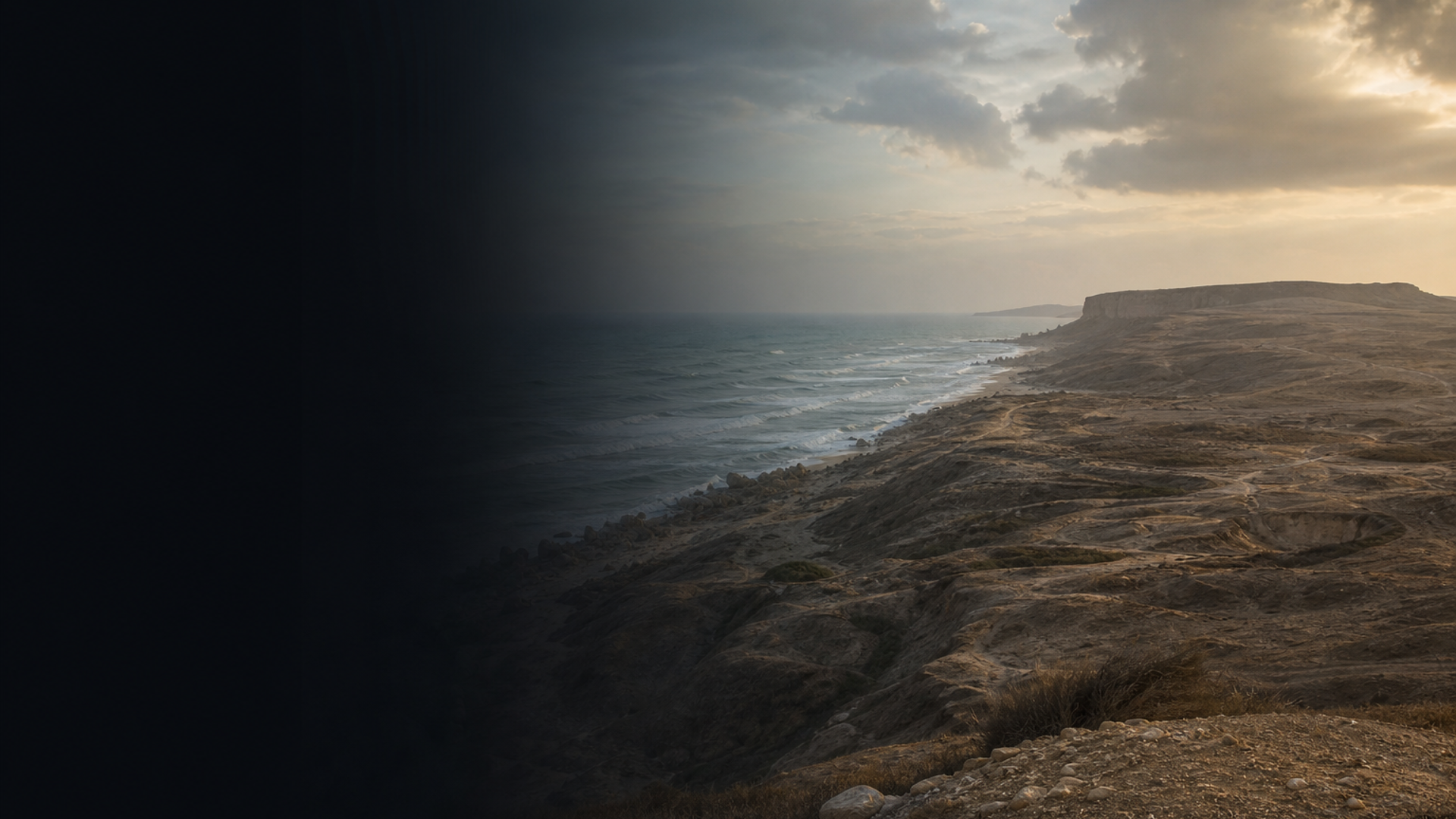

Social life likely revolved around household units, craft specialists, and itinerant merchants. Imported ceramics and personal items hint at traders and visitors from across the eastern Mediterranean; locally produced wares coexisted with Aegean-style pottery fragments in certain strata. Burial practices at nearby cemeteries show variation in funerary goods and body treatment, suggesting social differentiation or multiple cultural affiliations within the city. Archaeological traces record a vibrant, open port city where identities were negotiated daily through trade, food, and material expression.

  • Economy centered on coastal trade, fishing, agriculture, and craft production
  • Material culture shows local and imported goods, indicating long-distance contacts
Chapter V

Genetic Profile

Four sequenced individuals from Ashkelon (dated 1383–1123 BCE) reveal a limited but informative genetic snapshot. Y-chromosome lineages include haplogroup J (observed in 1 individual), common across the Near East, and R1 (observed in 1 individual), a wider Eurasian lineage that appears in many contexts and can derive from diverse historical inputs. Maternal lineages include mtDNA T in two individuals and an H92 lineage in one; T and H subclades occur in both Near Eastern and European populations.

Interpretation must be cautious. With only four genomes, statistical power is too low to claim population-wide patterns. Nevertheless, these results are compatible with an expectation of predominant Near Eastern ancestry in coastal Levantine towns, with occasional individuals carrying lineages reflecting extra-regional connections. In other regional ancient-DNA research, early Iron Age individuals in some coastal sites show transient signals of Aegean- or European-related ancestry; the Ashkelon dataset is too small to confirm similar admixture here, but the presence of R1 and H-lineage mtDNA leaves open the possibility of episodic gene flow.

Future sampling—larger numbers across stratified contexts—will be essential to test hypotheses of migration, social incorporation of outsiders, or continuity. For now, genetics at Ashkelon complements archaeology by identifying individual ancestries and highlighting the city's role in an interconnected Mediterranean world.

  • Y-DNA: J (1) suggests Near Eastern paternal ancestry; R1 (1) hints at extra-regional input
  • mtDNA: T (2) and H92 (1) reflect maternal lineages found across the Near East and Eurasia
Chapter VI

Legacy & Modern Connections

Ashkelon's archaeological record and the small set of ancient genomes together emphasize continuity of place amid changing peoples. The city's long occupation means that modern genetic landscapes are shaped by many layers of migration, assimilation, and local continuity. Ancient DNA can illuminate episodes of admixture and the biological trace of historical interactions, but connecting ancient individuals directly to modern populations requires many more samples across time and space.

For museum audiences and public science, Ashkelon's story is evocative: a coastal city where material cultures and bodies moved with ships and trade. Even preliminary DNA results encourage thoughtful narratives about mobility, identity, and cultural encounter rather than simplistic tales of replacement. Continued multidisciplinary work—archaeology, isotopes, and expanded archaeogenetics—will refine how Ashkelon's ancient inhabitants contributed to the genetic tapestry of the Levant.

  • Modern genetic continuity is plausible but not proven from this small dataset
  • Expanded sampling will clarify how Ashkelon's inhabitants relate to later Levantine populations
AI 电源

AI 助手

就 Ashkelon Iron Age I — Coastal Crossroads 文化提问

AI 助手 由DNAGENICS公司制作

解锁此特性
Ask questions about the Ashkelon Iron Age I — Coastal Crossroads culture. Our AI assistant can explain genetic findings, historical context, archaeological evidence, and modern connections.
AI 样本分析

Ashkelon Iron Age I — Coastal Crossroads 文化是人类历史中值得了解的一章……

遗传分析揭示了与早期种群的联系,同时显示了独特的适应和文化创新的证据。 古代DNA样本提供了对迁徙模式、社会结构以及古代种群之间的生物关系的深刻见解。

这是人工智能分析的预览。 解锁全AI 助手, 以探索关于:

  • 遗传组成和祖先
  • 移徙模式和起源
  • 日常生活和文化习俗
  • 现代遗传遗产

探索更古老的文化

揭开古代世界文明的故事

使用优惠码 可减免 35% • 11月12日 到期




