Aude Iron Age: Coastal Strongholds

下载的 PDF 是图像副本。如需可选中文本及更好的辅助技术支持,请使用打印功能。

Aude Iron Age: Coastal Strongholds

揭开一个失落的文明

正在加载考古记录……

正在收集古代记录

跳转到主内容
Aude Iron Age: Coastal Strongholds
文明焦点

Aude Iron Age: Coastal Strongholds

Archaeology and DNA from coastal oppida of Aude and Gard, 600–50 BCE

600 CE - 50 BCE
Occitanie, Southern France
滚动开始
Chapter I

剧情

了解 Aude Iron Age: Coastal Strongholds 文化

Archaeological and ancient-DNA evidence from 10 Iron Age individuals (600–50 BCE) at La Monédière, Le Cailar and Pech-Maho reveals a community rooted in western European genetic lineages with Mediterranean ties. Limited sample size makes conclusions preliminary.

Time Period

600–50 BCE

Region

Occitanie, Southern France

Common Y-DNA

R (majority), G, I

Common mtDNA

H1e, X2, V9, H, R

Chapter II

时间线

这种文化历史上的关键时刻

600 BCE

Early Iron Age coastal occupations

Settlement and fortification activity at Pech-Maho, Le Cailar and La Monédière mark intensified coastal occupation and Mediterranean exchange networks.

Chapter III

Origins & Emergence

The France_Aude_IA assemblage — ten individuals dated between 600 and 50 BCE from La Monédière (Bessan), Le Cailar (Place de la Saint-Jean) and Pech-Maho (near Narbonne) — sits within the broader Iron Age landscape of the Aude and Gard. Archaeological data indicates these sites functioned as coastal and riverine hubs: fortified promontories, clustered habitations and burials suggest communities engaged in local craft, agriculture and maritime exchange.

Material culture from the region shows Mediterranean connections: imported or imitative wares and objects point to contact with Phoenician, Greek and other western Mediterranean networks. At the same time, local ceramic traditions and settlement organization reflect long-standing regional continuity. Genetic data from these ten individuals provides a first glimpse of the people who inhabited these sites; however, the modest sample size means population-level inferences remain provisional. Limited evidence suggests a population profile dominated by Western European Y-lineages alongside minority paternal haplogroups, consistent with patterns seen elsewhere in Iron Age coastal France. Archaeology and DNA together paint a picture of communities anchored in local landscapes while participating in wider maritime exchange.

  • Sites reflect coastal/riverine hubs with fortifications and burial areas
  • Material culture shows Mediterranean trade and local tradition
  • Small genetic sample (n=10) gives preliminary but valuable insights
Chapter IV

Daily Life & Society

Archaeological excavations at Pech-Maho, Le Cailar and La Monédière reveal quotidian rhythms shaped by sea, salt marsh and hinterland fields. Domestic structures and storage pits indicate cereal cultivation, animal husbandry and craft production. Finds of metalworking debris and finished objects imply local artisanship alongside imported goods, suggesting both self-sufficiency and long-distance exchange.

Le Cailar’s central-place deposits and public spaces (excavated at Place de la Saint-Jean) point to episodes of communal activity — markets, feasting or ritual gatherings — while coastal sites like Pech-Maho acted as nodes in maritime communication. Burial evidence demonstrates variation in mortuary treatment, from inhumation to grave goods, hinting at social differentiation. Osteological indicators, where preserved, show diets influenced by terrestrial agriculture with marine supplements. Overall, archaeological traces present a vivid, tactile world of farmers, sailors, craftsmen and traders interacting across the western Mediterranean fringe.

  • Economy combined agriculture, craft production and maritime exchange
  • Settlement patterns include fortified promontories and communal spaces
Chapter V

Genetic Profile

The genetic dataset for France_Aude_IA comprises 10 individuals dated 600–50 BCE. Y-chromosome haplogroups are dominated by R (5 individuals) with single instances of G and I. Mitochondrial lineages include H1e (2), X2 (1), V9 (1), H (1) and R (1). This mix aligns broadly with patterns observed in Iron Age and earlier western European populations: a prevalence of R-lineages on the paternal side and a variety of maternal haplogroups reflecting deep European maternal diversity.

Interpretation must emphasize caution. Ten samples offer only a snapshot: uneven preservation, burial sampling bias and limited geographic spread mean demographic structure, migration intensity and kinship patterns cannot be fully resolved. That said, the predominance of R suggests continuity with broader western European male lineages during the Iron Age, while the presence of G and I points to genetic heterogeneity and potential local or regional ancestries. Maternal haplogroups H1e and V9 are common in western Europe and often signal long-term continuity of lineages. When paired with archaeology — trade goods, coastal settlement — the DNA hints at communities that were locally rooted yet connected to wider networks of movement and exchange.

  • Y-DNA dominated by R (5/10); G and I present
  • mtDNA diversity (H1e, X2, V9, H, R) indicates deep European maternal lineages
Chapter VI

Legacy & Modern Connections

The Iron Age communities of Aude help illuminate the genetic and cultural foundations of southern France. Modern populations of Occitanie carry echoes of these ancient lineages; mitochondrial haplogroups such as H subclades remain common in the region. Archaeological continuity in settlement locations and coastal orientation also links ancient economic patterns to later historical developments in the Roman and medieval periods.
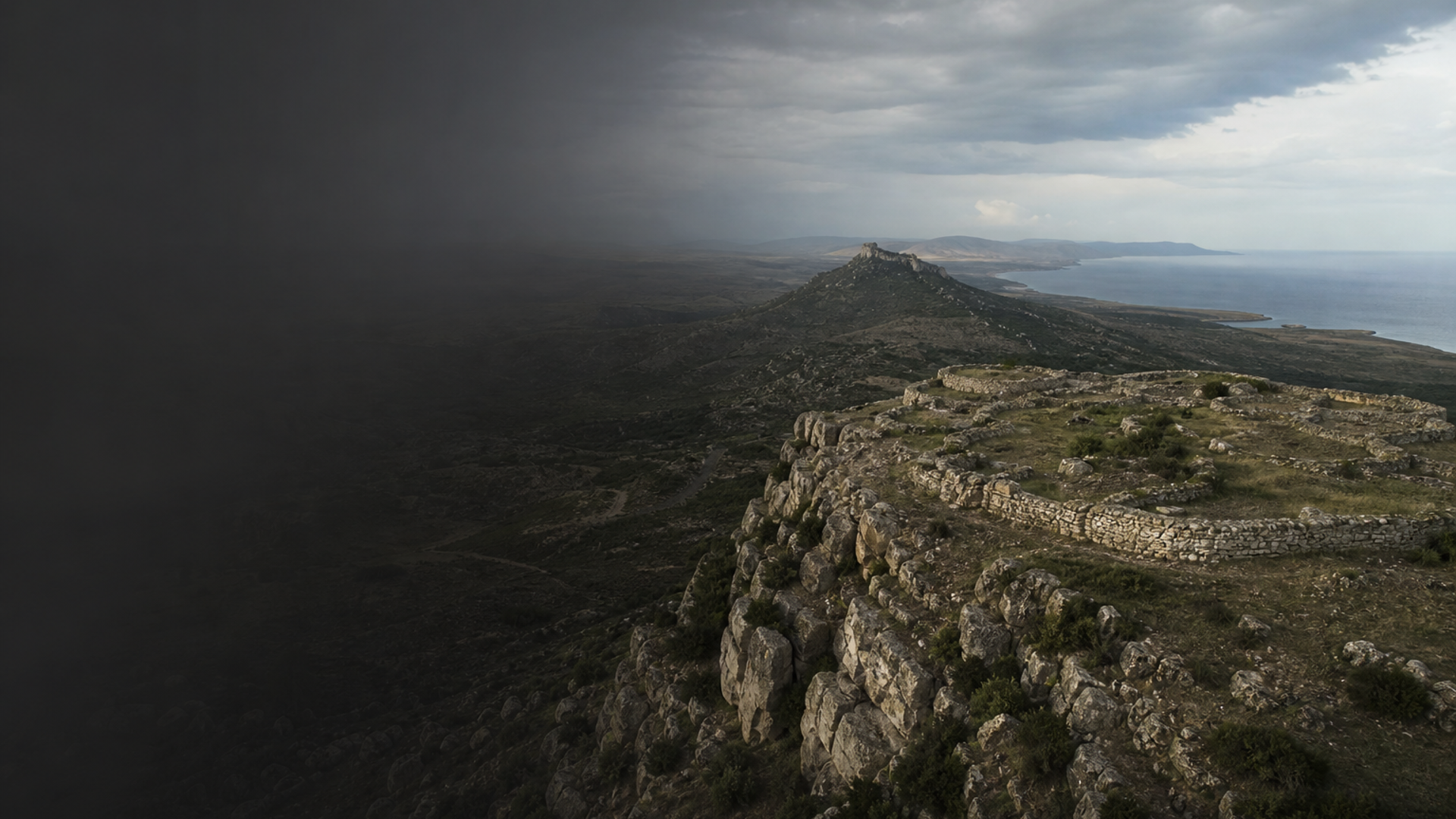

Because the sample set is modest, claims of direct ancestry should be made cautiously: genetic continuity is likely partial and filtered through millennia of migration and admixture. Still, combining material culture and ancient DNA offers a cinematic window into a world where local lifeways and Mediterranean connections shaped the ancestral threads of the modern landscape.

  • Modern Occitanie populations retain some related maternal lineages
  • Archaeology + DNA reveal continuity and connectivity across millennia
AI 电源

AI 助手

就 Aude Iron Age: Coastal Strongholds 文化提问

AI 助手 由DNAGENICS公司制作

解锁此特性
Ask questions about the Aude Iron Age: Coastal Strongholds culture. Our AI assistant can explain genetic findings, historical context, archaeological evidence, and modern connections.
AI 样本分析

Aude Iron Age: Coastal Strongholds 文化是人类历史中值得了解的一章……

遗传分析揭示了与早期种群的联系,同时显示了独特的适应和文化创新的证据。 古代DNA样本提供了对迁徙模式、社会结构以及古代种群之间的生物关系的深刻见解。

这是人工智能分析的预览。 解锁全AI 助手, 以探索关于:

  • 遗传组成和祖先
  • 移徙模式和起源
  • 日常生活和文化习俗
  • 现代遗传遗产

探索更古老的文化

揭开古代世界文明的故事

使用优惠码 可减免 35% • 11月12日 到期




