Bahrain Late Tylos–Sasanian Shores

下载的 PDF 是图像副本。如需可选中文本及更好的辅助技术支持,请使用打印功能。

Bahrain Late Tylos–Sasanian Shores

揭开一个失落的文明

正在加载考古记录……

正在收集古代记录

跳转到主内容
Bahrain Late Tylos–Sasanian Shores
文明焦点

Bahrain Late Tylos–Sasanian Shores

Island crossroads where Tylos traditions met Sasanian power (300–647 CE)

300 CE - 647 CE
Bahrain (Madinat Hamad, Northern Governorate)
滚动开始
Chapter I

剧情

了解 Bahrain Late Tylos–Sasanian Shores 文化

Archaeological and ancient-DNA glimpses from Madinat Hamad (Bahrain) hint at a coastal society shaped by Gulf trade and Sasanian ties. Three low-coverage samples show maternal links across West and South Asia; conclusions remain preliminary.

Time Period

300–647 CE

Region

Bahrain (Madinat Hamad, Northern Governorate)

Common Y-DNA

Not reported / undetermined

Common mtDNA

R2 (1), T2b (1), U (1)

Chapter II

时间线

这种文化历史上的关键时刻

300 CE

Emergence of Late Tylos–Sasanian phase

Regional archaeological horizons show intensified Sasanian influence and continued Tylos traditions along Bahraini coasts.

647 CE

Transition after early Islamic expansions

Political and cultural transformations follow changes in regional power; local material culture shows evolving ties.

Chapter III

Origins & Emergence

The Late Tylos–Sasanian phase in Bahrain unfolds along the island’s northern shores, where the long-lived Tylos identity — known from Classical-era accounts and local archaeology — overlapped with increasing Sasanian political and cultural influence after the 3rd century CE. Archaeological data indicates continued urban and maritime activity at sites such as Madinat Hamad (Northern Governorate), with material traces that include dense habitation layers, burial contexts, and imported goods that testify to Gulf-wide connectivity.

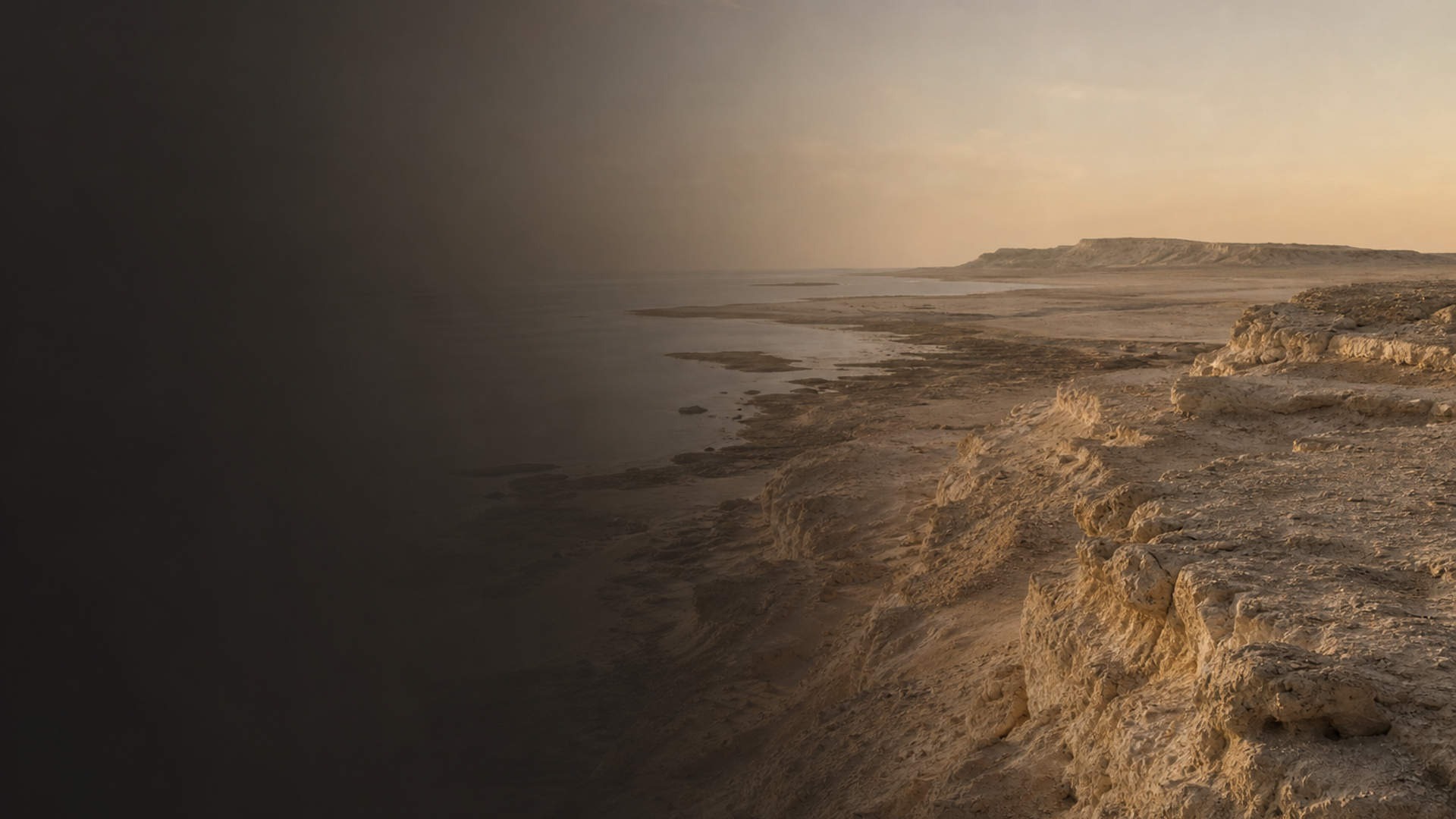
This era is cinematic in contrast: an insular landscape of mangroves, shallow lagoons and salt flats becoming a conduit for silver, ceramics, and ideas. Coin issues, architectural repairs, and stylistic shifts in pottery observed across Bahrain have been interpreted as reflections of administrative change and intensified trade links with the Iranian plateau and beyond. However, the archaeological record is uneven: many site sequences are fragmentary, and precise attribution of some finds to local Tylos traditions versus Sasanian introductions remains debated.

Limited evidence suggests continuity of local lifeways even as external ties deepen, producing a hybrid cultural horizon rather than a wholesale replacement.

  • Madinat Hamad provides key burial and habitation contexts for 4th–7th centuries CE
  • Archaeological indicators show sustained maritime trade and imported material culture
  • Evidence points to cultural continuity mixed with Sasanian administrative influence
Chapter IV

Daily Life & Society

Daily life on Late Tylos–Sasanian Bahrain likely centered on the sea and salt: fishing, small-scale agriculture in oases, pearl harvesting, and trade-related crafts. Settlement traces at coastal sites indicate homes built to cope with tidal regimes and a reliance on maritime networks for luxury and staple imports. Funerary assemblages recovered from the region suggest varied burial practices, with grave goods that reflect both local artisan production and imported wares.

Social organization was probably layered. Local leadership and merchant families would have managed trade and local affairs, while Sasanian political structures may have introduced new administrative actors or fiscal demands. Religious life during this phase was plural: Zoroastrian, Christian, and continuing indigenous practices likely coexisted in different settings — archaeological visibility varies by site.

Technologies and crafts such as pottery making, metallurgy, and beadwork show continuity with earlier Gulf traditions but with stylistic influences from Iran and the wider Indian Ocean. Everyday artifacts testify to an island community adept at navigating cosmopolitan exchange while maintaining local lifeways.

Archaeological data is still fragmentary, and many reconstructions remain provisional pending broader excavation and targeted analyses.

  • Economy rooted in maritime resources, craft production, and long-distance trade
  • Social life blended local elites with Sasanian administrative connections
Chapter V

Genetic Profile

Ancient DNA from three individuals excavated at Madinat Hamad (dated within 300–647 CE) provides preliminary maternal-line glimpses into Late Tylos–Sasanian Bahrain. The three mtDNA haplogroups observed — R2, T2b, and U — each carry broad geographic distributions in West, Central, and South Asia and in parts of West Eurasia. R2 is often associated with South-Central Asia, T2b has known distributions across West Eurasia and the Near East, and members of haplogroup U are widespread across West Eurasia.

Crucially, no consistent Y-chromosome pattern is reported for these samples (common Y-DNA haplogroups are not provided), so paternal-line inferences cannot be drawn from this dataset. With only three samples, conclusions are necessarily tentative: small sample sizes (<10) limit resolution and the ability to detect population structure, sex-biased migration, or temporal shifts.

Nevertheless, the mtDNA mix is compatible with a Gulf island that operated as a crossroads, receiving maternal lineages from both the Iranian plateau and the broader Indian Ocean world. This genetic signal dovetails with archaeological evidence for trade and mobility, suggesting that gene flow accompanied material exchange. Future sampling, particularly including male lineages and higher-coverage genomes, will be essential to test scenarios of local continuity, elite migration, or long-distance maritime movement.

  • Three mtDNA lineages found: R2, T2b, U — suggestive of West/South Asian connections
  • Absence of Y-DNA data and low sample count make conclusions preliminary
Chapter VI

Legacy & Modern Connections

The Late Tylos–Sasanian period helped shape the deep historical layering of Bahrain: an island shaped by maritime exchange, administrative shifts, and cultural blending. Genetic traces, though sparse, hint at the same currents visible in the archaeological record — a population bouquet formed by local continuity and incoming lineages that traveled along sea lanes.

For modern inhabitants, this period is part of a longue durée of connectivity that underpins contemporary genetic and cultural diversity in the Gulf. However, given the very small ancient sample size, any direct links to present-day populations require careful, comparative study using larger datasets and contextual archaeology. In short: the cinematic image of Bahrain as a crossroads is supported by both objects and genes, but the story remains incomplete until more data fills the gaps.

  • Contributes to the narrative of Bahrain as a long-standing maritime crossroads
  • Modern connections plausible but require broader ancient and modern comparative datasets
AI 电源

AI 助手

就 Bahrain Late Tylos–Sasanian Shores 文化提问

AI 助手 由DNAGENICS公司制作

解锁此特性
Ask questions about the Bahrain Late Tylos–Sasanian Shores culture. Our AI assistant can explain genetic findings, historical context, archaeological evidence, and modern connections.
AI 样本分析

Bahrain Late Tylos–Sasanian Shores 文化是人类历史中值得了解的一章……

遗传分析揭示了与早期种群的联系,同时显示了独特的适应和文化创新的证据。 古代DNA样本提供了对迁徙模式、社会结构以及古代种群之间的生物关系的深刻见解。

这是人工智能分析的预览。 解锁全AI 助手, 以探索关于:

  • 遗传组成和祖先
  • 移徙模式和起源
  • 日常生活和文化习俗
  • 现代遗传遗产

探索更古老的文化

揭开古代世界文明的故事

使用优惠码 可减免 35% • 11月12日 到期