Balong Cave: Jin–Northern & Southern Dynasties

下载的 PDF 是图像副本。如需可选中文本及更好的辅助技术支持,请使用打印功能。

Balong Cave: Jin–Northern & Southern Dynasties

揭开一个失落的文明

正在加载考古记录……

正在收集古代记录

跳转到主内容
Balong Cave: Jin–Northern & Southern Dynasties
文明焦点

Balong Cave: Jin–Northern & Southern Dynasties

Human remains from Guangxi that whisper of southern China during 250–550 CE

250 CE - 550 CE
Guangxi, China (Balong Cave)
滚动开始
Chapter I

剧情

了解 Balong Cave: Jin–Northern & Southern Dynasties 文化

Archaeological human remains from Balong Cave (Dahua, Guangxi) dated 250–550 CE reveal maternal lineages dominated by mtDNA M and C7a. Small sample sizes make conclusions tentative, but the finds illuminate southern coastal lifeways and connections visible in ancient DNA.

Time Period

250–550 CE

Region

Guangxi, China (Balong Cave)

Common Y-DNA

No reported Y-DNA data

Common mtDNA

M (3), C7a (1)

Chapter II

时间线

这种文化历史上的关键时刻

250 CE

Balong Cave burials begin (approx.)

Human remains at Balong Cave are dated to circa 250 CE, marking early Jin-period occupation in northern Guangxi.

Chapter III

Origins & Emergence

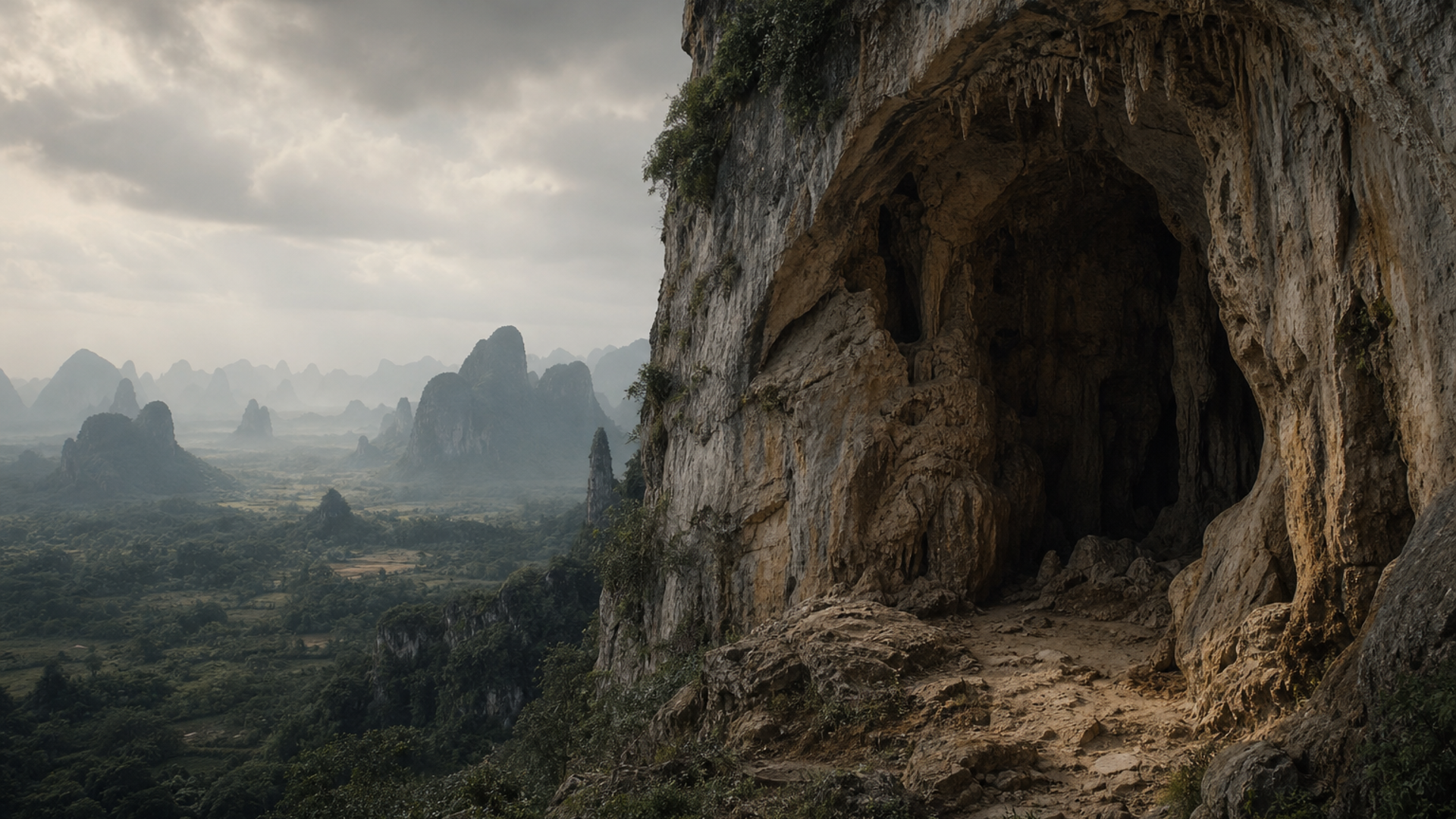
Set within the karsted hills of northern Guangxi, Balong Cave (Beijing Town, Dahua Yao Autonomous County, Hechi City) preserves human remains dating to roughly 250–550 CE — a turbulent era framed by the Jin and the later Northern and Southern Dynasties. Archaeological data indicates these individuals lived at the southern edge of major political transformations on the North China Plain, where population movements, warfare, and elite relocations reshaped cultural landscapes. The Balong material sits within a larger pattern of southern refugia: communities that persisted in subtropical lowlands while contacts with northern polities intensified.

Limited evidence suggests these people were part of local southern networks rather than direct transplants of northern elite populations. The geology of Guangxi and long-term local subsistence strategies would have anchored groups in place, producing genetic continuity that may predate the Jin–Northern and Southern period. At the same time, textual and archaeological records of the broader era document movement of peoples, merchants, and soldiers, so a mix of local continuity and intermittent incoming ancestry is plausible. Given only four samples, such scenarios remain provisional; more genome-wide data and broader regional sampling are required to trace origins with confidence.

  • Balong Cave occupants dated to 250–550 CE, Jin and Northern & Southern Dynasties era
  • Site lies in karst hills of Dahua Yao Autonomous County, Guangxi
  • Evidence favors local southern settlement with possible external contacts; conclusions are tentative
Chapter IV

Daily Life & Society

Archaeological traces from Guangxi’s lowlands and caves suggest a lifeway adapted to subtropical environments: wet-rice cultivation in river valleys, supplemented by fishing, foraging, and hill-side horticulture. Although detailed artifact inventories from Balong Cave are limited, the cave context itself implies varied mortuary practices — cave interments or secondary deposition are common in south China’s limestone landscapes and reflect both practical and symbolic choices.

Socially, the era saw heightened regional interaction: trade routes carried ceramics, metals, and ideas between inland valleys and coastal ports. Local communities would have negotiated these flows, adopting new material forms while maintaining vernacular craft traditions. Ethnic identities in the historical record are fluid; present-day Yao and other southern groups occupy the region, but direct cultural continuity to early medieval populations at Balong Cave cannot be assumed without stronger archaeological and genetic linkage.

Preservation in cave contexts can bias what archaeologists recover — bone survivorship, selective burials, and sparse grave goods mean our window into daily life is partial. The existing assemblage offers evocative glimpses rather than a complete portrait.

  • Likely subsistence: wet-rice agriculture, fishing, foraging in subtropical Guangxi
  • Cave interments reflect regionally varied mortuary traditions; archaeological record remains partial
Chapter V

Genetic Profile

Ancient DNA recovered from four individuals at Balong Cave shows a maternal composition dominated by haplogroup M (3 individuals) with one individual carrying C7a. Both clades are deep-rooted branches common across East and Southeast Asia; M is widespread in southern China and across maritime Asia, while C7a is a more localized East Asian maternal lineage. These mtDNA results point to strong southern East Eurasian maternal ancestry among these individuals.

Critically, no Y‑chromosome haplogroups are reported for this sample set, so paternal lineage structure remains unknown. The very small sample count (n = 4) makes population-level inferences preliminary: observed frequencies could reflect chance, kin groups, or sampling bias. Genome-wide data — when available — would clarify whether these maternal lineages existed alongside substantial northern-derived ancestry associated with Han migrations, or whether they represent primarily autochthonous southern ancestry persisting through the Jin and Northern–Southern transitions.

Archaeogenetics thus provides a tantalizing glimpse: mitochondrial continuity with broader southern East Asia, but ambiguity about admixture, sex-biased migration, and ties to later populations. Expanded sampling across Guangxi and contiguous regions is needed to transform these early signals into robust demographic narratives.

  • mtDNA: M (3 samples) and C7a (1 sample) — signal of southern East Asian maternal ancestry
  • No reported Y‑DNA; small sample size (n=4) makes conclusions tentative
Chapter VI

Legacy & Modern Connections

The Balong individuals occupy a shadowed corner of China’s long demographic history — a time when local southern populations continued beneath the surface of sweeping political change. Their maternal lineages echo patterns seen across modern southern Chinese and Southeast Asian groups, suggesting strands of continuity in the female line. Yet without broader, genome-wide comparisons and more than four samples, connecting these ancient people directly to modern ethnic groups in Guangxi would be speculative.

For museum and public audiences, Balong Cave offers a cinematic story: limestone caves as repositories of memory, quiet witnesses to centuries of continuity and change. Scientifically, the site underscores the need for careful, expanded sampling and interdisciplinary work that marries stratigraphic archaeology, radiocarbon dating, and full genomic sequencing to chart how ancient southern communities contributed to the palettes of modern East Asian ancestry.

  • Mitochondrial lineages suggest maternal continuity with southern East Asia, but links to modern groups are uncertain
  • Further genome-wide sampling in Guangxi is essential to resolve demographic legacies
AI 电源

AI 助手

就 Balong Cave: Jin–Northern & Southern Dynasties 文化提问

AI 助手 由DNAGENICS公司制作

解锁此特性
Ask questions about the Balong Cave: Jin–Northern & Southern Dynasties culture. Our AI assistant can explain genetic findings, historical context, archaeological evidence, and modern connections.
AI 样本分析

Balong Cave: Jin–Northern & Southern Dynasties 文化是人类历史中值得了解的一章……

遗传分析揭示了与早期种群的联系,同时显示了独特的适应和文化创新的证据。 古代DNA样本提供了对迁徙模式、社会结构以及古代种群之间的生物关系的深刻见解。

这是人工智能分析的预览。 解锁全AI 助手, 以探索关于:

  • 遗传组成和祖先
  • 移徙模式和起源
  • 日常生活和文化习俗
  • 现代遗传遗产

探索更古老的文化

揭开古代世界文明的故事

使用优惠码 可减免 35% • 11月12日 到期