Barç Post‑Medieval Remains

下载的 PDF 是图像副本。如需可选中文本及更好的辅助技术支持,请使用打印功能。

Barç Post‑Medieval Remains

揭开一个失落的文明

正在加载考古记录……

正在收集古代记录

跳转到主内容
Barç Post‑Medieval Remains
文明焦点

Barç Post‑Medieval Remains

Two skeletal genomes from Barç (Korça Basin) linking graves and maternal lineages U and J

1452 CE - 1635 CE
Barç, Korça Basin, Southeast Albania
2 Ancient Samples
滚动开始
Chapter I

剧情

了解 Barç Post‑Medieval Remains 文化

Archaeological and genetic snapshots from Barç, southeast Albania (1452–1635 CE). Two post‑medieval individuals yield mtDNA U and J; Y‑chromosome data are insufficient. Limited samples mean interpretations about population continuity and mobility remain preliminary.

Time Period

1452–1635 CE

Region

Barç, Korça Basin, Southeast Albania

Common Y-DNA

Undetermined (insufficient data)

Common mtDNA

U (1), J (1)

Chapter II

时间线

这种文化历史上的关键时刻

1452 CE

Earliest dated individuals

Human remains from Barç begin within the site's dated range, marking early Post‑Medieval occupations in the Korça Basin.

1635 CE

Latest dated individuals

Latest direct dates for the sampled individuals fall here, within a century of social and political change in the region.

Chapter III

Origins & Emergence

The Barç assemblage sits at the crossroads of history and landscape: a small cluster of Post‑Medieval burials and settlement debris recorded in the Korça Basin of southeast Albania. Archaeological survey and targeted excavation in and around the village of Barç have revealed funerary contexts consistent with 15th–17th century burial practices in the region. Material culture from nearby sites — pottery fragments, metalwork typologies and stratigraphic relationships — anchors these remains within a turbulent era of Ottoman expansion, local principalities, and shifting trade networks.

Archaeological data indicate continuity of rural settlement in the Korça Basin across the late medieval into the Post‑Medieval period, though the local record is fragmentary. Limited structural remains and isolated graves suggest small, dispersed communities rather than dense urban centers at this locality. Environmental evidence from the basin points to mixed agriculture and pastoralism as the economic backdrop for inhabitants of Barç.

Because only two human samples are available, any reconstruction of origins for the Barç individuals must be cautious. The archaeological context provides a canvas — graves and associated finds hint at lifeways and chronology — but does not, by itself, resolve the complex tapestry of migration, local continuity, and cultural exchange that characterized the Balkans in this period. Genetic data, though sparse here, add a complementary axis for exploring those possibilities.

  • Barç site located in Korça Basin, southeast Albania
  • Archaeological indicators align with 15th–17th century Post‑Medieval contexts
  • Evidence suggests small, rural community with agricultural economy
Chapter IV

Daily Life & Society

Life in the Korça Basin during the Post‑Medieval centuries was lived against shifting political horizons. Archaeological traces from Barç and its environs—house foundations, field systems inferred from soil disturbance, and scattered artefacts—evoke a rhythm of small‑scale farming, shepherding and local craft production. The material record preserves a quiet domesticity: household ceramics, tool blades and occasional imported wares that suggest connection to wider trade circuits without urban intensity.

Social organization likely centered on extended households and community obligations. Burial practices observed in the immediate Barç contexts conform to modest interments, reflecting local traditions that persisted even as regimes and administrative structures changed. Ethnographic analogy and regional comparative archaeology indicate that kin networks, seasonal pastoral mobility, and communal land use were important features of rural life.

Archaeological data remain limited: there is no extensive cemetery nor an articulated settlement plan published for Barç. Consequently, reconstructions of social hierarchy or detailed craft specialization are provisional. When combined with genetic results, however, these material traces help to suggest how biological ancestry and cultural practice intersected in everyday life — who stayed, who moved, and how communities adapted to broader historical forces.

  • Material culture suggests small‑scale farming and pastoralism
  • Burial contexts are modest; social organization likely kin‑based
Chapter V

Genetic Profile

Ancient DNA analysis of the two Barç individuals yields a preliminary maternal signal: one individual carries mitochondrial haplogroup U and the other haplogroup J. Both haplogroups are widespread across Europe and the Near East; haplogroup U has deep Paleolithic and Neolithic roots in Europe, while J is often associated with post‑Neolithic expansions from the Near East and is common across the eastern Mediterranean and Balkans.

No reliable Y‑chromosome assignments are reported for these samples, leaving paternal lineages undetermined. With only two genomes, statistical power is extremely limited. The presence of U and J together is compatible with local continuity among Balkan maternal lineages, but could also reflect centuries of mobility that characterized the Ottoman era’s trade and administrative networks. Genetic affinities at autosomal levels cannot be robustly inferred from this pair alone; population‑level conclusions are therefore tentative.

Archaeogenetic interpretation should emphasize caution: small sample size (<10) makes patterns sensitive to chance and local idiosyncrasy. Nonetheless, integrating mtDNA with archaeological context allows modest hypotheses — for example, that Barç individuals carried maternal ancestries typical of the broader southeastern European and eastern Mediterranean gene pool during the 15th–17th centuries. Future sampling from Barç and surrounding sites, especially with Y‑chromosome and genome‑wide data, will be needed to test these ideas and clarify continuity versus incoming admixture in the post‑medieval Korça Basin.

  • mtDNA: U (1) and J (1) — small but informative maternal signal
  • Y‑DNA: undetermined; autosomal inferences are preliminary due to n=2
Chapter VI

Legacy & Modern Connections

The tiny genetic window from Barç invites reflection on continuity and change in southeastern Albania. Maternal lineages like U and J remain present across modern Balkan populations, so the Barç mtDNA does not contradict regional continuity. However, the Ottoman period witnessed increased human mobility, and the genetic footprint of that mobility can blur simple narratives of ancestry.

For contemporary descendants and regional histories, the Barç samples are a whisper rather than a chorus: they illustrate how archaeology and ancient DNA together can illuminate everyday lives while also underscoring the need for broader sampling. With more data, researchers could map the ebb and flow of lineages across centuries, tying burial grounds and household remains to longer genetic trajectories that shaped modern Albanian diversity.

  • mtDNA lineages observed are still found in the modern Balkans
  • Interpretations require more samples to distinguish continuity from mobility
Chapter VII

样本目录

2 份与 Barç Post‑Medieval Remains 文化相关的古 DNA 样本,为研究该时期的人群提供遗传线索。

2 / 2 samples
纵向 样本 国家 大纪元 日期 文化 性别 Y-DNA mtDNA
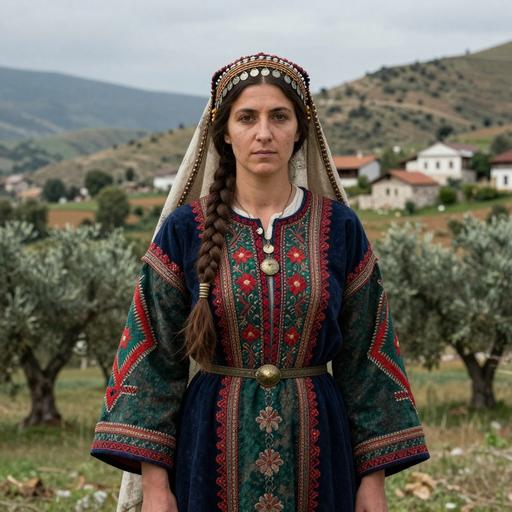
重建的肖像画 Barc Post Medieval individual, Albania
Barc Post Medieval individual, Albania
Albania Albania_Barc_PostMedieval 1481-1635 calCE (340±15 BP, PSUAMS-8301) Albanian F - U3b1
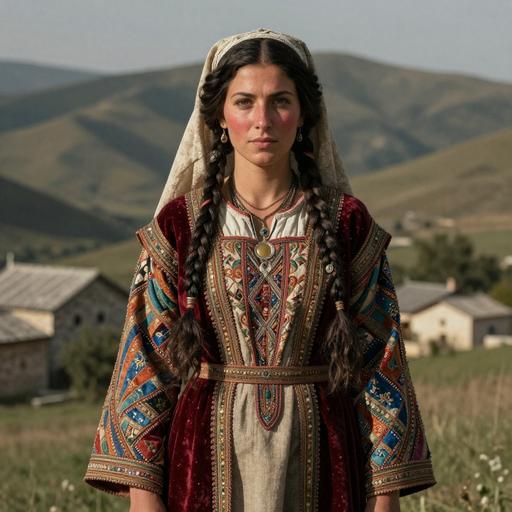
重建的肖像画 Barc Post Medieval individual, Albania
Barc Post Medieval individual, Albania
Albania Albania_Barc_PostMedieval 1452-1619 calCE (385±15 BP, PSUAMS-8300) Albanian F - J1c1b
AI 电源

AI 助手

就 Barç Post‑Medieval Remains 文化提问

AI 助手 由DNAGENICS公司制作

解锁此特性
Ask questions about the Barç Post‑Medieval Remains culture. Our AI assistant can explain genetic findings, historical context, archaeological evidence, and modern connections.
AI 样本分析

Barç Post‑Medieval Remains 文化是人类历史中值得了解的一章……

遗传分析揭示了与早期种群的联系,同时显示了独特的适应和文化创新的证据。 古代DNA样本提供了对迁徙模式、社会结构以及古代种群之间的生物关系的深刻见解。

这是人工智能分析的预览。 解锁全AI 助手, 以探索关于:

  • 遗传组成和祖先
  • 移徙模式和起源
  • 日常生活和文化习俗
  • 现代遗传遗产

探索更古老的文化

揭开古代世界文明的故事

使用优惠码 可减免 35% • 11月12日 到期