Beagle Channel Yamana, ~1500 BP

下载的 PDF 是图像副本。如需可选中文本及更好的辅助技术支持,请使用打印功能。

Beagle Channel Yamana, ~1500 BP

揭开一个失落的文明

正在加载考古记录……

正在收集古代记录

跳转到主内容
Beagle Channel Yamana, ~1500 BP
文明焦点

Beagle Channel Yamana, ~1500 BP

A lone ancient genome from Río Pipo illuminates maritime lifeways at Tierra del Fuego

260 CE - 6001500 CE
Beagle Channel, Tierra del Fuego, Argentina
1 Ancient Samples
滚动开始
Chapter I

剧情

了解 Beagle Channel Yamana, ~1500 BP 文化

Archaeological data from the Beagle Channel (Río Pipo, Tierra del Fuego) and one ancient genome (260–600 CE) offer a tentative glimpse into the maritime Yamana world. Limited genetic evidence (Y Q, mtDNA C1b) aligns with broader southern Native American lineages but remains preliminary.

Time Period

260–600 CE (~1500 BP)

Region

Beagle Channel, Tierra del Fuego, Argentina

Common Y-DNA

Q (1 sample)

Common mtDNA

C1b (1 sample)

Chapter II

时间线

这种文化历史上的关键时刻

500 CE

Río Pipo individual (approx.)

A genome-dated individual from Río Pipo provides a ~260–600 CE snapshot of Beagle Channel occupation and genetics.

Chapter III

Origins & Emergence

The human presence along the Beagle Channel is a story of navigation and survival at the southern edge of the Americas. Archaeological remains at coastal localities such as Río Pipo in Tierra del Fuego attest to recurrent occupation by highly mobile, marine-adapted peoples. Radiocarbon-calibrated contexts that bracket the genetic sample place this individual between roughly 260 and 600 CE — about 1,500 years before present — fitting into what archaeologists refer to as the Beagle Channel Yamana cultural horizon. Shell middens, bone and lithic toolkits, and ephemeral hearths across the archipelago indicate repeated seasonal fishing, seabird and pinniped exploitation, and a toolkit optimized for cutting, scraping and hunting from small craft.

Climatic variability and the rich kelp and intertidal ecosystems likely shaped patterns of settlement, encouraging dispersed band-level groups with intimate ecological knowledge. Archaeological data indicates long-term coastal continuity in the region, but the precise emergence of Late Holocene adaptations in the Beagle Channel remains incompletely resolved. Importantly, the genetic evidence currently rests on a single ancient genome; limited sample size constrains robust reconstruction of population origins, demographic shifts, or migratory episodes. Thus, narratives of emergence blend evocative coastal life with cautious, provisional inference until more samples and well-dated contexts are available.

  • Occupation centered on Beagle Channel coasts, including Río Pipo
  • Dates for the sample: 260–600 CE (~1500 BP)
  • Conclusions provisional due to a single genome sample
Chapter IV

Daily Life & Society

Daily existence in the Beagle Channel would have been dominated by the sea: kelp-strewn shores, tide pools and abundant seabird colonies provided predictable resources. Archaeological assemblages in the broader Yamana tradition include dense shell middens, fish bone concentrations, and specialized bone and stone implements suitable for processing marine mammals and birds. The material record suggests small, mobile family groups using light watercraft to access inshore and island resources; material culture was portable and adaptive rather than monumentally built.

Clothing and shelter in such a cold, windy environment likely emphasized animal skins and layered protection; ethnographic analogies and artifact wear patterns imply finely worked hide clothing and tools for sewing and repair. Social organization probably emphasized reciprocal sharing and flexible band membership, strategies that fostered resilience in a resource-rich but spatially variable seascape. Ritual and symbolic life leave lighter archaeological traces here, but curated objects and curated tool styles indicate long-term cultural traditions transmitted across generations and islands. All reconstructions of social life in this period are informed by archaeological context from sites like Río Pipo and must be framed as interpretive, often fragmentary glimpses into lived experience.
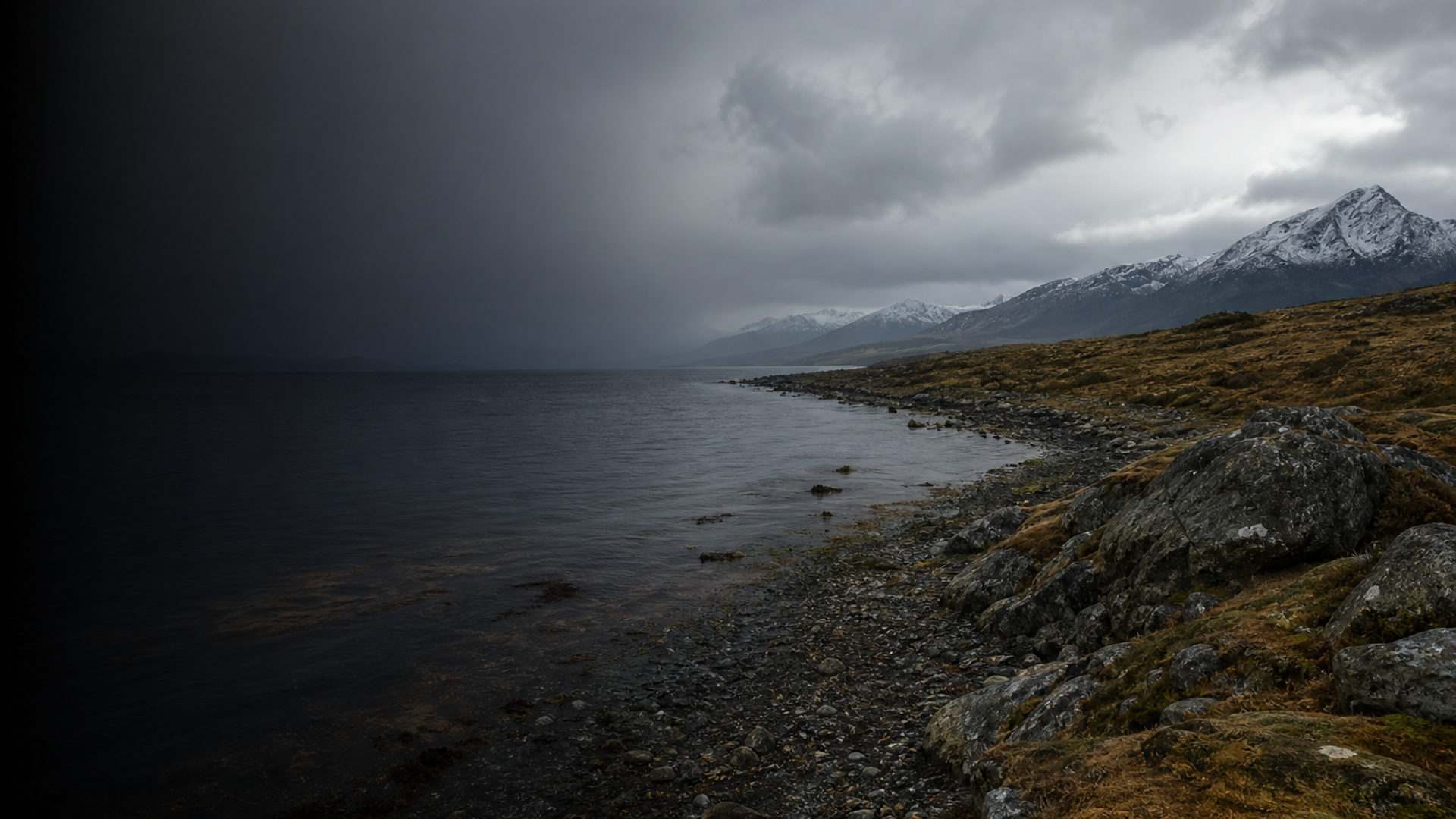
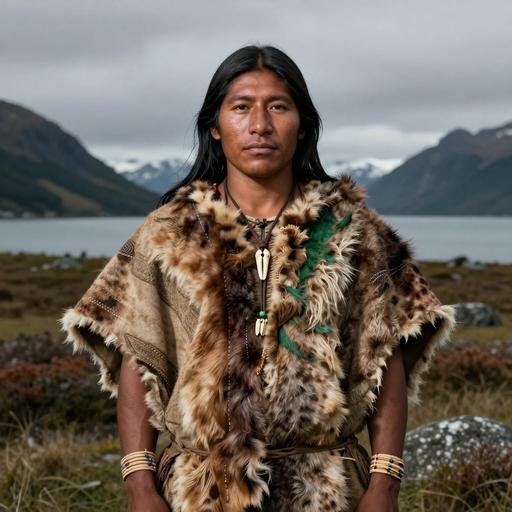
  • Marine-focused diet: fish, seabirds, seals, and shellfish
  • Mobile bands using lightweight craft and portable toolkits
Chapter V

Genetic Profile

The ancient DNA evidence from Río Pipo is both tantalizing and circumscribed: there is a single individual dated to 260–600 CE carrying Y-chromosome haplogroup Q and mitochondrial haplogroup C1b. Haplogroup Q is a predominant paternal lineage across many Native American populations and is consistent with a deep ancestry that traces back to the initial peopling of the Americas. mtDNA C1b likewise appears across South America and is part of the maternal diversity common to many ancient and modern indigenous groups in the southern cone.

Because the dataset contains only one genome, any demographic interpretation must be tentative. A single match to Q and C1b supports broader patterns of Pan-American lineages in southernmost populations but cannot resolve questions of population continuity, local admixture, or substructure. DNA preservation in maritime environments can be variable, and post-depositional processes sometimes bias which individuals yield genetic data. Nonetheless, even a lone genome can anchor hypotheses: it provides a temporal genetic snapshot that aligns with archaeological expectations of long-term coastal habitation and suggests affinities with wider southern Native American genetic variation. Expanded sampling, careful stratigraphic association, and comparative analyses with both ancient and modern genomes are essential to move from suggestion to robust inference.

  • Y-DNA haplogroup Q — consistent with Pan-American paternal lineages
  • mtDNA C1b — maternal lineage found across southern South America
Chapter VI

Legacy & Modern Connections

The cultural and genetic echoes of Beagle Channel maritime lifeways persist in the histories of indigenous peoples of Tierra del Fuego, such as the Yamana (Yagán) and neighboring groups. While genetic continuity between this single ancient individual and any specific modern community cannot be asserted confidently, the presence of broad Native American lineages (Q and C1b) is compatible with long-term regional occupation and shared ancestry across southern South America.

Beyond ancestry, the legacy lies in intimate ecological knowledge, boatbuilding traditions, and seasonal mobility strategies that characterize the region’s human past. For genetic ancestry platforms, the Río Pipo genome offers a poignant, preliminary datapoint that can be used respectfully to contextualize modern genetic links, always emphasizing uncertainty and the need for broader, community-engaged research to deepen understanding.

  • Possible affinities with modern Fuegian indigenous groups, but speculative
  • Cultural legacy in maritime technology and ecological knowledge
Chapter VII

样本目录

1 份与 Beagle Channel Yamana, ~1500 BP 文化相关的古 DNA 样本,为研究该时期的人群提供遗传线索。

1 / 1 samples
纵向 样本 国家 大纪元 日期 文化 性别 Y-DNA mtDNA
重建的肖像画 Beagle Channel Late Horizon Yamana individual, Argentina
Beagle Channel Late Horizon Yamana individual, Argentina
Argentina Argentina_BeagleChannel_Yamana_1500BP 260-600 calCE (1975±25 BP, PSUAMS-6673) Indigenous Cultures of South America M Q-L53 C1b
AI 电源

AI 助手

就 Beagle Channel Yamana, ~1500 BP 文化提问

AI 助手 由DNAGENICS公司制作

解锁此特性
Ask questions about the Beagle Channel Yamana, ~1500 BP culture. Our AI assistant can explain genetic findings, historical context, archaeological evidence, and modern connections.
AI 样本分析

Beagle Channel Yamana, ~1500 BP 文化是人类历史中值得了解的一章……

遗传分析揭示了与早期种群的联系,同时显示了独特的适应和文化创新的证据。 古代DNA样本提供了对迁徙模式、社会结构以及古代种群之间的生物关系的深刻见解。

这是人工智能分析的预览。 解锁全AI 助手, 以探索关于:

  • 遗传组成和祖先
  • 移徙模式和起源
  • 日常生活和文化习俗
  • 现代遗传遗产

探索更古老的文化

揭开古代世界文明的故事

使用优惠码 可减免 35% • 11月12日 到期





