Belize 4,000 Years Ago

下载的 PDF 是图像副本。如需可选中文本及更好的辅助技术支持,请使用打印功能。

Belize 4,000 Years Ago

揭开一个失落的文明

正在加载考古记录……

正在收集古代记录

跳转到主内容
Belize 4,000 Years Ago
文明焦点

Belize 4,000 Years Ago

Two ancient voices from Mayahak Cab Pek hint at deep maternal ties across early Mesoamerica

2204 CE - 1778 BCE
Belize (Mayahak Cab Pek)
滚动开始
Chapter I

剧情

了解 Belize 4,000 Years Ago 文化

Archaeological and aDNA data from two individuals (c. 2204–1778 BCE) at Mayahak Cab Pek, Belize reveal mtDNA lineages C and A. Limited samples point to broader Native American maternal diversity in the Middle Holocene; interpretations remain preliminary.

Time Period

c. 2204–1778 BCE

Region

Belize (Mayahak Cab Pek)

Common Y-DNA

Not reported / no data

Common mtDNA

C (1), A (1)

Chapter II

时间线

这种文化历史上的关键时刻

2204 BCE

Dated human presence at Mayahak Cab Pek

Radiocarbon-calibrated dates place at least two individuals at Mayahak Cab Pek between 2204 and 1778 BCE, anchoring human activity in the region to the Middle Holocene.

Chapter III

Origins & Emergence

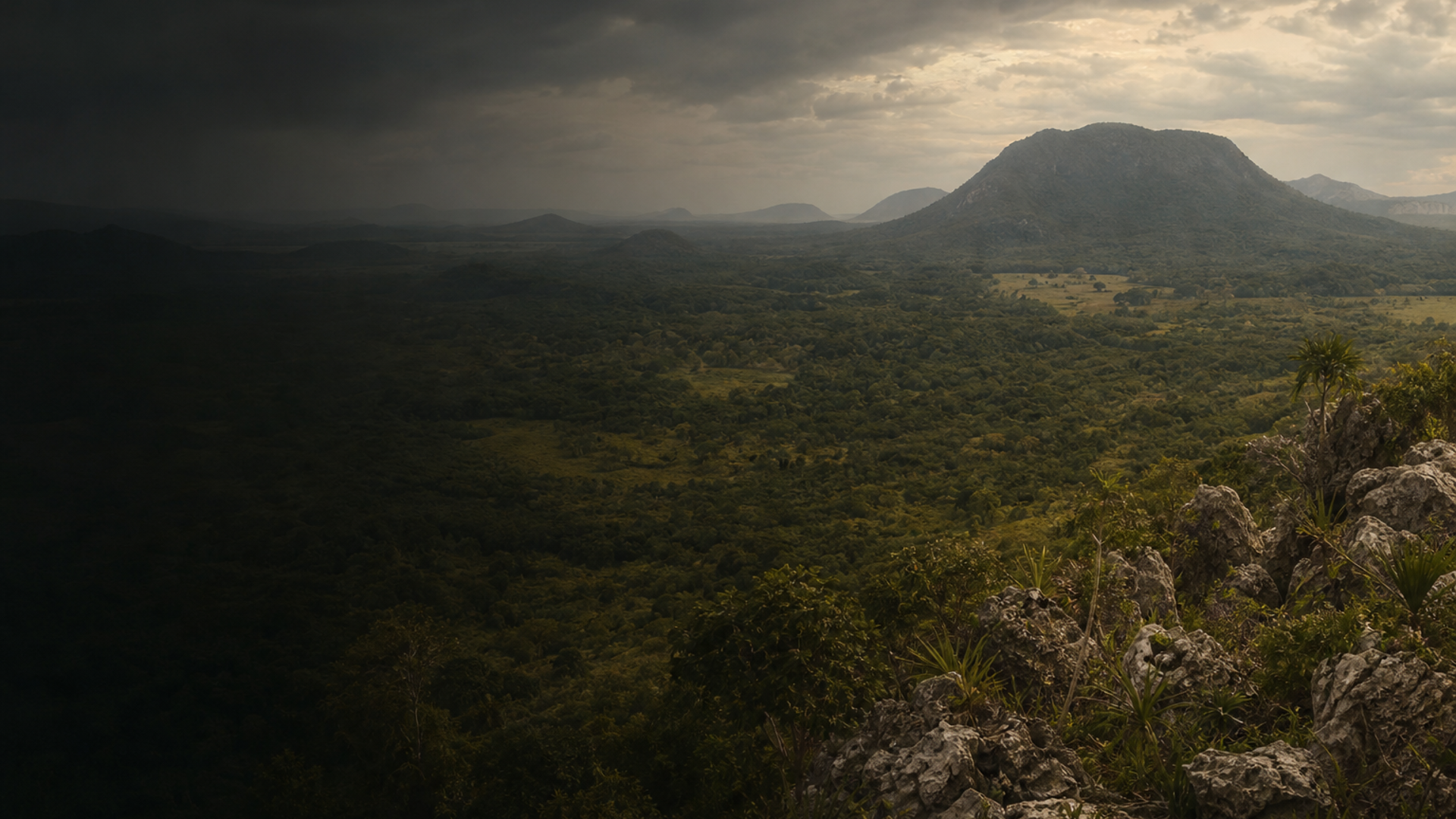
Beneath the canopy of Belize's lowland forests and along ancient shorelines, communities active around 4,000 years before present left traces that speak to a world in motion. Archaeological data from the site of Mayahak Cab Pek (the source of the two sampled individuals) places human activity here between 2204 and 1778 BCE, a period often described as part of the Middle Holocene transition in southern Mesoamerica.

Limited evidence suggests a landscape of mixed economies — coastal and riverine resources combined with early horticultural experiments in some regions — producing mobile but locally rooted lifeways. Stone tools, shell remains, and isolated early ceramics found regionally indicate a mosaic of technologies and adaptations rather than a single, uniform culture.

Genetically, the two individuals offer rare direct windows into these populations: their maternal lineages (mtDNA haplogroups C and A) belong to haplogroups commonly observed among Indigenous peoples across the Americas. This pattern is consistent with broader post‑glacial peopling scenarios, but with only two samples from a single site, the story is fragmentary. Archaeological interpretation therefore remains cautious: these individuals are compelling glimpses rather than comprehensive portraits.

  • Samples dated to c. 2204–1778 BCE at Mayahak Cab Pek, Belize
  • Regional archaeology indicates mixed foraging and early horticulture
  • Genetic signals are consistent with broader Native American maternal lineages
Chapter IV

Daily Life & Society

Imagine a shoreline lit by torches, children playing near lagoons, and adults tending gardens or harvesting shellfish — a cinematic but scientifically grounded image of daily life in coastal Belize during the Middle Holocene. Archaeological remains recovered in the region (lithic scatters, shell concentrations, and occasional pottery in later contexts) point to subsistence strategies that blended riverine, marine, and terrestrial resources. Settlement patterns likely ranged from seasonal camps to semi‑sedentary hamlets depending on resource abundance.

Social organization at this time is difficult to reconstruct in detail. Small group sizes, flexible mobility, and kin-based social networks are plausible, supported indirectly by settlement and resource-use patterns across nearby sites. Craft production was probably on a household scale; exchange of exotic materials (shell, obsidian) appears intermittently in the archaeological record of Belize, implying routes of interaction that could have connected communities over substantial distances.

Preservation biases in tropical environments mean that organic materials and ephemeral structures rarely survive; our picture of daily life is therefore partial. Contextualizing these two genetic samples within broader archaeological landscapes helps bridge bodily biography and community practice, but many questions about social roles, ritual, and long-term settlement remain open.

  • Subsistence combined coastal, riverine, and terrestrial resources
  • Likely small, kin-based communities with regional exchange networks
Chapter V

Genetic Profile

The genetic data from Mayahak Cab Pek are concise but meaningful. Two individuals produced recoverable mitochondrial genomes: one belongs to haplogroup C and the other to haplogroup A. Both haplogroups are among the founding maternal lineages widely distributed across the Americas and commonly identified in ancient and modern Indigenous populations.

These maternal lineages are consistent with a deep-time connection to the first waves of Native American settlement, reflecting population histories that began many millennia earlier than these samples. However, with only two individuals (sample count = 2), any inferences about population structure, continuity, or migration within Belize must be treated as preliminary. The absence of reported Y‑DNA data for these individuals further limits insights into paternal ancestry, sex-biased migration, or kinship patterns.

Ancient DNA from tropical settings faces challenges: preservation is variable, contamination risks persist, and small sample sizes can bias interpretations. Nevertheless, these mtDNA results complement archaeological evidence by anchoring local human presence to pan‑American maternal diversity. Future work with larger sample sets, genomic nuclear data, and comparative regional sampling will be required to move from suggestive patterns to robust models of population history in lowland Mesoamerica.

  • mtDNA haplogroups C and A observed — lineages common across the Americas
  • Small sample size (n=2) and no Y‑DNA mean conclusions are provisional
Chapter VI

Legacy & Modern Connections

These two ancient genomes are threads in a much larger tapestry that connects past peoples of Belize to Indigenous communities across the Americas. The presence of maternal haplogroups A and C at Mayahak Cab Pek aligns with genetic patterns seen in later populations of Mesoamerica and beyond, suggesting long-standing maternal line continuity in the region.
Caution is essential: two samples cannot map the full complexity of population change, cultural transformation, or the genesis of later groups such as the Maya. Still, such findings are powerful because they provide direct temporal anchors — biological voices speaking from a landscape often silent in the archaeological record. They emphasize the value of integrating aDNA with careful excavation, radiocarbon dating, and regional comparative studies. Expanding the sample size and obtaining genome-wide data will be critical to trace ancestry, admixture, and demographic events more precisely and to responsibly explore connections to present-day Indigenous peoples.

  • Maternal lineages echo broader Native American diversity across time
  • Further sampling and genome-wide data needed to clarify long-term continuity
AI 电源

AI 助手

就 Belize 4,000 Years Ago 文化提问

AI 助手 由DNAGENICS公司制作

解锁此特性
Ask questions about the Belize 4,000 Years Ago culture. Our AI assistant can explain genetic findings, historical context, archaeological evidence, and modern connections.
AI 样本分析

Belize 4,000 Years Ago 文化是人类历史中值得了解的一章……

遗传分析揭示了与早期种群的联系,同时显示了独特的适应和文化创新的证据。 古代DNA样本提供了对迁徙模式、社会结构以及古代种群之间的生物关系的深刻见解。

这是人工智能分析的预览。 解锁全AI 助手, 以探索关于:

  • 遗传组成和祖先
  • 移徙模式和起源
  • 日常生活和文化习俗
  • 现代遗传遗产

探索更古老的文化

揭开古代世界文明的故事

使用优惠码 可减免 35% • 11月12日 到期




