Bell Beaker France: Echoes in Stone and Bone

下载的 PDF 是图像副本。如需可选中文本及更好的辅助技术支持,请使用打印功能。

Bell Beaker France: Echoes in Stone and Bone

揭开一个失落的文明

正在加载考古记录……

正在收集古代记录

跳转到主内容
Bell Beaker France: Echoes in Stone and Bone
文明焦点

Bell Beaker France: Echoes in Stone and Bone

A concise portrait of Bell Beaker communities in France, where archaeology meets ancient DNA.

2835 CE - 1946 BCE
France (Haute-Savoie, Moselle, Haut-Rhin, Forcalquier)
滚动开始
Chapter I

剧情

了解 Bell Beaker France: Echoes in Stone and Bone 文化

Archaeological and genetic evidence from 10 French Bell Beaker individuals (2835–1946 BCE) links burial sites across Haute-Savoie, Moselle, Haut-Rhin and Forcalquier to wider Bell Beaker dynamics. Limited sample size makes conclusions preliminary but highlights strong Y‑DNA R lineages and mixed maternal lineages.

Time Period

2835–1946 BCE

Region

France (Haute-Savoie, Moselle, Haut-Rhin, Forcalquier)

Common Y-DNA

R (majority of samples)

Common mtDNA

H, X, U, T (diverse maternal lines)

Chapter II

时间线

这种文化历史上的关键时刻

2500 BCE

Bell Beaker horizons active in France

Around 2500 BCE Bell Beaker pottery and burial practices are widespread in regions represented by these samples, reflecting increased mobility and exchange across western Europe.

Chapter III

Origins & Emergence

From the wind-scoured terraces of Haute-Savoie to the river corridors of Moselle, the Bell Beaker phenomenon arrived in France as a mosaic of local adoption and long-distance connection. Archaeological data indicates the Bell Beaker style—recognizable by its bell-shaped pottery, copper daggers and distinctive burial orientations—appeared across western Europe after ca. 2800 BCE. The French sequence represented here (2835–1946 BCE) spans the later Chalcolithic into early Bronze Age contexts, with sites such as Sur les Barmes (Marlens, Haute-Savoie), PAC de la Sente (Mondelange, Moselle), and Hégenheim Necropole (Haut‑Rhin) giving secure contexts for burials and grave goods.

Limited evidence suggests these communities were not a single migrating tribe but part of a cultural network: local funerary practices and regional material styles persisted even as Bell Beaker pottery and metal objects spread. In the broader archaeological record, the Bell Beaker horizon often signals increased mobility, exchange of raw materials, and new social expressions of status. Genetic data from this French sample set adds a layer to that story, hinting at male-biased lineage patterns and varied maternal ancestries that reflect both incoming networks and local continuity. Because this dataset comprises ten individuals, interpretations remain preliminary; nonetheless, the convergence of objects, burial rites, and DNA offers a cinematic glimpse of cultural entanglement on the eve of the Bronze Age.

  • Bell Beaker style appears in France ca. late 3rd millennium BCE
  • Key sites: Sur les Barmes (Marlens), PAC de la Sente (Mondelange), Hégenheim Necropole
  • Evidence points to networks rather than a single migrating group
Chapter IV

Daily Life & Society

Material culture from Bell Beaker contexts in France paints a vivid, if partial, picture of households and communities. Pottery shapes and funerary assemblages imply a mix of pastoralism, small-scale agriculture, and craft specialization: grooved bell beakers and copper objects appear alongside flint tools and domestic pottery fragments, suggesting trade in prestige goods while everyday life remained rooted in local production. Settlement evidence is uneven; many of the best-preserved contexts are funerary, such as the necropolises at Rouffach and Hégenheim, which illuminate social differentiation through grave goods and burial placement.

Burial practices—single inhumations often accompanied by a beaker and a few personal items—hint at emerging individual identities and possibly lineage-based status. Archaeological layers in sites like Les Villas d'Aurele (Sierentz) show reuse of locations over generations, indicating long-term ties to landscape. Plant and animal remains from nearby contemporaneous sites suggest mixed farming economies, while copper and exotic flints point to long-distance contacts. Social life likely combined conservative local traditions with new social signals broadcast through Bell Beaker objects, reflecting both continuity and innovation in everyday practice.
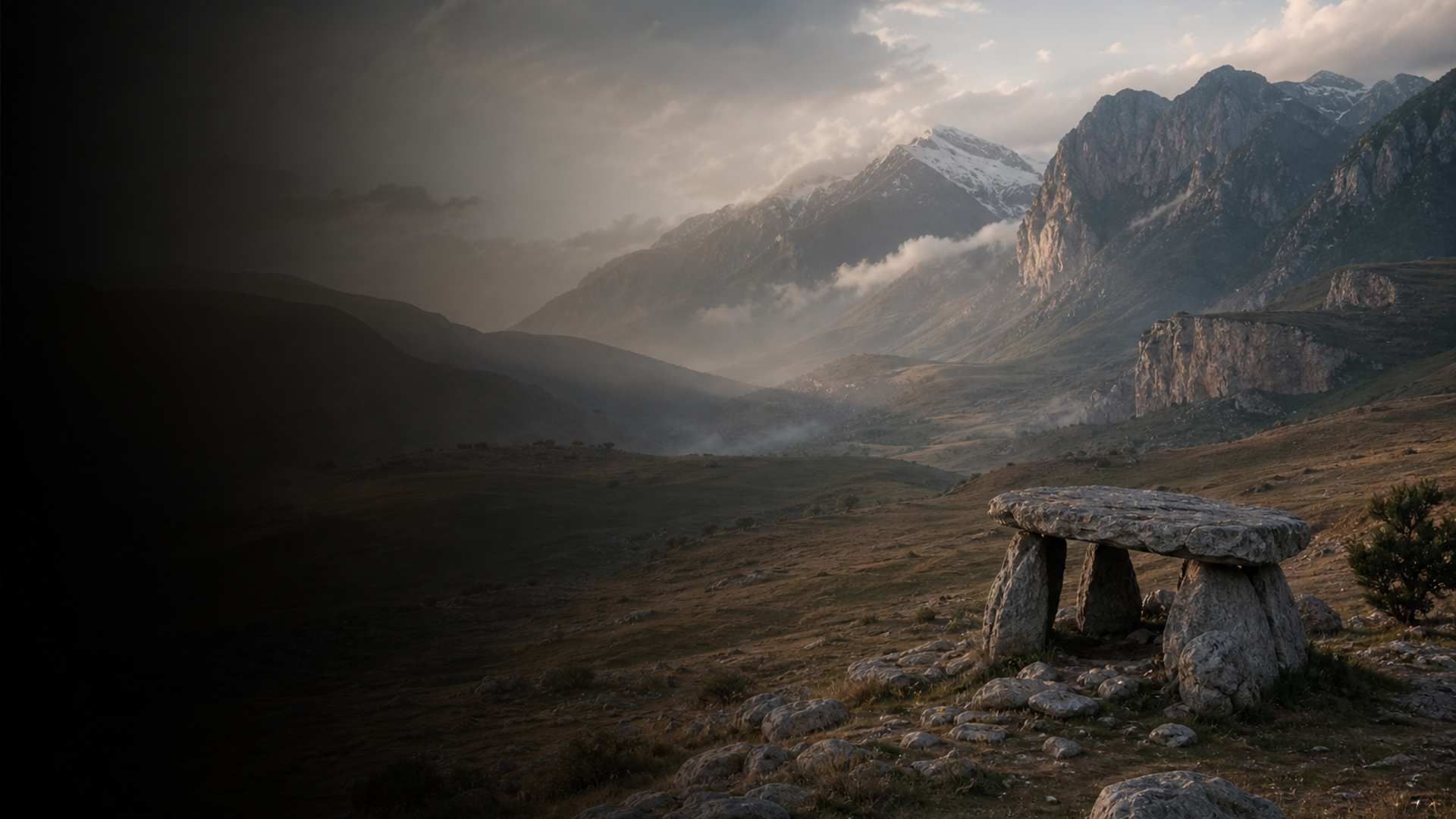

  • Funerary focus: single inhumations with beakers and personal items
  • Economy: mixed farming, herding, local crafts, and long-distance exchange
Chapter V

Genetic Profile

The genetic signal from these ten French Bell Beaker individuals shows a striking concentration of Y‑chromosome R lineages (7 of 10), consistent with broader Bell Beaker patterns in western Europe that often feature R‑type paternal ancestry associated in many studies with post‑Neolithic expansions. The maternal picture is more diverse: mitochondrial haplogroups include H (three individuals, one specified as H1e), X (two), U (one), and T (one), indicating multiple maternal ancestries coexisting within these communities.

Archaeogenetic research generally links the Bell Beaker phenomenon to an increase in steppe-derived ancestry across parts of Europe. In this French sample set, the predominance of R Y‑lineages suggests male‑mediated gene flow may have played a role in the transmission of Bell Beaker cultural elements locally. However, the diversity of mtDNA haplogroups implies local women or diverse maternal origins were integrated into these communities. Because the dataset is modest (n=10), any demographic inference must be cautious: sample size limits the ability to generalize about population-wide sex‑biased migration or the proportion of steppe ancestry. Still, these results resonate with a larger pattern—male-skewed lineage turnover alongside continuity in maternal lineages—visible in many Bell Beaker contexts across western Europe.

  • Y-DNA dominated by R lineages (7/10), suggesting male-biased transmission
  • Diverse mtDNA (H, X, U, T) indicates mixed maternal ancestries and local continuity
Chapter VI

Legacy & Modern Connections

The archaeological and genetic traces of Bell Beaker people in France are threads woven into the longer tapestry of European ancestry. Objects and DNA alike show how connections—trade routes, marriages, and mobility—recast regional populations in the late 3rd and early 2nd millennia BCE. Many modern Europeans carry lineages that trace aspects of this deep past, and while Y‑DNA R haplogroups are common today in western France, direct lines of descent are complex and mediated by millennia of subsequent movement.

Archaeogenetics allows us to imagine the Bell Beaker past with greater fidelity, but it also underscores complexity: local traditions persisted even amid new influences, and small burial samples capture only a fraction of living communities. For visitors tracing ancestry, these sites—Sur les Barmes, Mondelange, Sierentz, Hégenheim, Rouffach and La Fare—offer concrete anchors where pottery, copper, and bone meet the molecules that preserve human stories. The legacy is both material and genetic: a portrait of cultural innovation entwined with continuity that helped shape later Bronze Age societies in France and beyond.

  • Bell Beaker lineages contributed to later Western European genetic landscapes
  • Material culture and DNA together reveal mobility, exchange, and local continuity
AI 电源

AI 助手

就 Bell Beaker France: Echoes in Stone and Bone 文化提问

AI 助手 由DNAGENICS公司制作

解锁此特性
Ask questions about the Bell Beaker France: Echoes in Stone and Bone culture. Our AI assistant can explain genetic findings, historical context, archaeological evidence, and modern connections.
AI 样本分析

Bell Beaker France: Echoes in Stone and Bone 文化是人类历史中值得了解的一章……

遗传分析揭示了与早期种群的联系,同时显示了独特的适应和文化创新的证据。 古代DNA样本提供了对迁徙模式、社会结构以及古代种群之间的生物关系的深刻见解。

这是人工智能分析的预览。 解锁全AI 助手, 以探索关于:

  • 遗传组成和祖先
  • 移徙模式和起源
  • 日常生活和文化习俗
  • 现代遗传遗产

探索更古老的文化

揭开古代世界文明的故事

使用优惠码 可减免 35% • 11月12日 到期




