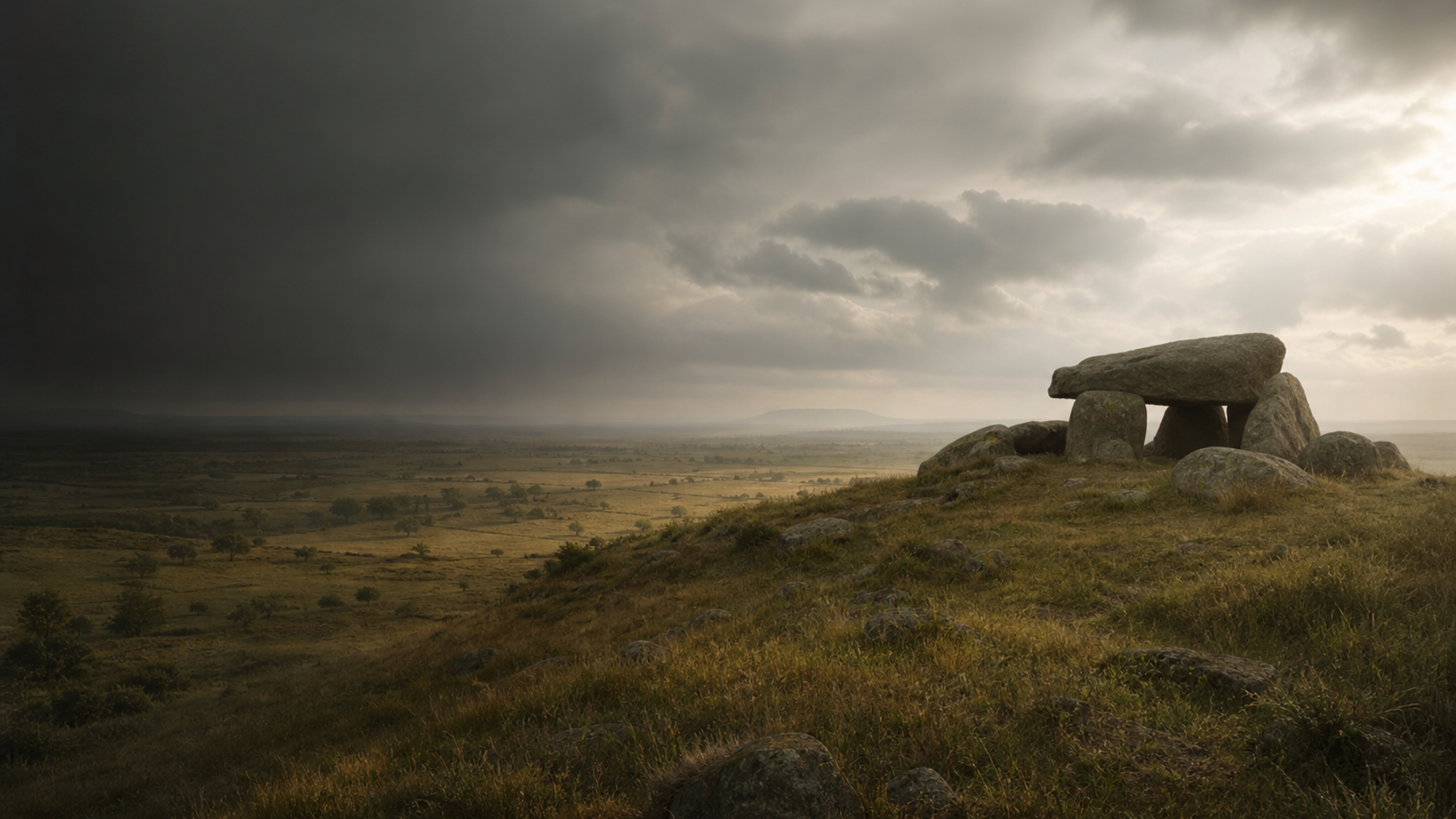
Bell Beaker Germany: Threads of the Steppe

下载的 PDF 是图像副本。如需可选中文本及更好的辅助技术支持,请使用打印功能。

Bell Beaker Germany: Threads of the Steppe

揭开一个失落的文明

正在加载考古记录……

正在收集古代记录

跳转到主内容
Bell Beaker Germany: Threads of the Steppe
文明焦点

Bell Beaker Germany: Threads of the Steppe

Archaeology and DNA from 2800–1800 BCE across German Bell Beaker landscapes

2800 CE - 1800 BCE
Germany (multiple sites)
滚动开始
Chapter I

剧情

了解 Bell Beaker Germany: Threads of the Steppe 文化

A concise synthesis of 62 ancient genomes from German Bell Beaker sites (2800–1800 BCE). Integrates archaeological context from Benzingerode-Heimburg to Bavaria with genetic patterns showing dominant Y-chromosome R lineages and diverse maternal haplogroups.

Time Period

2800–1800 BCE

Region

Germany (multiple sites)

Common Y-DNA

R (dominant), R1, F

Common mtDNA

H, U, K, T (H1* present)

Chapter II

时间线

这种文化历史上的关键时刻

2500 BCE

Bell Beaker expansion in central Germany

Widespread adoption of Bell Beaker ceramics and burial practices in German regions; archaeological and genetic data indicate increased Steppe-related ancestry and cultural exchange.

Chapter III

Origins & Emergence

The Bell Beaker phenomenon arrives in Germany like a shard of bright pottery carried on long-distance currents of exchange. Between 2800 and 1800 BCE, communities across regions now called Saxony-Anhalt and Bavaria — at Benzingerode-Heimburg, Quedlinburg Sites VII and XII, Rothenschirmbach, and multiple Bavarian loci such as Manching-Oberstimm and Künzing-Bruck — produced the characteristic bell-shaped beakers, new burial rites, and expanded metal use. Archaeological data indicates local adoption of Bell Beaker styles often overlapped with continuing Neolithic practices rather than immediate replacement.

Genetic sampling from 62 individuals across these German sites provides a spatially resolved snapshot of this transformation. Limited evidence from individual graves can mask complex processes — migration, cultural diffusion, and local continuity — but the genomic signal across the dataset points to a significant influx of ancestry components associated with Steppe-derived populations coupled with locally inherited maternal lineages. This pattern is consistent with archaeological scenarios in which mobile groups carrying Bell Beaker-associated material culture interacted biologically and socially with resident farming communities. Many details — the timing of specific local admixture events, the social mechanisms of integration, and the degree of cultural vs. biological transmission at each site — remain under active investigation and should be treated with appropriate caution.

  • Bell Beaker in Germany dated 2800–1800 BCE
  • Key sites: Benzingerode-Heimburg, Quedlinburg, Rothenschirmbach, Bavaria
  • Archaeology and DNA show admixture of Steppe and local Neolithic ancestry
Chapter IV

Daily Life & Society

Life in Bell Beaker communities can be glimpsed through the material traces left in graves, hoards, and settlement debris. Pottery — the eponymous bell beakers — served as both everyday ware and funerary markers; copper objects and copper-ore trade hint at widening exchange networks. At several German sites in this dataset, burials are furnished variably: some with rich grave goods, others with modest assemblages, suggesting emerging social differentiation.

Archaeobotanical and zooarchaeological observations from contemporaneous contexts indicate mixed economies of cereal cultivation, animal husbandry, and seasonal mobility. Lithic and metal artifacts imply specialized craft production and access to long-distance raw materials such as copper and amber. Burials sometimes display standardized orientations and grave treatments that archaeologists interpret as shared ritual frameworks, yet regional diversity is clear: cemetery plans, house structures, and artifact styles differ between Saxony-Anhalt and Bavaria.

These patterns support a mosaic social landscape in which newly arriving or mobile groups blended with established communities. Kinship, craft networks, and marriage practices likely structured daily life, but the archaeological record rarely preserves lived experience directly. Interpretations must therefore combine material evidence with bioarchaeological data to reconstruct diet, mobility, and health — and to understand how cultural identities were negotiated across generations.

  • Bell beakers, copper, and amber mark expanding exchange
  • Mixed farming, herding, and craft specialization with regional diversity
Chapter V

Genetic Profile

The genetic dataset of 62 individuals from German Bell Beaker contexts offers a robust window into population dynamics, while still requiring careful interpretation at fine scales. Y-chromosome results show a dominance of haplogroup R (24 individuals), with smaller counts assigned to R1 (1) and F (1). These patterns are compatible with a substantial male-line contribution from lineages associated elsewhere with Steppe-derived expansions, though the dataset's resolution for subclades is limited and prevents confident assignment to finer branches in every case.

Mitochondrial DNA is more diverse: haplogroup H is common (14), followed by U (10), K (9), T (6), and H1* (2). This maternal diversity suggests continuity with earlier Neolithic and regional populations and points to female-mediated continuity alongside male-biased admixture. Genome-wide ancestry profiles across the sample are heterogeneous but frequently include a significant component of Steppe-related ancestry combined with persistent Neolithic farmer ancestry — a signal consistent with admixture rather than wholesale replacement.

Interpretive cautions: while a sample of 62 is substantial for ancient DNA studies and allows regional insights, some haplogroup counts (e.g., singletons such as R1 and F) are too small to support strong population-wide claims. Local site-by-site variation can be high, and future sampling and improved haplogroup resolution will refine our understanding of paternal lineages, migration timing, and patterns of kinship and residence.

  • Majority Y-DNA assigned to haplogroup R; single R1 and F occurrences
  • mtDNA diversity (H, U, K, T) indicates maternal continuity with Neolithic groups
Chapter VI

Legacy & Modern Connections

The Bell Beaker presence in Germany forms a pivotal chapter in the genetic and cultural formation of later European populations. The admixture of Steppe-related ancestry with enduring Neolithic maternal lineages contributed to ancestry components that persist in many modern Europeans. Archaeologically, Bell Beaker technological innovations in metallurgy and stylistic motifs in pottery helped shape late Neolithic to early Bronze Age trajectories in Central Europe.

However, the legacy is complex rather than monolithic. Genetic signals vary across regions, and cultural influence sometimes spread without a large accompanying gene flow. The German Bell Beaker dataset (62 genomes) helps bridge material and biological narratives: it shows how movements of people, ideas, and objects intersected, producing regional mosaics that fed into Bronze Age societies. Continued ancient DNA sampling and careful archaeological contextualization will help trace how these threads wove into the tapestry of later European populations.

  • Contributed Steppe-derived ancestry components seen in modern Europeans
  • Cultural innovations in metallurgy and pottery shaped later Bronze Age developments
AI 电源

AI 助手

就 Bell Beaker Germany: Threads of the Steppe 文化提问

AI 助手 由DNAGENICS公司制作

解锁此特性
Ask questions about the Bell Beaker Germany: Threads of the Steppe culture. Our AI assistant can explain genetic findings, historical context, archaeological evidence, and modern connections.
AI 样本分析

Bell Beaker Germany: Threads of the Steppe 文化是人类历史中值得了解的一章……

遗传分析揭示了与早期种群的联系,同时显示了独特的适应和文化创新的证据。 古代DNA样本提供了对迁徙模式、社会结构以及古代种群之间的生物关系的深刻见解。

这是人工智能分析的预览。 解锁全AI 助手, 以探索关于:

  • 遗传组成和祖先
  • 移徙模式和起源
  • 日常生活和文化习俗
  • 现代遗传遗产

探索更古老的文化

揭开古代世界文明的故事

使用优惠码 可减免 35% • 11月12日 到期