Bell Beakers of Valais

下载的 PDF 是图像副本。如需可选中文本及更好的辅助技术支持,请使用打印功能。

Bell Beakers of Valais

揭开一个失落的文明

正在加载考古记录……

正在收集古代记录

跳转到主内容
Bell Beakers of Valais
文明焦点

Bell Beakers of Valais

Sion-Petit-Chasseur burials where stone, pottery and genes hint at movement

2500 CE - 1950 BCE
Valais, Switzerland
滚动开始
Chapter I

剧情

了解 Bell Beakers of Valais 文化

Preliminary genetic and archaeological evidence from three individuals (Sion-Petit-Chasseur, Dolmen XI) illuminates Bell Beaker presence in Switzerland c.2500–1950 BCE. Limited samples suggest R paternal lineages and mixed maternal ancestries (K, H, U). Interpretations remain tentative.

Time Period

c. 2500–1950 BCE

Region

Valais, Switzerland

Common Y-DNA

R (2 of 3 samples)

Common mtDNA

K, H, U (one each)

Chapter II

时间线

这种文化历史上的关键时刻

2500 BCE

Bell Beaker activity at Petit-Chasseur

Initial use of Dolmen XI at Sion-Petit-Chasseur by Bell Beaker-associated communities in Valais, marking regional participation in late Neolithic networks.

Chapter III

Origins & Emergence

A wind of calibrated dates and carved stone brings the Bell Beaker horizon into the alpine valleys. Archaeological data indicates activity at Sion-Petit-Chasseur, Dolmen XI (Valais, Switzerland), between roughly 2500 and 1950 BCE, a period when megalithic burial architecture and the iconic bell-shaped pottery are part of a broader European mosaic.

Limited evidence suggests these burials belong to networks that connected Atlantic, Central and Alpine zones. The Bell Beaker phenomenon is not a single migrating people but a patchwork of local communities adopting similar pottery styles, burial rites and, in many places, new technologies. In Switzerland, the megalithic dolmens like Petit-Chasseur acted as focal points where local traditions and incoming influences intersected.

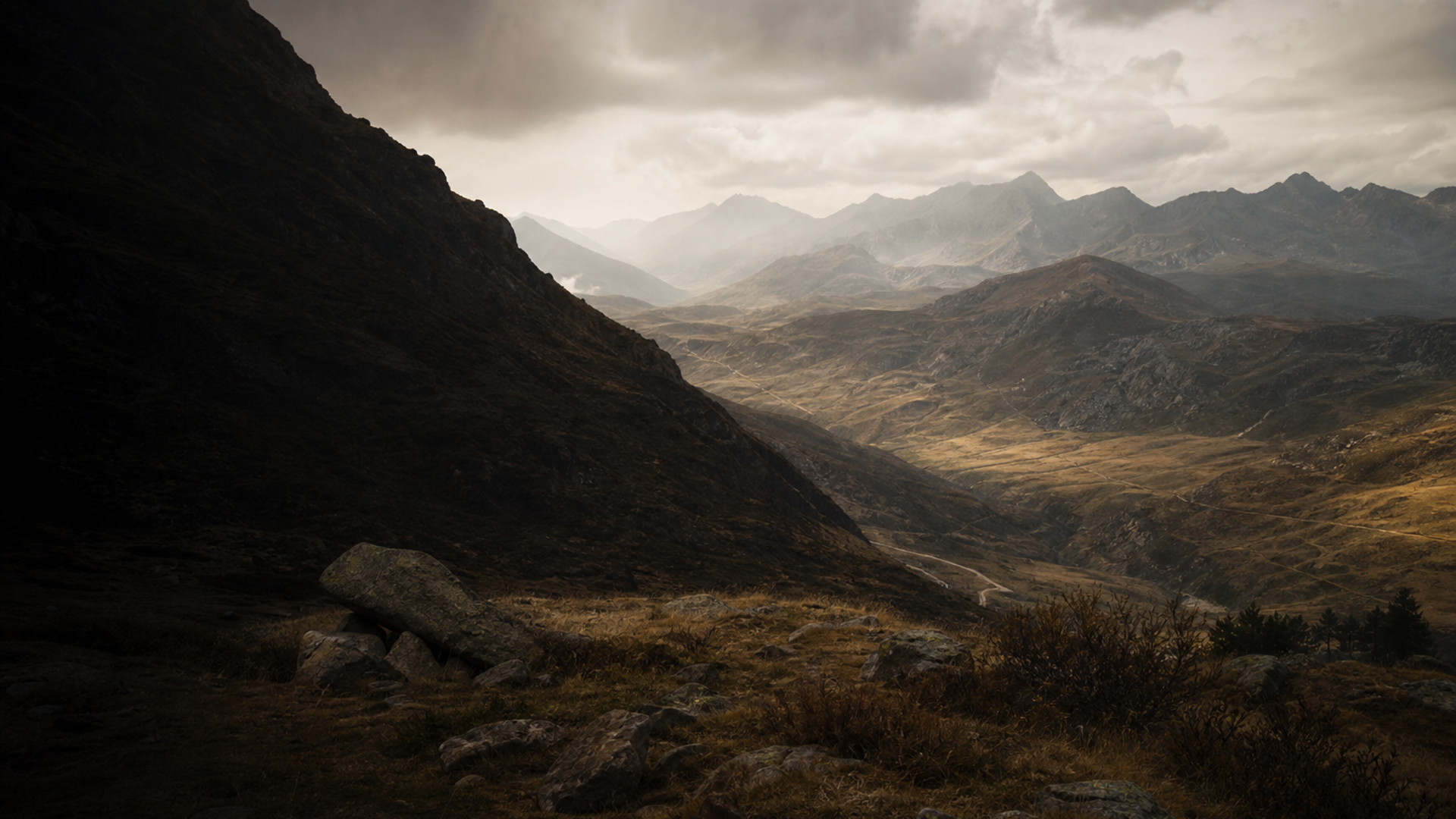
Sion-Petit-Chasseur sits within a landscape of pastoral terraces and alpine passes; geological corridors may have facilitated long-distance contacts. While pottery styles and funerary architecture suggest cultural affiliation with the Bell Beaker complex, the scale and directionality of movement into Valais remain uncertain. Ongoing work aims to refine chronological resolution with more radiocarbon dates and broader regional sampling.

  • Dolmen XI at Sion-Petit-Chasseur dated c.2500–1950 BCE
  • Bell Beaker material culture seen across Central and Atlantic Europe
  • Local megalithic and incoming Bell Beaker traditions likely fused
Chapter IV

Daily Life & Society

In cinematic glimpses we can picture small farming and herding communities seasonally moving stock between valley floors and alpine pastures. Archaeological data indicates subsistence based on mixed agriculture and cattle, with long-distance exchange of prestige objects and raw materials shaping social ties.

Dolmens like Petit-Chasseur served as communal memorial places rather than simple household graves. Burials aggregated over generations suggest ancestor veneration and social memory played a major role. Grave assemblages in Bell Beaker contexts elsewhere often include pottery, copper items and personal ornaments; similar artifacts in Swiss contexts imply participation in shared networks of exchange and identity, though the specific inventory at Dolmen XI is incompletely documented for this dataset.

Craftspeople likely manipulated copper, flint and bone to produce tools and adornments, while pottery styles signaled group identity. Landscapes of the Valais — river corridors, passes and terraces — structured daily routes, seasonal movements and the social geography of exchange that connected alpine communities to wider European currents.

  • Mixed farming and herding economies in alpine valleys
  • Dolmens functioned as communal burial and memory sites
Chapter V

Genetic Profile

The genetic snapshot from Sion-Petit-Chasseur Dolmen XI comprises three individuals dated to c.2500–1950 BCE. With only three samples, conclusions are preliminary and should be treated cautiously. Two of the three males carry Y-DNA classified broadly as haplogroup R — a lineage that, in other Bell Beaker contexts across Europe, is often associated with expansions of Steppe-derived ancestry. However, these data do not by themselves resolve which R subclades are present, nor the timing or source of male-line migration into Valais.

Mitochondrial haplogroups are diverse in the small sample: one K, one H, and one U. This mix mirrors patterns seen elsewhere where maternal lineages show continuity with earlier European populations alongside incoming lineages. Archaeogenetic studies often find that Bell Beaker-associated groups combined Steppe-derived paternal signals with a mosaic of maternal ancestries, suggesting complex social processes (sex-biased mobility, local incorporation) rather than uniform replacement.

Given the sample count (<10), any inference about population structure, admixture proportions, or social organization remains tentative. Additional genomes from the region and direct radiocarbon-dated individuals will be necessary to test whether the Valais Bell Beaker groups fit wider continental genetic trends or represent local variation.

  • Small sample size (n=3) — interpretations are preliminary
  • Y-DNA R in two individuals; mtDNA K, H, U across three
Chapter VI

Legacy & Modern Connections

The stones of Petit-Chasseur and the molecules preserved in ancient bone together tell a story of connection. Genetic signals tied to the Bell Beaker horizon contributed to the genetic landscape of later European populations, but the precise pathways and regional outcomes varied. In Switzerland, these early Bronze Age crossroads helped shape ancestry layers that persist in varying degrees in modern populations.

Archaeologically, Bell Beaker forms — from pottery to burial practices — left an imprint on cultural traditions across Europe. Genetically, the presence of R-lineage Y chromosomes in Swiss Bell Beaker burials echoes broader patterns of male-mediated gene flow in portions of Europe, while diverse maternal lines underscore complex social dynamics. Because the current dataset is small, claims about direct continuity to modern Swiss populations should remain cautious; future sampling will clarify the depth of local continuity versus replacement.

  • Contributed to layered ancestry in Europe and Switzerland
  • Preliminary genetic links hint at male-biased movements and mixed maternal continuity
AI 电源

AI 助手

就 Bell Beakers of Valais 文化提问

AI 助手 由DNAGENICS公司制作

解锁此特性
Ask questions about the Bell Beakers of Valais culture. Our AI assistant can explain genetic findings, historical context, archaeological evidence, and modern connections.
AI 样本分析

Bell Beakers of Valais 文化是人类历史中值得了解的一章……

遗传分析揭示了与早期种群的联系,同时显示了独特的适应和文化创新的证据。 古代DNA样本提供了对迁徙模式、社会结构以及古代种群之间的生物关系的深刻见解。

这是人工智能分析的预览。 解锁全AI 助手, 以探索关于:

  • 遗传组成和祖先
  • 移徙模式和起源
  • 日常生活和文化习俗
  • 现代遗传遗产

探索更古老的文化

揭开古代世界文明的故事

使用优惠码 可减免 35% • 11月12日 到期