Beniamin (Urartu) — A Moment in Stone

下载的 PDF 是图像副本。如需可选中文本及更好的辅助技术支持,请使用打印功能。

Beniamin (Urartu) — A Moment in Stone

揭开一个失落的文明

正在加载考古记录……

正在收集古代记录

跳转到主内容
Beniamin (Urartu) — A Moment in Stone
文明焦点

Beniamin (Urartu) — A Moment in Stone

A single Iron Age genome from Shirak Province opens a window into Urartian Armenia, cautiously read against archaeology.

801 CE - 774 BCE
Shirak Province, Armenia (Beniamin)
滚动开始
Chapter I

剧情

了解 Beniamin (Urartu) — A Moment in Stone 文化

A lone 801–774 BCE genome from ShirakProvince.Beniamin, Armenia, tied to the Urartian world. Archaeological context and regional ancient DNA hint at Caucasus–Near Eastern continuities, but conclusions remain provisional given the single sample.

Time Period

801–774 BCE (Iron Age)

Region

Shirak Province, Armenia (Beniamin)

Common Y-DNA

Not reported (single sample)

Common mtDNA

Not reported (single sample)

Chapter II

时间线

这种文化历史上的关键时刻

2500 BCE

Early Bronze Age roots in the Highlands

Early metalworking and pastoralist landscapes set long-term patterns in the Armenian Highlands that later underpin Iron Age societies.

Chapter III

Origins & Emergence

The Beniamin individual comes from the high, wind-swept terraces of Shirak Province in northwestern Armenia, dated to 801–774 BCE — a moment squarely within the ascendancy of the Urartian state (roughly 9th–6th centuries BCE). Archaeological data across the Armenian Highlands show fortified settlements, irrigation works and temple complexes associated with Urartu’s political economy, suggesting a landscape of organized states and regional craft economies.

Limited evidence suggests that communities in the Shirak basin participated in the broader cultural networks of the Urartian sphere: exchange of metalwork styles, shared architectural vocabulary and administrative signs such as inscribed stelae elsewhere in the kingdom. The Beniamin find must be read against this regional backdrop rather than as an isolated curiosity.

Caveats: this dataset contains a single ancient genome. Any statements about population movements, social structure, or cultural affiliation are preliminary. Archaeological comparisons and careful stratigraphic context help anchor the individual in a recognizable Iron Age cultural horizon, but broader demographic patterns require more samples from Beniamin and neighboring sites.

  • Dated to 801–774 BCE, within Urartian political expansion
  • Site located in ShirakProvince.Beniamin, Armenia
  • Single-sample context—interpret cautiously
Chapter IV

Daily Life & Society

Archaeological reconstructions of Urartian-era daily life evoke a landscape of terraced fields, stone-built farmsteads and fortified centers that controlled water and pastures. Inhabitants of the Shirak plateau likely practiced mixed agriculture and pastoralism, tending cereals, pulses and herds while moving seasonally between high pastures and lower fields. Craft specialists in nearby centers produced metal tools, ceramics and stone masonry that radiated stylistic influences across the region.

Material culture often reflects social hierarchies: monumental architecture and administrative artefacts cluster at regional centers, while smaller settlements show simpler domestic inventories. Funerary practices in the Urartian world were diverse — stone cist graves, cairns and communal monuments — but local variability was high. For Beniamin specifically, archaeological survey and regional analogy provide the best window into everyday rhythms: seasonal labor, fortified refuges, and participation in long-distance exchange that linked the Armenian Highlands to Anatolia and the Near East.

Limited evidence from a single burial cannot reveal household economy or ritual in detail, but when integrated with regional archaeology it contributes to a richer mosaic of Iron Age life.

  • Mixed farming and transhumant pastoralism probable
  • Participation in regional craft and exchange networks
Chapter V

Genetic Profile

The genomic data from ShirakProvince.Beniamin is a rare snapshot: one individual dated 801–774 BCE. In the wider Urartian and trans-Caucasian record, archaeogenetic studies have tended to reveal continuity with Bronze Age Caucasus populations combined with varying degrees of gene flow from neighboring Near Eastern and Anatolian groups. The single Beniamin genome is broadly consistent with these regional patterns, indicating a genetic landscape shaped by local continuity together with long-distance contacts.

Important caveats: with n=1, any population-level inference is highly provisional. Y-chromosome and mitochondrial haplogroups are not reported here, which limits direct paternal/maternal lineage statements. Nevertheless, integrating this genome with archaeological context allows cautious hypotheses: continuity of local ancestry among highland communities, and possible admixture events reflecting trade, migration, or elite mobility associated with Urartian political networks.

Future directions: additional samples from Beniamin and neighboring Urartian settlements, combined with isotope studies and larger comparative datasets, are essential to move from intriguing suggestion to robust model of demographic change during the Iron Age.

  • Single genome aligns with regional Caucasus–Near Eastern continuity
  • Y/mtDNA not reported; conclusions preliminary (n=1)
Chapter VI

Legacy & Modern Connections

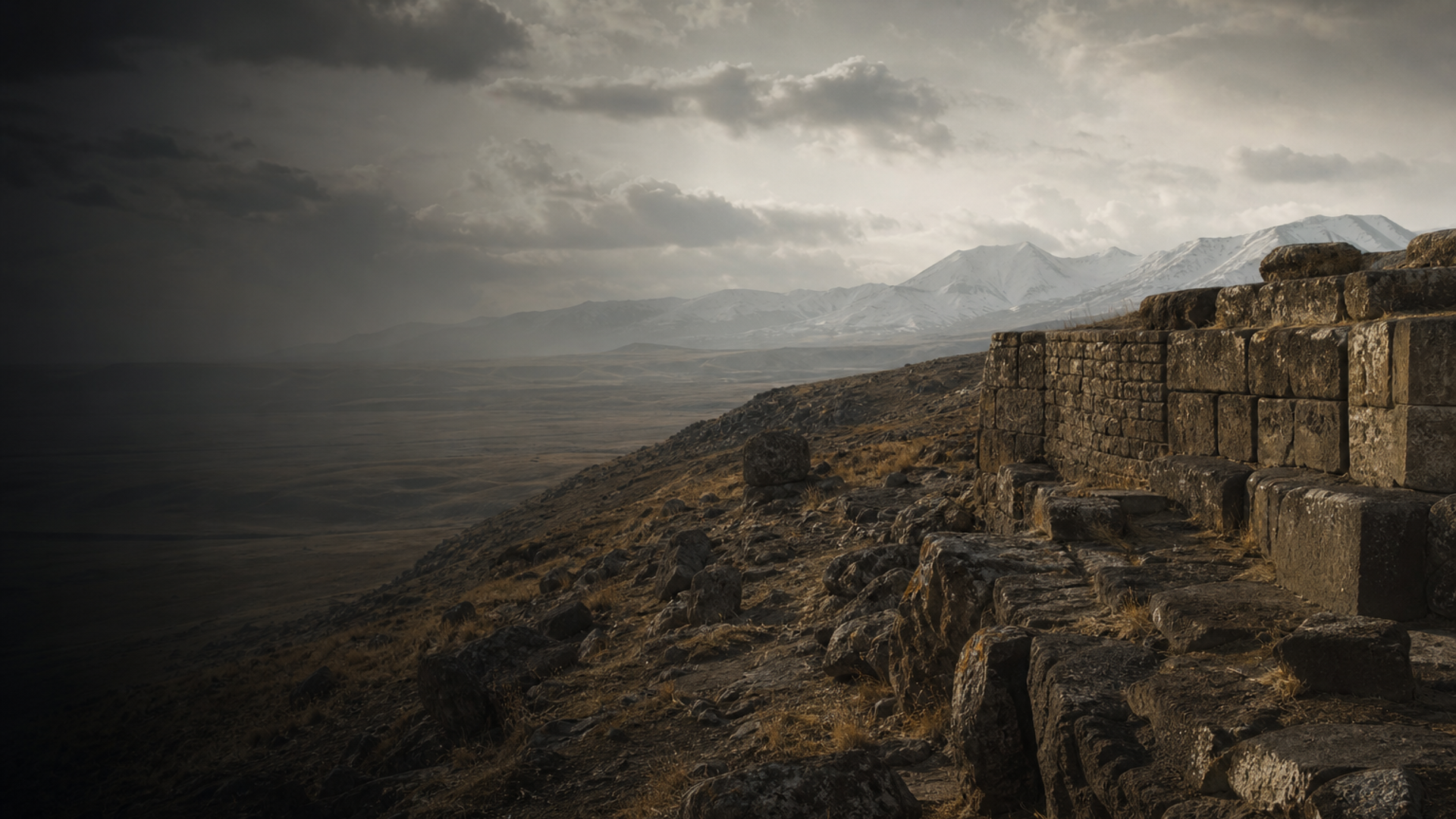
The Beniamin individual occupies a cinematic hinge between past and present: stone terraces and ruined fortresses visible in the Armenian Highlands carry echoes of the Urartian state that once organized them. While direct lineage claims are premature from a single genome, the genetic and archaeological signal from Urartu more broadly supports deep regional continuity in the Caucasus into historical times.

For modern populations of Armenia and the surrounding Caucasus, this continuity suggests that elements of Iron Age ancestry persist in the gene pool, layered atop later movements and cultural shifts. The true legacy of the Beniamin find is methodological: it demonstrates how even a lone ancient genome, when carefully contextualized with archaeological landscape and material culture, can spark testable questions about migration, social organization and the biological footprint of ancient states. Expanded sampling will be required to transform these questions into firm conclusions.

  • Suggests continuity between Iron Age highland populations and later inhabitants
  • Highlights need for more ancient DNA and archaeological sampling
AI 电源

AI 助手

就 Beniamin (Urartu) — A Moment in Stone 文化提问

AI 助手 由DNAGENICS公司制作

解锁此特性
Ask questions about the Beniamin (Urartu) — A Moment in Stone culture. Our AI assistant can explain genetic findings, historical context, archaeological evidence, and modern connections.

AI 样本分析

Beniamin (Urartu) — A Moment in Stone 文化是人类历史中值得了解的一章……

遗传分析揭示了与早期种群的联系,同时显示了独特的适应和文化创新的证据。 古代DNA样本提供了对迁徙模式、社会结构以及古代种群之间的生物关系的深刻见解。

这是人工智能分析的预览。 解锁全AI 助手, 以探索关于:

  • 遗传组成和祖先
  • 移徙模式和起源
  • 日常生活和文化习俗
  • 现代遗传遗产

探索更古老的文化

揭开古代世界文明的故事

使用优惠码 可减免 35% • 11月12日 到期




