Caleta Huelen: Coastal Voices c.1100 BP

下载的 PDF 是图像副本。如需可选中文本及更好的辅助技术支持,请使用打印功能。

Caleta Huelen: Coastal Voices c.1100 BP

揭开一个失落的文明

正在加载考古记录……

正在收集古代记录

跳转到主内容
Caleta Huelen: Coastal Voices c.1100 BP
文明焦点

Caleta Huelen: Coastal Voices c.1100 BP

A small coastal community on Chile’s shore, glimpsed through bones and DNA

750 CE - 11501100 CE
Chile (Caleta Huelen 12, coastal)
滚动开始
Chapter I

剧情

了解 Caleta Huelen: Coastal Voices c.1100 BP 文化

Archaeological and genetic data from three individuals at Caleta Huelen 12 (750–1150 CE) suggest coastal Chilean lifeways tied to Pan-American maternal lineages (B2, A2) and Y-haplogroup Q; interpretations are preliminary due to low sample count.

Time Period

750–1150 CE (≈1100 BP)

Region

Chile (Caleta Huelen 12, coastal)

Common Y-DNA

Q (1 of 3)

Common mtDNA

B2 (2 of 3), A2 (1 of 3)

Chapter II

时间线

这种文化历史上的关键时刻

750 CE

Earliest dated samples

Earliest calibrated dates for sampled contexts at Caleta Huelen 12, marking the start of the local sequence (~750 CE).

1150 CE

Latest dated samples

Latest calibrated dates for the sampled individuals, closing the dated range at approximately 1150 CE.

Chapter III

Origins & Emergence

Along the wind-swept coves of coastal Chile, the people represented by samples from Caleta Huelen 12 lived during the late first and early second millennium CE — broadly dated between 750 and 1150 CE (≈1100 BP). Archaeological data from the wider coastal zone during this interval indicate persistent small-scale fishing and foraging settlements, episodic mobility, and networks of exchange that connected littoral and inland groups. The designation “Middle Horizon Caleta Huelen” used for this assemblage situates these individuals within a regional sequence of cultural change but does not imply direct affiliation to the highland Middle Horizon political systems; coastal lifeways often retained distinct trajectories.

Genetically, the tiny sample set (n = 3) offers a tentative snapshot rather than a definitive portrait. The detected Y-chromosome lineage Q and maternal lineages B2 and A2 are well-known Pan-American haplogroups with deep roots in the Americas; their presence at Caleta Huelen 12 is consistent with long-standing coastal and continental population histories. Limited evidence suggests continuity with broader Andean and coastal populations, but the small number of genomes means any model of migration, admixture, or local continuity must remain provisional until larger datasets are available.

In short: the site captures a coastal community engaged with regional lifeways at ca. 1100 BP; the genetic markers align with Indigenous American lineages, but archaeological and genetic sampling remain sparse.

  • Dated c. 750–1150 CE (≈1100 BP), Caleta Huelen 12 represents late first–early second millennium coastal occupation
  • Regional archaeology indicates coastal foraging and maritime resource use; local ties to inland networks are possible
  • Genetic signals match Pan‑American haplogroups, but n = 3 means conclusions are preliminary
Chapter IV

Daily Life & Society

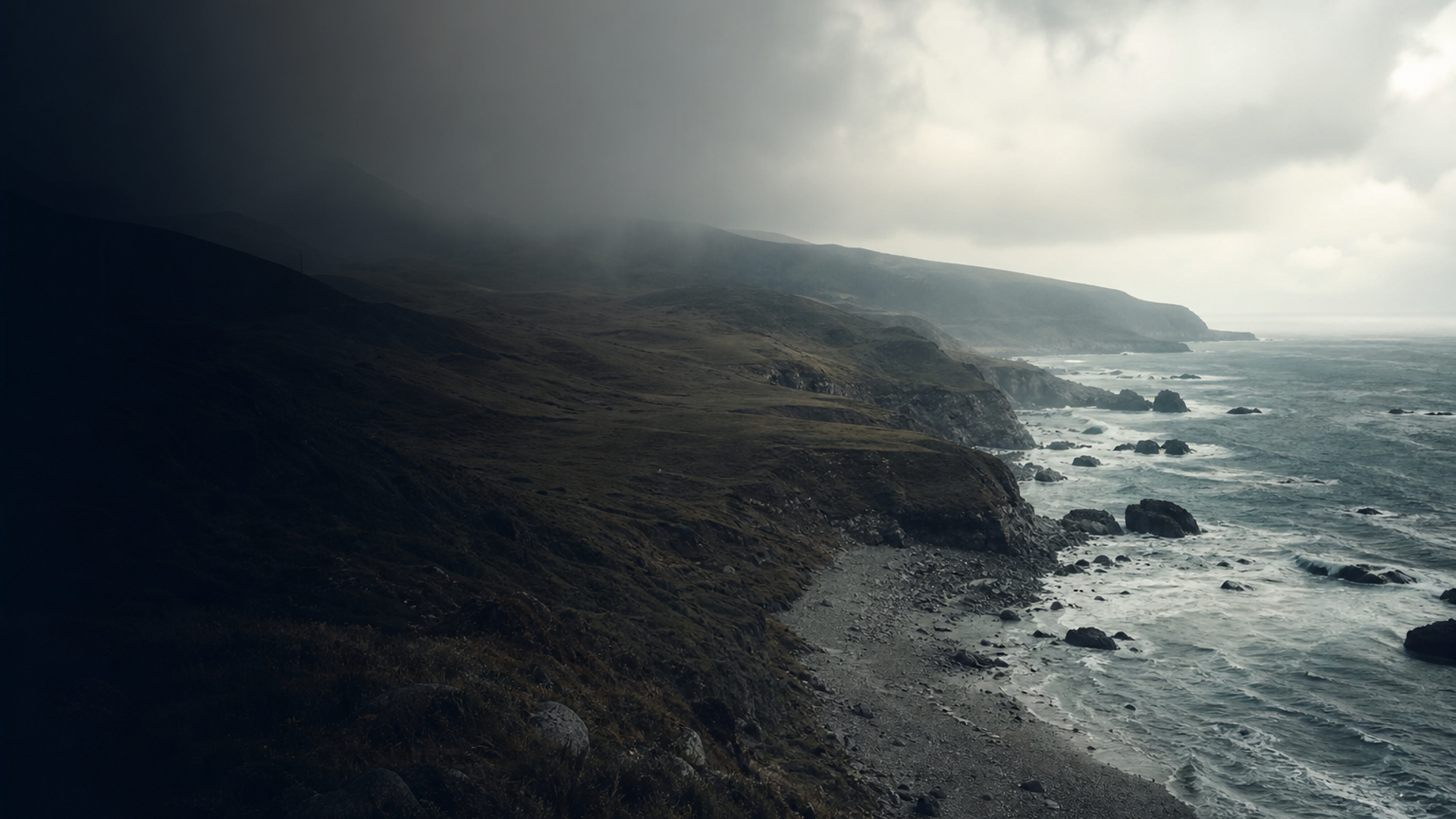
Imagine low stone hearths near the tide line, morning fog dissolving over boats and nets: coastal sites like Caleta Huelen 12 were likely focused on maritime resources. While excavations at this particular locale are limited, regional coastal sequences of northern and central Chile from the same centuries document shell middens, fish remains, simple dwellings, and specialized tools for fishing and shellfish gathering. Such material assemblages point to small communities organized around daily rhythms of tide, season, and the movements of fish and seabirds.

Social life in these settlements would have blended kinship ties and practical cooperation. Exchange of coastal commodities (fish, shell ornaments, dried products) with inland groups is plausible, based on ethnohistoric patterns and regional archaeological parallels. Burial practices vary across the coast and the few burials sampled at Caleta Huelen 12 contribute limited but valuable biological information: age profiles, dietary inferences from bone chemistry (where available), and now genetic affinities. Many aspects of household organization, ritual life, and social hierarchy remain unknown for this specific site; continued excavation and interdisciplinary study are needed to convert evocative landscapes into robust social narratives.

  • Coastal subsistence likely centered on fishing, shellfish, and seabird exploitation (regional pattern inferred)
  • Small, mobile or semi-sedentary communities with exchanges linking coast and interior
Chapter V

Genetic Profile

The genetic dataset from Caleta Huelen 12 comprises three individuals (n = 3). Results show one Y‑chromosome lineage assigned to haplogroup Q and mitochondrial haplogroups distributed as B2 (two individuals) and A2 (one individual). These lineages are widely documented across the Americas and are interpreted as deep, autochthonous Indigenous lineages rather than evidence of recent external input.

Haplogroup Q is the predominant Y‑lineage among many Indigenous populations of the Americas and its presence here is consistent with male-line continuity in coastal Chile. Maternal haplogroups B2 and A2 are among the most common Native American mtDNA clades; B2 is often associated with populations from both coastal and inland South America, while A2 is similarly widespread. The combination seen at Caleta Huelen 12 does not by itself indicate specific migration events or precise kinship ties within the community.

Crucially, sample size limits the strength of inference. With only three genomes, population-level statistics (admixture proportions, within-site diversity, demographic modeling) are underpowered. Archaeogenetic interpretation should therefore treat these data as preliminary indicators: they confirm the presence of classical Native American lineages at this coastal locale around 1100 BP, but larger and more geographically distributed samples are required to resolve questions about local continuity, gene flow with highland groups, or demographic shifts associated with broader regional transitions.

Future work combining additional ancient genomes, isotopic dietary data, and detailed stratigraphic context could turn this evocative snapshot into a full portrait of biological and cultural history.

  • Y haplogroup Q present (1 of 3) — consistent with Native American paternal lineages
  • mtDNA B2 (2) and A2 (1) — common Pan‑American maternal haplogroups; interpretations are preliminary (n < 10)
Chapter VI

Legacy & Modern Connections

The genetic signatures from Caleta Huelen 12 resonate with living Indigenous populations of Chile and the broader Andean-Pacific region: the same broad haplogroups persist in many modern communities, reflecting enduring biological threads across centuries. Archaeologically, coastal lifeways documented around 750–1150 CE contribute to the long continuum of maritime adaptation that has shaped cultural identities along Chile’s shoreline.

Because the dataset is small, linking these ancient individuals directly to particular modern ethnic groups or cultural traditions would be premature. Instead, these genomes serve as signposts — reminders that contemporary populations carry multiple strands of ancestry stretching back millennia. Respectful collaboration with descendant communities, expansion of the ancient DNA record, and interdisciplinary study will be essential to refine how these past lives relate to living heritage.

In museums and scientific narratives, Caleta Huelen 12 stands as an evocative fragment: a coastal voice whose full story awaits more voices and more data.

  • Ancient lineages align broadly with present-day Indigenous genetic variation in Chile
  • Small sample size cautions against direct ancestry claims — more data and engagement are needed
AI 电源

AI 助手

就 Caleta Huelen: Coastal Voices c.1100 BP 文化提问

AI 助手 由DNAGENICS公司制作

解锁此特性
Ask questions about the Caleta Huelen: Coastal Voices c.1100 BP culture. Our AI assistant can explain genetic findings, historical context, archaeological evidence, and modern connections.
AI 样本分析

Caleta Huelen: Coastal Voices c.1100 BP 文化是人类历史中值得了解的一章……

遗传分析揭示了与早期种群的联系,同时显示了独特的适应和文化创新的证据。 古代DNA样本提供了对迁徙模式、社会结构以及古代种群之间的生物关系的深刻见解。

这是人工智能分析的预览。 解锁全AI 助手, 以探索关于:

  • 遗传组成和祖先
  • 移徙模式和起源
  • 日常生活和文化习俗
  • 现代遗传遗产

探索更古老的文化

揭开古代世界文明的故事

使用优惠码 可减免 35% • 11月12日 到期