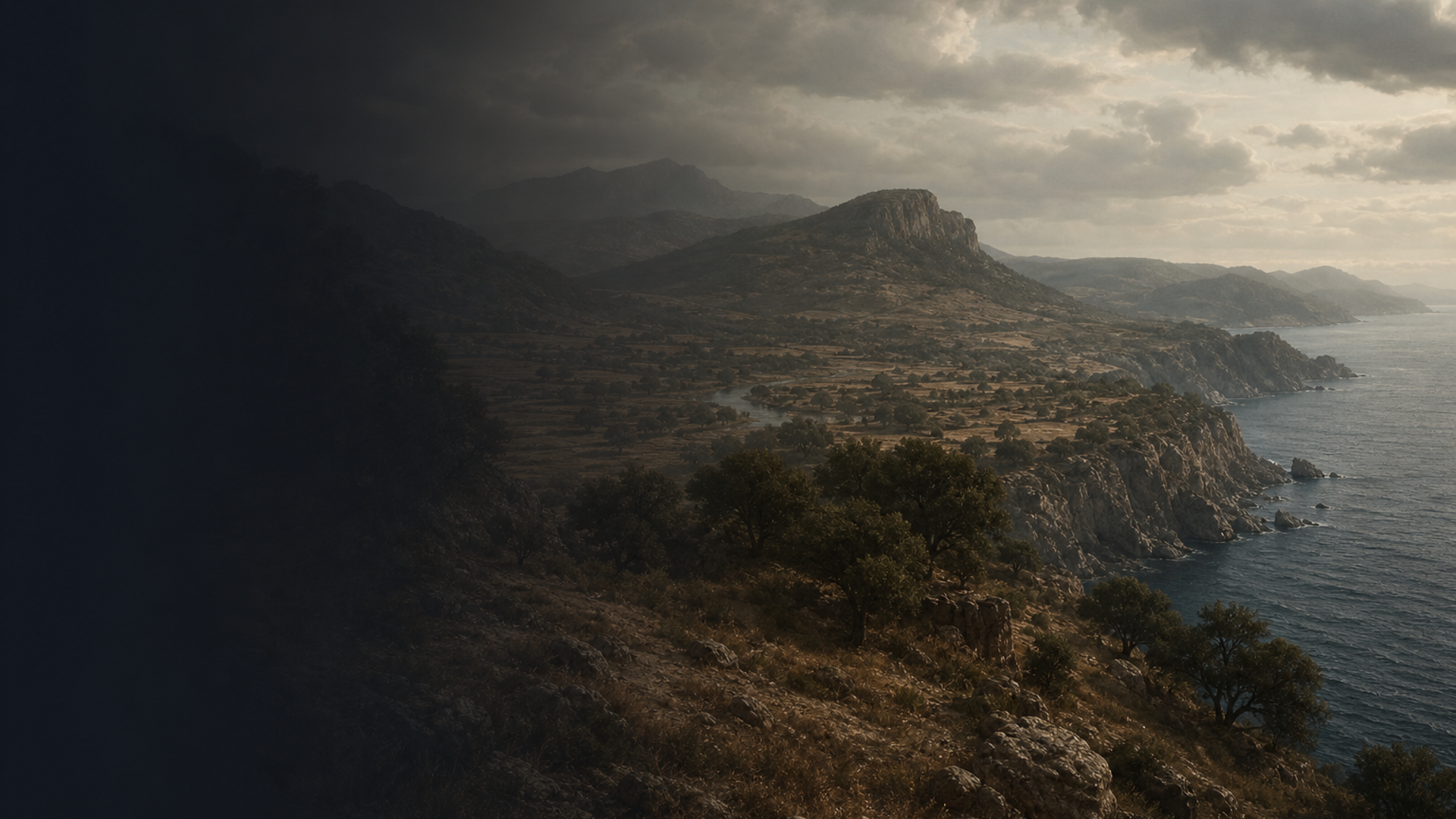
Carolingian Barcelona: Frontier Lives

下载的 PDF 是图像副本。如需可选中文本及更好的辅助技术支持,请使用打印功能。

Carolingian Barcelona: Frontier Lives

揭开一个失落的文明

正在加载考古记录……

正在收集古代记录

跳转到主内容
Carolingian Barcelona: Frontier Lives
文明焦点

Carolingian Barcelona: Frontier Lives

Echoes of Frankish rule and local Iberian resilience in northeastern Spain (785–810 CE)

785 CE - 810 CE
Northeast Iberian Peninsula (Barcelona area)
滚动开始
Chapter I

剧情

了解 Carolingian Barcelona: Frontier Lives 文化

Archaeological and genetic glimpses from five individuals in Barcelona, Roda de Ter and L'Esquerda (785–810 CE) illuminate life on the Carolingian frontier. Limited samples suggest mixed male-line R haplogroups and diverse maternal lineages, reflecting local continuity and incoming influences.

Time Period

785–810 CE (Carolingian Spain)

Region

Northeast Iberian Peninsula (Barcelona area)

Common Y-DNA

R (2 of 5 sampled)

Common mtDNA

U (2), T2h, W1, H42

Chapter II

时间线

这种文化历史上的关键时刻

2500 BCE

Bronze Age ancestral threads

Bronze Age migrations and local developments laid genomic and cultural foundations later visible in medieval Iberia; some maternal lineages observed in medieval samples trace back to this deep past.

Chapter III

Origins & Emergence

The late 8th and early 9th centuries in northeastern Iberia were a time of shifting power and cultural interweaving. After Charlemagne's campaigns, the March of Gothia and the nascent Spanish counties anchored a Carolingian presence along the eastern Pyrenean corridor. Archaeological data from Barcelona, Roda de Ter and the hilltop site of L'Esquerda indicate continuity of settlement at older loci alongside new administrative centers and ecclesiastical consolidation.

Material traces — fortified enclosures, reused Roman masonry, burial orientations consistent with Christian practice — suggest a landscape negotiating older Iberian traditions and Frankish administrative rhythms. Limited evidence suggests some demographic movement into the region, whether through military retinues, clergy, or artisan networks. The skeletal and cultural record is fragmentary: many sites were reused or disturbed in later medieval phases, so reconstructions remain provisional.

Taken together, the archaeological picture is one of layered occupation: local families maintained rural ties and agricultural life while new political ties to the Carolingian world introduced different material styles and religious institutions. This is a borderland story, in which mobility, adaptation, and continuity all played parts, and where genetic data can help distinguish transient arrivals from long-term local communities.

  • Carolingian expansion established frontier counties in northeastern Iberia.
  • Sites: Barcelona, Roda de Ter, L'Esquerda show continuity and reuse.
  • Evidence suggests both local persistence and incoming influence.
Chapter IV

Daily Life & Society

Life in these communities would have been shaped by agriculture, craft, and the demands of a frontier polity. Terraced fields, olive and cereal cultivation, and pastoralism dominated the rural economy; nearby towns and fortified settlements functioned as nodes of administration, market exchange, and ecclesiastical authority. Archaeological remains — foundations, storage pits, and household debris — point to mixed economies combining subsistence farming with specialized crafts and trade along Mediterranean routes.

Social life revolved around kin networks, parish churches, and seasonal obligations to local lords or comital authorities. Funerary practices recorded at small cemeteries near L'Esquerda and Roda de Ter show Christian burial rites, but variability in grave goods and body treatment hints at social differentiation and lingering local customs. Durable goods such as reused Roman stone, imported ceramics, and locally produced metalwork would have given visual texture to daily life.

This was a landscape of thresholds — between mountain passes and coastal plains, between old Visigothic traditions and Carolingian administration. The archaeological record preserves gestures of adaptation rather than wholesale replacement, but the full social mosaic is only partly visible and requires careful integration with genetic evidence to tease apart mobility, marriage networks, and lineage continuity.

  • Agrarian economy with local craft and Mediterranean trade ties.
  • Cemeteries show Christian rites alongside local burial variability.
Chapter V

Genetic Profile

Five sampled individuals dated 785–810 CE from Barcelona, Roda de Ter and L'Esquerda offer a narrow but intriguing genetic window into Carolingian-period Iberia. The Y-DNA record is small: two individuals carry haplogroup R. While R lineages (commonly including R1b in later Iberian datasets) are frequent in western Europe, the samples here are too few to assign broader population-level patterns; conclusions must be tentative.

Mitochondrial diversity is notable: two U lineages, plus T2h, W1 and H42, indicate a mix of maternal ancestries. Haplogroup U can reflect deep local European roots stretching back to Mesolithic and Bronze Age populations, whereas T2h and H42 are often associated with later Neolithic and Bronze Age farmer lineages. W1 is rarer and may signal local or regionally varied maternal lines. These mtDNA types together suggest continuity of long-standing maternal lineages in the region alongside possible influxes of people carrying other maternal haplogroups.

Archaeogenomic interpretation should emphasize caution: with only five genomes, we can indicate possibilities — local continuity, some incoming male-line R presence, and maternal diversity — but not firm demographic models. Future sampling across more burials and sites will be essential to resolve whether observed patterns reflect family groups, military cohorts, clerical mobility, or broader population shifts.

  • Small sample (n=5) — interpretations are preliminary.
  • Y: R present in 2 individuals; mtDNA shows diverse maternal lineages (U, T2h, W1, H42).
Chapter VI

Legacy & Modern Connections

The genetic and archaeological traces from these late 8th–early 9th century burials contribute to a longer-story of population continuity in northeastern Iberia. Maternal haplogroups that reach back into the Neolithic and Bronze Age indicate ancestral threads that persist into the medieval era. The presence of R-line Y-haplogroups is consistent with broader western European male-line patterns, but the small sample size prevents direct links to modern surname or regional lineages.

Archaeologically, the region's built landscape — churches, reused Roman masonry, and fortified settlements — shaped later medieval settlement patterns and identity. Genetically, these early medieval communities likely contributed a mosaic of lineages to later Catalan and northeastern Iberian populations, but assigning precise contributions requires larger ancient and modern comparative datasets. In short: these five genomes provide evocative hints of continuity and connection, but they are guideposts, not final answers.

  • Maternal lineages suggest long-term ancestry persistence into the medieval period.
  • Small dataset offers hints toward modern regional ancestry, not definitive links.
AI 电源

AI 助手

就 Carolingian Barcelona: Frontier Lives 文化提问

AI 助手 由DNAGENICS公司制作

解锁此特性
Ask questions about the Carolingian Barcelona: Frontier Lives culture. Our AI assistant can explain genetic findings, historical context, archaeological evidence, and modern connections.
AI 样本分析

Carolingian Barcelona: Frontier Lives 文化是人类历史中值得了解的一章……

遗传分析揭示了与早期种群的联系,同时显示了独特的适应和文化创新的证据。 古代DNA样本提供了对迁徙模式、社会结构以及古代种群之间的生物关系的深刻见解。

这是人工智能分析的预览。 解锁全AI 助手, 以探索关于:

  • 遗传组成和祖先
  • 移徙模式和起源
  • 日常生活和文化习俗
  • 现代遗传遗产

探索更古老的文化

揭开古代世界文明的故事

使用优惠码 可减免 35% • 11月12日 到期