Catacomb Echoes of Moldova

下载的 PDF 是图像副本。如需可选中文本及更好的辅助技术支持,请使用打印功能。

Catacomb Echoes of Moldova

揭开一个失落的文明

正在加载考古记录……

正在收集古代记录

跳转到主内容
Catacomb Echoes of Moldova
文明焦点

Catacomb Echoes of Moldova

Bronze Age burials on the Lower Dniester linking graves, landscape, and genes

2865 CE - 2200 BCE
Lower Dniester / Moldova
滚动开始
Chapter I

剧情

了解 Catacomb Echoes of Moldova 文化

Archaeological remains from Sărăteni, Tiraspol and Purcari (2865–2200 BCE) reveal Catacomb-style mortuary practices in Moldova. Limited genetic data (4 samples) yield maternal haplogroups W6, H, N and hint at Steppe-related ancestry — conclusions remain preliminary.

Time Period

2865–2200 BCE (Middle–Late Bronze Age)

Region

Lower Dniester / Moldova

Common Y-DNA

Undetermined (limited male data)

Common mtDNA

W6 (1), H (1), N (1) — limited samples

Chapter II

时间线

这种文化历史上的关键时刻

2500 BCE

Emergence of Catacomb burials in Moldova

Catacomb-style shaft-and-chamber graves appear in the Lower Dniester region, marking local expression of broader Bronze Age mortuary changes.

Chapter III

Origins & Emergence

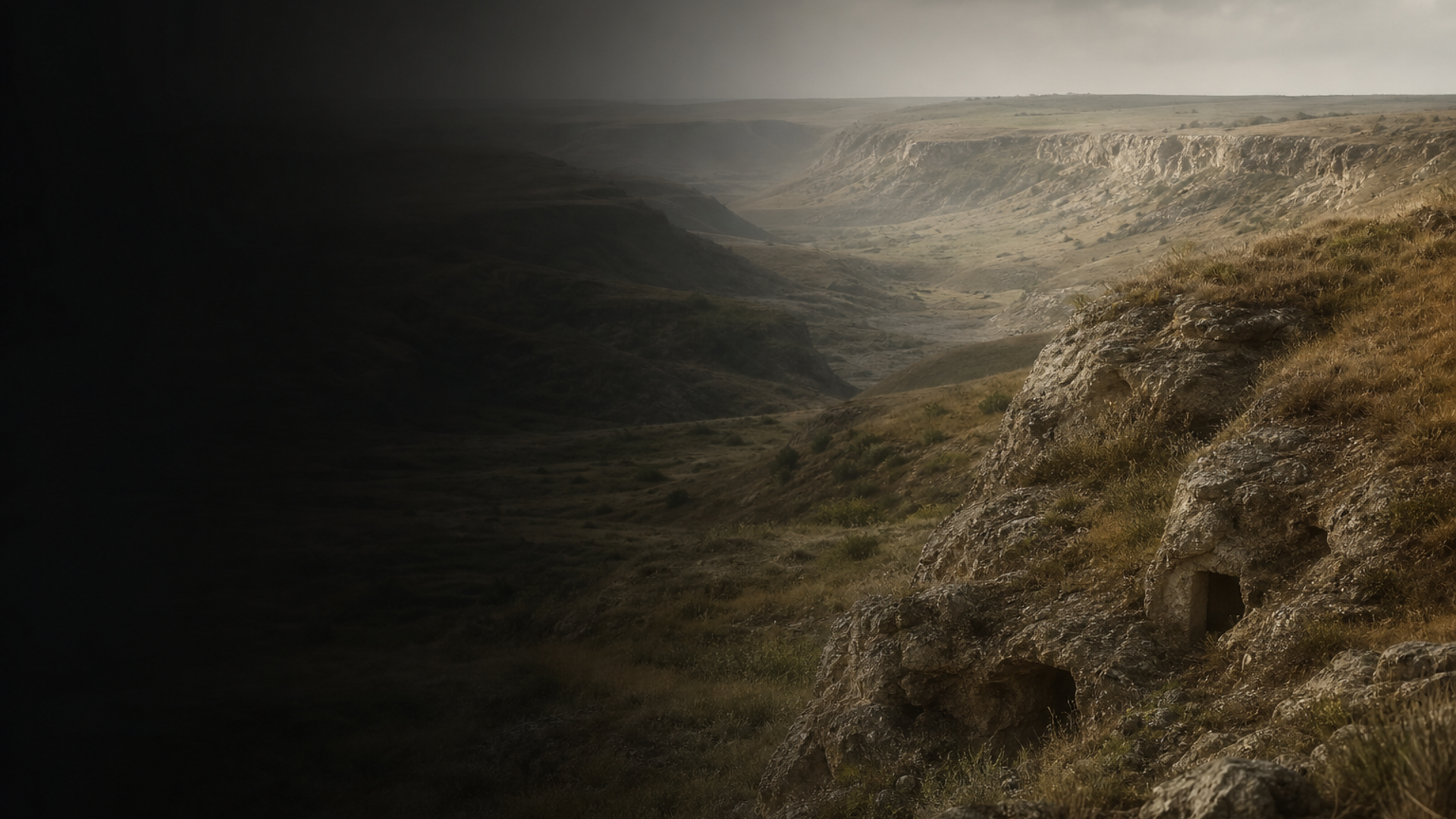
Across windswept terraces above the Lower Dniester, a distinct funerary grammar emerges in the Middle to Late Bronze Age — the catacomb burial tradition. Archaeological data indicates people in sites such as Sărăteni, Tiraspol (Transnistria) and Purcari (Ștefan Vodă district) practiced shaft-and-chamber burials that create subterranean 'catacombs' beneath shallow mounds. These mortuary forms align chronologically with wider Catacomb Culture phenomena that spread across the Pontic–Caspian steppe and adjacent lowlands after c. 3000 BCE.

Material traces in Moldova are often fragmentary but evocative: reused pottery types, occasional metal objects and the architecture of burial pits point to ritualized attention to the dead and to long-distance cultural connections. Radiocarbon-calibrated dates for the local assemblage fall broadly between 2865 and 2200 BCE, a period of dynamic mobility and cultural exchange. Archaeological data indicates continuity with earlier steppe practices coupled with regional expressions shaped by local traditions and landscapes.

Limited evidence suggests that these communities negotiated new forms of social identity through burial architecture — using subterranean space to mark lineage, status or connection to a broader steppe horizon. However, the Moldovan corpus is small and taphonomic disturbance has removed some context, so hypotheses about precise social mechanisms remain tentative.

  • Catacomb-style shaft-and-chamber burials at Sărăteni, Tiraspol, Purcari
  • Dates calibrated to 2865–2200 BCE, Middle–Late Bronze Age
  • Mortuary architecture suggests regional links to broader Pontic steppe traditions
Chapter IV

Daily Life & Society

The archaeological record of Moldova's Catacomb-associated communities offers glimpses rather than panoramas. Settlement traces near burial clusters are sparse; much of what we infer about everyday life comes from grave goods, wear on bones and landscape context. Osteological indicators point to a mobile mixed economy: pastoralism with seasonally managed herds, supplemented by cultivation of hardy cereals in riverine terraces and foraging in gallery forests.

Craftspeople worked with copper and bronze, and pottery shows both local ceramic traditions and imported forms — a material vocabulary that speaks to exchange across the steppe and along river corridors. The emphasis on subterranean burial chambers and incorporation of grave goods suggests social distinctions that were materially expressed in death: some individuals received more elaborate treatment, while others were interred with modest assemblages.

Archaeological data indicates that life in this region balanced mobility and place: communities moved livestock across landscapes but returned to fixed ritual loci to anchor memory and ancestry. That pattern is consistent with broader Bronze Age dynamics in Eastern Europe, yet local mosaic practices underline the diversity within the Catacomb phenomenon. Given the small sample sizes from Moldova, reconstructions of household composition and economy should be treated as provisional.

  • Mixed pastoralism and small-scale cultivation inferred from osteology and landscape
  • Material culture shows local and long-distance connections; social differentiation reflected in burial complexity
Chapter V

Genetic Profile

Genetic sampling from Moldova_MBA_Catacomb is very limited (4 individuals), so conclusions must be measured. The mitochondrial DNA evidence among these individuals records haplogroups W6, H and N, indicating maternal lineages that are found broadly across Eurasia and are not exclusive to any single archaeological culture. The presence of H and W6 could reflect connections to Northwest Eurasian maternal pools; haplogroup N in this context likewise reflects deep, widespread maternal diversity.

Although specific Y-DNA haplogroups are not consistently reported for this small set, broader genomic studies of Catacomb and neighboring steppe groups frequently reveal significant Steppe-related ancestry (derived from earlier Yamnaya and related populations). Archaeogenetic patterns suggest that populations in the Pontic–Caspian zone during the Bronze Age were admixed, combining Steppe pastoralist ancestry with local Neolithic-derived components. The Moldova samples tentatively fit this pattern, but with only four genomes the statistical power is low.

Because the sample count is under ten, any demographic inferences — about migration, kinship, or sex-biased mobility — are preliminary. Future aDNA from additional burials at Sărăteni, Tiraspol and Purcari would be required to clarify paternal lineages, temporal change, and the balance between local continuity and incoming Steppe-related gene flow.

  • mtDNA haplogroups observed: W6 (1), H (1), N (1); small sample size
  • Limited data are consistent with broader Catacomb patterns of Steppe-related admixture, but conclusions are preliminary
Chapter VI

Legacy & Modern Connections

Catacomb burials along the Lower Dniester leave a visible imprint on landscape memory and on later cultural formations. Archaeological data indicates these mortuary practices contributed to regional traditions of subterranean burial that persisted in modified forms into the Iron Age in parts of Eastern Europe. Genetically, maternal lineages seen in the Moldovan Catacomb samples (H, W6, N) are not unique to this horizon and continue to appear in modern Eurasian populations, reflecting deep ancestral links rather than direct one-to-one descent.

Cinematically, one can imagine seasonal herds returning to river valleys where ancestors lay in silent chambers — a practice that tied living communities to specific places and cosmologies. From a DNA-ancestry perspective, the Moldova_MBA_Catacomb dataset acts as a tentative thread connecting ancient steppe mobility and local European lineages; as more genomes are added, that thread will either tighten into clear patterns or reveal a more complex tapestry of movement and continuity.

  • Catacomb mortuary forms influenced later regional burial practices
  • Maternal haplogroups reflect deep Eurasian continuity; modern affinities require more data
AI 电源

AI 助手

就 Catacomb Echoes of Moldova 文化提问

AI 助手 由DNAGENICS公司制作

解锁此特性
Ask questions about the Catacomb Echoes of Moldova culture. Our AI assistant can explain genetic findings, historical context, archaeological evidence, and modern connections.
AI 样本分析

Catacomb Echoes of Moldova 文化是人类历史中值得了解的一章……

遗传分析揭示了与早期种群的联系,同时显示了独特的适应和文化创新的证据。 古代DNA样本提供了对迁徙模式、社会结构以及古代种群之间的生物关系的深刻见解。

这是人工智能分析的预览。 解锁全AI 助手, 以探索关于:

  • 遗传组成和祖先
  • 移徙模式和起源
  • 日常生活和文化习俗
  • 现代遗传遗产

探索更古老的文化

揭开古代世界文明的故事

使用优惠码 可减免 35% • 11月12日 到期