Chandman Uvs: Echoes of the Steppe

下载的 PDF 是图像副本。如需可选中文本及更好的辅助技术支持,请使用打印功能。

Chandman Uvs: Echoes of the Steppe

揭开一个失落的文明

正在加载考古记录……

正在收集古代记录

跳转到主内容
Chandman Uvs: Echoes of the Steppe
文明焦点

Chandman Uvs: Echoes of the Steppe

Genomes and graves trace a frontier from Early Iron Age horizons through Xiongnu and Late Medieval lives.

400 BCE - 1500 CE
Uvs Province, Mongolia
滚动开始
Chapter I

剧情

了解 Chandman Uvs: Echoes of the Steppe 文化

Archaeological and genomic data from Uvs, Mongolia (Uvs. Chandman Mountain; Ulaangom cemetery) link Early Iron Age, Xiongnu, and Late Medieval individuals. Eleven genomes reveal east–west steppe connections, diverse maternal lineages, and mixed paternal signals—preliminary but evocative.

Time Period

c. 400 BCE – 1500 CE

Region

Uvs Province, Mongolia

Common Y-DNA

R (3), Q (3), C (1)

Common mtDNA

U (3), T (2), D (2), H91 (1), F (1)

Chapter II

时间线

这种文化历史上的关键时刻

200 BCE

Rise of Xiongnu polities

The Xiongnu confederation emerges in the eastern steppe, intensifying long-distance contacts that affected Uvs-region networks.

Chapter III

Origins & Emergence

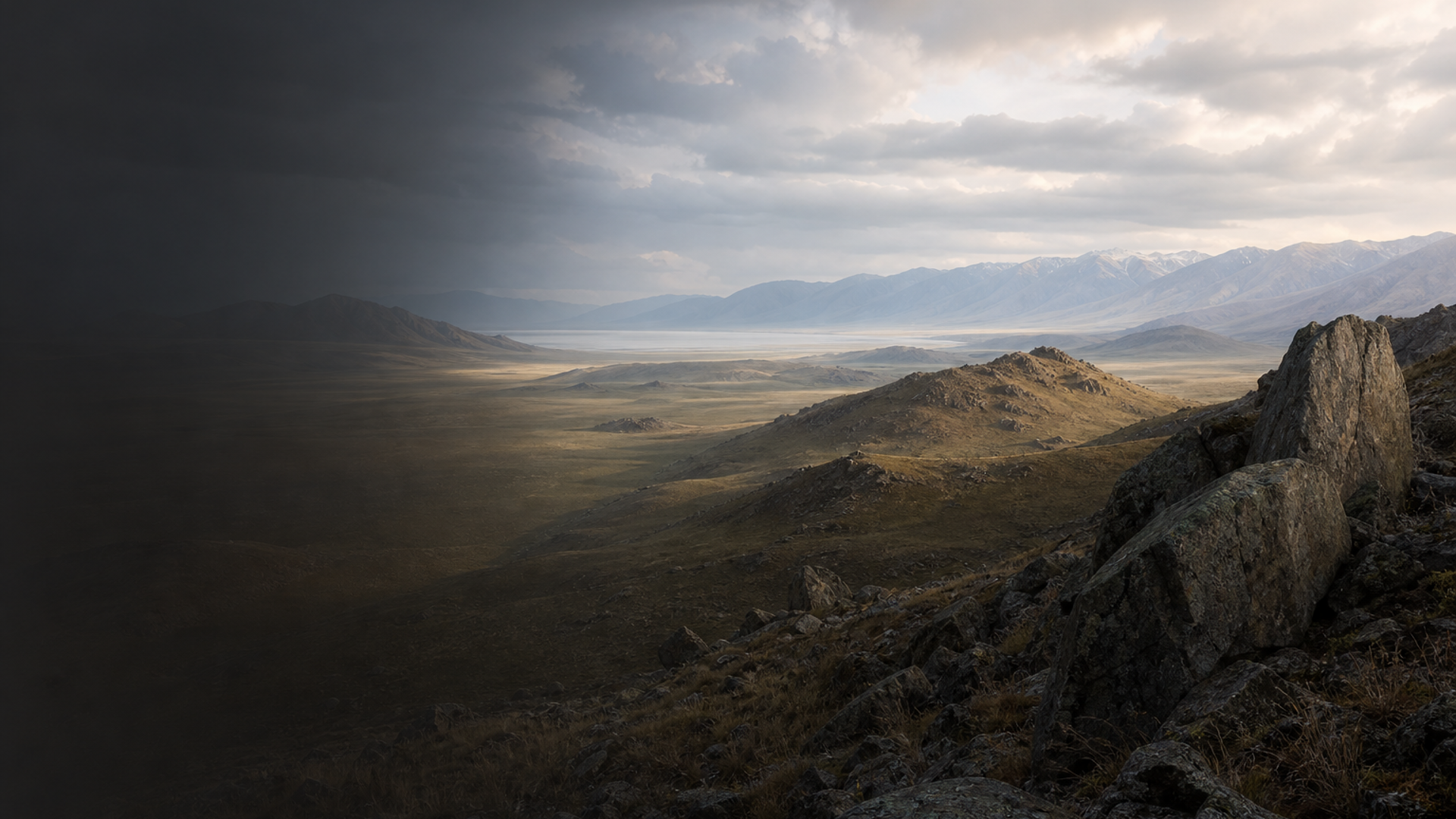
The Uvs assemblage sits on a high, wind-sculpted edge of the Central Asian steppe where archaeological layers record a long continuity of mobile pastoral lifeways. Excavations at Uvs. Chandman Mountain and the Ulaangom cemetery recover burials and surface features spanning roughly 400 BCE to 1500 CE, bridging the Early Iron Age, the era of Xiongnu polities, and later medieval reconfigurations. Archaeological data indicate recurrent patterns: single and multiple interments, grave goods suggesting horse-based economies, and regional networks connecting the Uvs basin to both eastern Siberian and western steppe zones.

Genetically, the sampled individuals—11 genomes in total—provide snapshots rather than a continuous record. Limited evidence suggests this population experienced pulses of admixture: western-affiliated lineages coexisted with eastern steppe components across the sequence. Material culture and burial practice change through time, but continuity in mobility and pastoralism is evident. While dramatic narratives of empire and migration invite cinematic imagery, the data counsel caution: burial samples are uneven through the millennium-long span, and local demographic shifts can be rapid. These remains therefore illuminate a frontier of contact—where caravans, horses, and people braided genetic and cultural threads across Eurasia.

  • Sites: Uvs. Chandman Mountain and Ulaangom cemetery, Uvs Province
  • Chronology: ca. 400 BCE–1500 CE, spanning Early Iron Age to Late Medieval phases
  • Archaeology indicates pastoral mobility with regional exchange networks
Chapter IV

Daily Life & Society

Life in the Uvs basin unfolded under a broad sky where horses shaped economy, status, and mobility. Archaeological assemblages from graves and nearby habitations suggest a mixed pastoral economy focused on horses, sheep, and goats, with seasonal transhumance across river valleys and mountain pastures. Grave offerings—bits of harness, metal tools, and occasional ornaments—evoke riders and herders whose lives were organized around flocks and mounted mobility.

Social organization likely varied through the centuries. In some burials, differentiated goods imply social ranking or specialized roles (riders, craftsmen); in others, simple interments suggest egalitarian households. Ethnographic analogy and steppe archaeology indicate that kin networks, alliance-building through marriage, and shifting political loyalties (especially during Xiongnu-era polities) structured everyday life. Environmental stressors—cold winters, pasture cycles—would have shaped settlement patterns and demographic resilience. Archaeological data indicate continual adaptation rather than abrupt cultural replacement, but gaps in the record mean reconstructions remain cautious and probabilistic.

  • Pastoral economy dominated by horses, sheep, and goats
  • Burial variability suggests social differentiation and changing political ties
Chapter V

Genetic Profile

The genetic portrait from Uvs is a mosaic reflecting the steppe's role as a conduit between east and west. Among 11 sampled individuals, Y-chromosome haplogroups include R (3 individuals), Q (3), and C (1), indicating both western Eurasian-associated paternal lines (R) and northern/East Asian-associated lineages (Q, C). On the mitochondrial side, haplogroups are predominantly U (3), T (2), D (2), with single occurrences of H91 and F—showing maternal diversity that spans western Eurasian (U, T, H) and eastern/central Asian (D, F) components.

These patterns are consistent with archaeological expectations of admixture on the steppe: male-mediated dispersals and local female continuity or vice versa can produce the mixed Y/mtDNA landscape we observe. Genome-wide signals (limited by sample size) suggest varying proportions of western Steppe-related ancestry and East Asian-related ancestry across individuals, compatible with cultural phases from Early Iron Age heterogeneity through Xiongnu-era connectivity and medieval reworking. Because the dataset is modest (11 genomes), statistical power is limited; claims about population continuity or demographic pulses must therefore be framed as provisional. Future sampling across stratified contexts would clarify whether observed haplogroup frequencies reflect long-term trends or short-term migrations and social practices.

  • Paternal mix: R, Q, and C haplogroups indicate east–west admixture
  • Maternal diversity: U, T, D, H91, F reflect both western and eastern maternal inputs
Chapter VI

Legacy & Modern Connections

The genetic echoes from Uvs illuminate threads that persist in the modern peoples of Mongolia and neighboring Siberia. Haplogroups observed here—R, Q, C on the Y-chromosome and U, T, D, F on mtDNA—are found in varying frequencies among contemporary Mongolian, Siberian, and Central Asian groups, implying that the Uvs basin contributed to broader regional ancestries. Archaeogenomic continuity is not simple: centuries of migration, empire formation, and local demographic shifts reshaped allele frequencies, yet the palimpsest of lineages in Uvs is recognizably ancestral to later steppe populations.

For researchers and museum audiences alike, these remains serve as a cinematic bridge: bones and genomes together narrate movement, encounter, and adaptation across a thousand years. The conclusions remain tentative until larger, chronologically targeted datasets are available, but current evidence positions Uvs as a locus of long-standing east–west contact—an ancestral crossroads whose genetic and cultural resonances reach into the present.

  • Modern echoes: haplogroups correspond to lineages seen in Mongolia and Siberia today
  • Preliminary dataset highlights Uvs as a long-term contact zone on the Eurasian steppe
AI 电源

AI 助手

就 Chandman Uvs: Echoes of the Steppe 文化提问

AI 助手 由DNAGENICS公司制作

解锁此特性
Ask questions about the Chandman Uvs: Echoes of the Steppe culture. Our AI assistant can explain genetic findings, historical context, archaeological evidence, and modern connections.
AI 样本分析

Chandman Uvs: Echoes of the Steppe 文化是人类历史中值得了解的一章……

遗传分析揭示了与早期种群的联系,同时显示了独特的适应和文化创新的证据。 古代DNA样本提供了对迁徙模式、社会结构以及古代种群之间的生物关系的深刻见解。

这是人工智能分析的预览。 解锁全AI 助手, 以探索关于:

  • 遗传组成和祖先
  • 移徙模式和起源
  • 日常生活和文化习俗
  • 现代遗传遗产

探索更古老的文化

揭开古代世界文明的故事

使用优惠码 可减免 35% • 11月12日 到期




