Coastal Currents: The Swahili World

下载的 PDF 是图像副本。如需可选中文本及更好的辅助技术支持,请使用打印功能。

Coastal Currents: The Swahili World

揭开一个失落的文明

正在加载考古记录……

正在收集古代记录

跳转到主内容
Coastal Currents: The Swahili World
文明焦点

Coastal Currents: The Swahili World

A thousand-year story of East African coastal towns shaped by Indian Ocean exchange and mixed ancestry

800 CE - 1800 CE
Kenya & Tanzania (Coastal Indian Ocean)
1 Ancient Samples
滚动开始
Chapter I

剧情

了解 Coastal Currents: The Swahili World 文化

Archaeological and aDNA evidence from 64 medieval–early modern Swahili individuals (800–1800 CE) from Kenya and Tanzania reveals primarily African maternal lineages alongside male-line inputs from the wider Indian Ocean. The data illuminate coastal cosmopolitanism centered on Manda, Kilwa, Mtwapa, Songo Mnara and Faza.

Time Period

800–1800 CE

Region

Kenya & Tanzania (Coastal Indian Ocean)

Common Y-DNA

J (majority), E, R, J1, G

Common mtDNA

Predominantly L (African maternal lineages)

Chapter II

时间线

这种文化历史上的关键时刻

800 CE

Early Coastal Urbanism

Emergence of stone-built settlements and intensified Indian Ocean trade; beginnings of identifiable Swahili towns (9th–10th centuries).

1000 CE

Kilwa and Regional Growth

Kilwa and other towns expand as regional trade hubs, importing ceramics and beads from across the Indian Ocean.

1505 CE

European Contact

Portuguese naval incursions into the Indian Ocean introduce new trade dynamics and occasional conflict with coastal polities.

1698 CE

Omani Influence Strengthens

Omani maritime power reshapes political control and trade patterns along the East African coast into the early modern era.

Chapter III

Origins & Emergence

From the dawn of urbanism on the Swahili coast in the 9th–11th centuries CE, coral-built towns rose where inland rivers met the ocean. Archaeological data from Manda (Lamu), Kilwa and Songo Mnara show layered occupations with stone mosques, carved tombstones, imported ceramics, glass trade-beads and beads of the Indian Ocean network. These material lines point to sustained exchange with Oman, Persia, India and beyond.

Linguistically and archaeologically the Swahili phenomenon grew from Bantu-speaking agricultural communities adopting maritime trade and Islam. Limited evidence suggests that outward-facing merchant lineages and immigrant traders contributed to elite culture and material wealth, while local populations provided the demographic and linguistic foundation. The genomic dataset (64 individuals dated between 800 and 1800 CE) supports this dual picture: archaeological complexity matches a mixed genetic signature that is regionally varied.

Chronology is not uniform—some settlements (for example Kilwa Kisiwani and Songo Mnara) reach urban florescence in the 11th–15th centuries, while other harbor towns like Mtwapa and Faza show continuities and reconfigurations into the early modern period. Archaeological interpretation stresses networks over a single origin story: coastal identity emerged through centuries of trade, intermarriage, and shifting political affiliations.

  • Urban centers formed from 9th–11th centuries CE around trade and Islam
  • Material links to Persia, Arabia, India seen in ceramics, beads, architecture
  • Archaeology and aDNA indicate local Bantu roots with external inputs
Chapter IV

Daily Life & Society

Life in Swahili towns was shaped by the sea. Ships brought cloth, ceramics, and glass beads; exports included ivory, timber, and coastal agricultural products. Stone houses of merchants, burnished floors, and mosques with qibla orientations reveal an urban culture attentive to ritual, status and long-distance commerce. Excavations at Songo Mnara and Kilwa reveal dense habitation patterns, craft areas, and elite compounds; cemeteries with inscribed tombstones reflect Islamic faith and literate identities.

Social organization was layered: merchant families, craft specialists, crew and laborers, and hinterland partners who supplied food and raw materials. Women appear in archaeological records through household assemblages and burial goods, suggesting active roles in production, exchange, and family networks. Ethnographic and historical records complement the archaeology, but archaeological data indicates local variability—some towns were dominated by maritime elites, others by mixed agrarian-merchants.

Imported goods were visible markers of status, yet many everyday items were locally made, showing continuity of African craft traditions alongside cosmopolitan taste. The material world speaks of a coast where mobility, multilingualism, and mixed ancestries were commonplace.

  • Economy centered on maritime trade (ivory, timber, cloth, beads)
  • Stone architecture, mosques and inscribed tombstones mark urban life
Chapter V

Genetic Profile

The genetic dataset comprises 64 individuals from multiple coastal sites (Mtwapa, Manda, Kilwa, Songo Mnara, Faza, Lindi, Bungule) dated 800–1800 CE. Maternal lineages are overwhelmingly African: 55 of the sampled mtDNA haplogroups fall into L clades, with a small number assigned to M (2) and L3 (1). This strong L-mtDNA dominance indicates substantial continuity of local African maternal ancestry across a millennium of coastal change.

Paternal markers are more mixed. Y-chromosome haplogroups include J (18), E (9), R (2), and single counts of J1 and G. Haplogroup J—often associated with Arabian, Persian and wider Near Eastern male lineages in the medieval Indian Ocean context—appears frequently, while haplogroup E reflects regional African paternal lineages. The disparity between largely African mtDNA and more heterogenous Y-DNA suggests male-biased input from outside the region consistent with merchant migration and patrilocal practices reported in historical sources.
These genetic patterns align with archaeological signals of long-distance trade and episodic immigration, but they are not uniform across sites or times. Because sample sizes per site vary and some haplogroups have low counts, interpretations should be treated cautiously: 64 samples give a meaningful but not exhaustive view of Swahili genetic diversity. Further sampling—especially inland and temporal transects—would refine the chronology and geographic spread of admixture events.

  • Maternal ancestry: predominantly African L haplogroups (55/64)
  • Paternal ancestry: mixed—J (18) suggests Near Eastern male inputs; E (9) reflects African lineages
Chapter VI

Legacy & Modern Connections

Archaeology and aDNA together show how the Swahili coast was a crucible of cultural and genetic mixing. Modern Swahili-speaking communities on the East African coast carry echoes of this past: linguistic continuity of Kiswahili, coastal architectural traditions, and family histories tied to maritime trade. Genetic studies of contemporary populations often find the same broad pattern—predominantly African maternal ancestry with variable West Eurasian or South Asian paternal contributions—though modern demographic events (colonialism, slavery, recent migrations) have further reshaped ancestry.

For users of a DNA ancestry platform, these findings emphasize context: an individual with a Y-chromosome matching haplogroup J and predominantly L-mtDNA could reflect medieval Indian Ocean admixture layered upon deep African maternal roots. Archaeological evidence grounds those genetic signals in places—Manda's harbors, Kilwa's stone town, Songo Mnara's lanes—reminding us that genes and material culture together tell a richer, more textured story. Continued archaeological excavation and broader aDNA sampling will sharpen our view of how coastal communities formed, moved, and endured.

  • Modern Swahili culture reflects centuries of local continuity and external ties
  • DNA signatures inform ancestry but require archaeological and historical context
Chapter VII

样本目录

1 份与 Coastal Currents: The Swahili World 文化相关的古 DNA 样本,为研究该时期的人群提供遗传线索。

1 / 1 samples
纵向 样本 国家 大纪元 日期 文化 性别 Y-DNA mtDNA
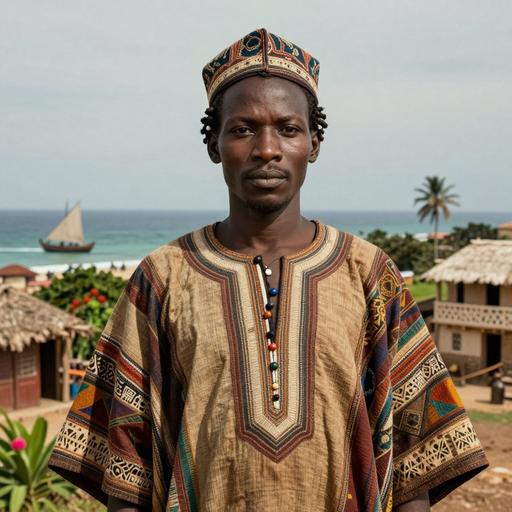
重建的肖像画 Swahili individual, Tanzania
Swahili individual, Tanzania
Tanzania Tanzania_Lindi_Swahili 1511-1664 calCE (305±15 BP, PSUAMS-5718) Swahili M E-BY53757 L0a1a2
AI 电源

AI 助手

就 Coastal Currents: The Swahili World 文化提问

AI 助手 由DNAGENICS公司制作

解锁此特性
Ask questions about the Coastal Currents: The Swahili World culture. Our AI assistant can explain genetic findings, historical context, archaeological evidence, and modern connections.
AI 样本分析

Coastal Currents: The Swahili World 文化是人类历史中值得了解的一章……

遗传分析揭示了与早期种群的联系,同时显示了独特的适应和文化创新的证据。 古代DNA样本提供了对迁徙模式、社会结构以及古代种群之间的生物关系的深刻见解。

这是人工智能分析的预览。 解锁全AI 助手, 以探索关于:

  • 遗传组成和祖先
  • 移徙模式和起源
  • 日常生活和文化习俗
  • 现代遗传遗产

探索更古老的文化

揭开古代世界文明的故事

使用优惠码 可减免 35% • 11月12日 到期





