Coasts & Cove: Mesolithic France

下载的 PDF 是图像副本。如需可选中文本及更好的辅助技术支持,请使用打印功能。

Coasts & Cove: Mesolithic France

揭开一个失落的文明

正在加载考古记录……

正在收集古代记录

跳转到主内容
Coasts & Cove: Mesolithic France
文明焦点

Coasts & Cove: Mesolithic France

Portrait of coastal hunter-gatherers from Brittany to the Paris Basin, 9078–5000 BCE

9078 CE - 5000 BCE
France (Brittany, Paris Basin, Grand Est)
滚动开始
Chapter I

剧情

了解 Coasts & Cove: Mesolithic France 文化

Archaeological and ancient DNA evidence from 11 Mesolithic individuals across France (9078–5000 BCE) reveals coastal lifeways, mtDNA dominated by haplogroup U, and unexpected Y-chromosome assignments. Limited samples invite cautious, evolving interpretations.

Time Period

9078–5000 BCE

Region

France (Brittany, Paris Basin, Grand Est)

Common Y-DNA

L (4), M (1) — atypical/uncertain

Common mtDNA

U (5), U5b (3)

Chapter II

时间线

这种文化历史上的关键时刻

7000 BCE

Mesolithic coastal intensification

Archaeological deposits at Téviec and Hoedic document intensive shellfish and fish exploitation, reflecting established coastal economies in western France.

Chapter III

Origins & Emergence

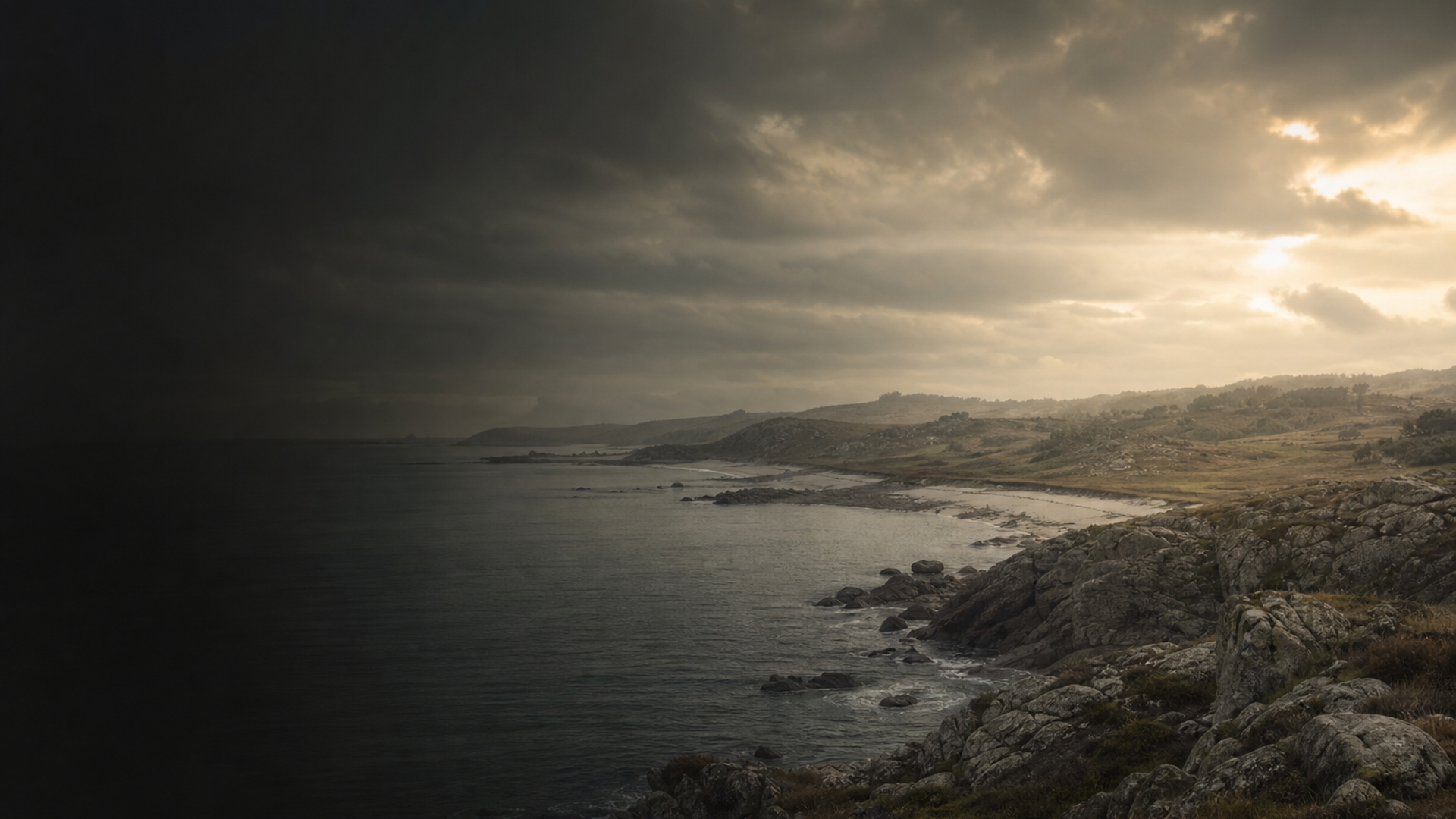
From the rocky headlands of Hoedic and Téviec in Brittany to riverine graves near Achères and Maisons-Alfort in the Paris Basin, the people we group as France_Mesolithic emerge from the end of the last Ice Age into a warming, reshaping world. Radiocarbon dates for the assemblage span roughly 9078 BCE to 5000 BCE, a long arc in which coastal resources and inland woodlands both sustained human communities. Archaeological layers at Téviec and Hoedic preserve shell middens, bone tools, and burial contexts that speak to repeated seasonal presence and maritime expertise. In eastern localities such as Mont Saint Pierre (Grand Est, Marne) and the site at Champigny, material traces emphasize riverine fishing and woodland hunting.

Archaeobotanical and faunal remains indicate a mosaic environment: increasing forest cover inland alongside rich estuarine zones on the Atlantic coast. These landscapes shaped mobility patterns, exchange networks, and funerary choices. Limited skeletal sampling (11 individuals) constrains our ability to generalize across all Mesolithic France; nevertheless, the combined archaeological and genetic record sketches communities adapted to diverse micro-environments, negotiating both continuity with Upper Paleolithic traditions and innovations that anticipate Neolithic transformations.

  • Sites span Brittany, Île-de-France, and Grand Est (Téviec, Hoedic, Mont Saint Pierre, Achères, Maisons-Alfort).
  • Dates range 9078–5000 BCE, covering early to late Mesolithic phases in France.
  • Material culture reflects coastal foraging, river fishing, and woodland hunting.
Chapter IV

Daily Life & Society

Picture low dunes and shell-rich beaches where people smoked fish over open fires, knapped microlithic points in sheltered coves, and buried loved ones with carefully arranged bone implements. At shell midden sites like Téviec and Hoedic, archaeologists recover dense deposits of shell, fish bone, and hearth features—signatures of intensive coastal subsistence. Inland burials and scatters from Achères and Maisons-Alfort show more mixed-resource economies, with deer, boar, and woodland plants evident in faunal and botanical assemblages.

Grave goods are generally modest but meaningful: bone toggles, pierced teeth, and composite tools suggest personal ornamentation and technological continuity. Social groups were likely small and mobile, tied to seasonal rounds that exploited estuaries in warm months and upland resources at other times. Spatial patterns of lithic raw material transport hint at exchange networks linking coasts and interior valleys. Burial practices vary by region and time, implying local traditions rather than a single uniform Mesolithic culture across France. Archaeological data indicates resilient, place-based lifeways shaped by coastlines, rivers, and forests.

  • Coastal middens (Téviec, Hoedic) show intensive marine resource use.
  • Inland sites (Achères, Maisons-Alfort) reflect mixed hunting and foraging economies.
Chapter V

Genetic Profile

The genetic snapshot from 11 individuals attributed to France_Mesolithic offers a bridge between osteology and ancestry. Maternal lineages are dominated by haplogroup U (five individuals), with U5b represented in three—patterns consistent with broader Western European hunter-gatherer (WHG) signatures documented elsewhere. These mtDNA results align with archaeological interpretations of long-term regional continuity: maternal lineages commonly observed among Mesolithic Europeans recur in the French record.

Y-chromosome results are less straightforward. Several samples are labeled as haplogroups L (4) and M (1), assignments that are unexpected for later European chronologies where haplogroups such as I and R are more common. This discrepancy may reflect several possibilities: true presence of rare or now-extinct paternal lineages in Mesolithic France; differing haplogroup nomenclature or low-resolution calls in some ancient DNA analyses; or contamination and analytical uncertainty. Given the modest sample count and potential for reclassification as reference databases grow, these Y-DNA findings should be treated cautiously.

Genome-wide affinities (where available) point toward predominant WHG ancestry with local variation. Archaeogenetic data therefore reinforce an image of Mesolithic communities rooted in Western hunter-gatherer genetic landscapes, while also indicating unexpected paternal diversity that invites further study.

  • mtDNA dominated by haplogroup U, including U5b—typical of European hunter-gatherers.
  • Y-DNA assignments (L, M) are surprising and require cautious interpretation due to sample size and possible low-resolution calls.
Chapter VI

Legacy & Modern Connections

The echoes of France_Mesolithic persist faintly in regional genetic landscapes and in the archaeological palimpsest of coasts and rivers. Maternal lineages such as mtDNA U5b are direct threads into later European populations, appearing in Mesolithic contexts across the continent and contributing to the ancestry of later groups. The cultural imprint—microlithic toolkits, coastal settlement patterns, and burial variability—shaped the substrate upon which Neolithic farming groups later interacted, admixed, or replaced local hunter-gatherers.

Modern populations in France and surrounding regions carry mixtures of ancestries formed by Mesolithic hunter-gatherers, incoming Neolithic farmers, and later migrations. The France_Mesolithic dataset, though limited to 11 individuals, offers tangible snapshots that tie material culture to genetic ancestry. Continued sampling and high-resolution analyses will clarify how these Mesolithic threads became woven into the genetic fabric of Europe.

  • mtDNA U5b links these individuals to broader Western hunter-gatherer ancestry.
  • Archaeological lifeways contributed to the cultural landscapes Neolithic incoming groups encountered.
AI 电源

AI 助手

就 Coasts & Cove: Mesolithic France 文化提问

AI 助手 由DNAGENICS公司制作

解锁此特性
Ask questions about the Coasts & Cove: Mesolithic France culture. Our AI assistant can explain genetic findings, historical context, archaeological evidence, and modern connections.
AI 样本分析

Coasts & Cove: Mesolithic France 文化是人类历史中值得了解的一章……

遗传分析揭示了与早期种群的联系,同时显示了独特的适应和文化创新的证据。 古代DNA样本提供了对迁徙模式、社会结构以及古代种群之间的生物关系的深刻见解。

这是人工智能分析的预览。 解锁全AI 助手, 以探索关于:

  • 遗传组成和祖先
  • 移徙模式和起源
  • 日常生活和文化习俗
  • 现代遗传遗产

探索更古老的文化

揭开古代世界文明的故事

使用优惠码 可减免 35% • 11月12日 到期




