Değirmendere: Archaic SubGeometric Echoes

下载的 PDF 是图像副本。如需可选中文本及更好的辅助技术支持,请使用打印功能。

Değirmendere: Archaic SubGeometric Echoes

揭开一个失落的文明

正在加载考古记录……

正在收集古代记录

跳转到主内容
Değirmendere: Archaic SubGeometric Echoes
文明焦点

Değirmendere: Archaic SubGeometric Echoes

Coastal Anatolian community, 750–480 BCE — archaeological traces meet maternal DNA

750 CE - 480 BCE
Aegean Turkey (Muğla, Yatağan)
滚动开始
Chapter I

剧情

了解 Değirmendere: Archaic SubGeometric Echoes 文化

Archaic SubGeometric settlers at Değirmendere (Muğla, Yatağan), 750–480 BCE. Archaeology and mtDNA (H, U, T, I, J) suggest coastal Aegean connections and mixed maternal ancestries; dataset of 12 samples is informative but limited.

Time Period

750–480 BCE

Region

Aegean Turkey (Muğla, Yatağan)

Common Y-DNA

Not reported in this dataset

Common mtDNA

H (3), U (2), T (2), I (2), J (2)

Chapter II

时间线

这种文化历史上的关键时刻

750 BCE

Early Archaic occupation

Initial phase of SubGeometric activity at Değirmendere; settlement and coastal exchange intensify.

600 BCE

Community integration

Material culture indicates active ties with nearby Aegean and Anatolian communities.

480 BCE

Late SubGeometric phase

Decline of SubGeometric features as broader Archaic transformations proceed across the Aegean.

Chapter III

Origins & Emergence

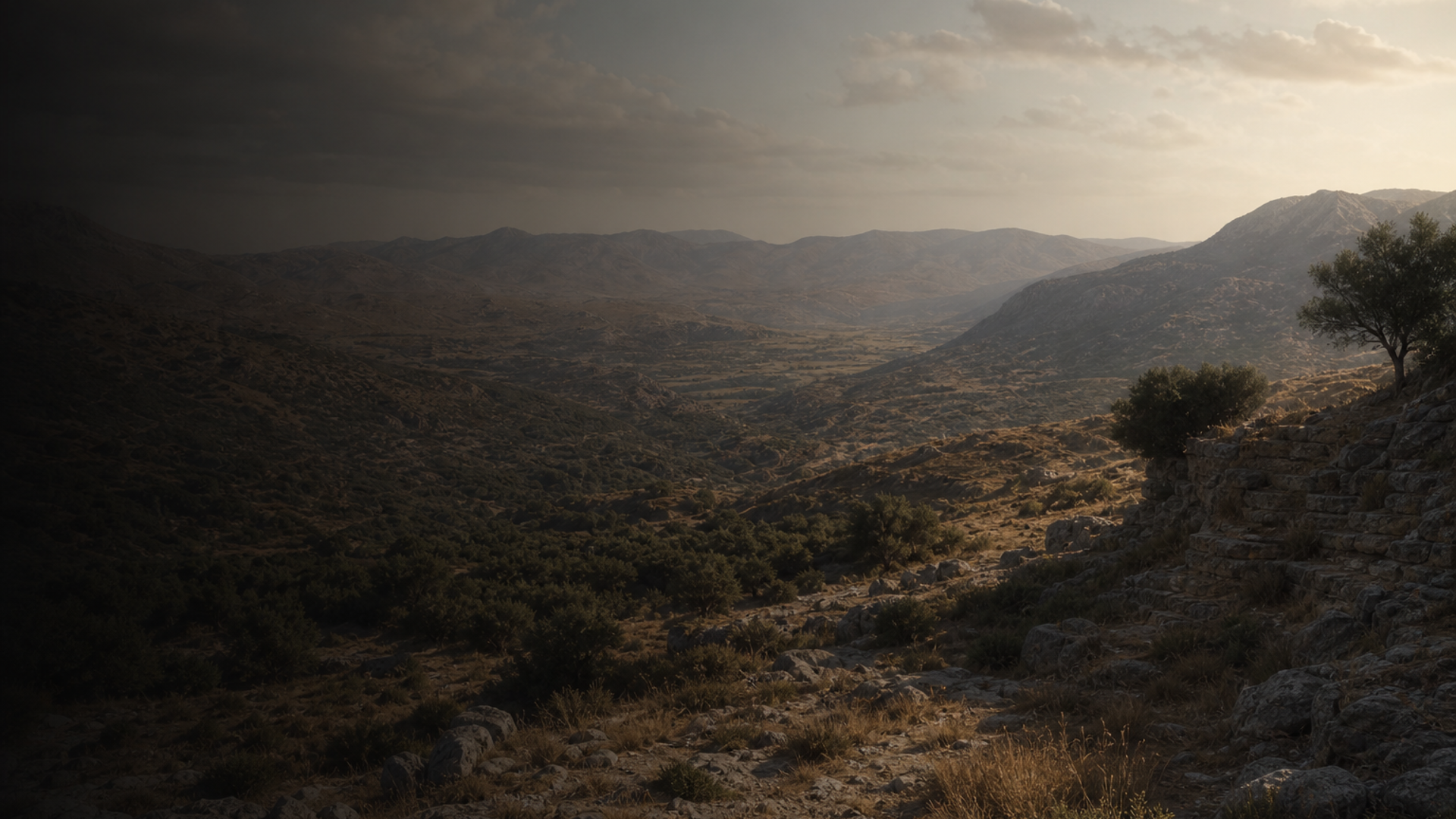
The Değirmendere assemblage sits within the Archaic SubGeometric horizon of southwestern Anatolia, a period that bridges late Iron Age transformations across the Aegean littoral. Dated between 750 and 480 BCE, the material culture at Değirmendere evokes a landscape of small harbors, rocky coves and long-standing coastal pathways. Archaeological data indicates pottery styles and settlement patterns that echo SubGeometric motifs known elsewhere in the Aegean, suggesting cultural dialogue across sea lanes.

Limited excavation and a modest suite of human remains (12 samples) means our picture remains provisional. Yet the site’s stratigraphy and associated finds point to a community engaged in both local subsistence and wider exchange networks. Environmental reconstructions for the Muğla region show a mosaic of arable terraces, pastures and maritime resources that would have shaped settlement choices. In cinematic terms, Değirmendere emerges as a place of salt-scented mornings and layered horizons: an Anatolian shore where inward-looking traditions met external currents. Archaeological data indicates continuity with earlier Anatolian settlement forms, but also the adoption of stylistic elements from Aegean partners. Caution: with only one sampled locality and a small temporal window, broader regional inferences should be framed as hypotheses pending further sampling.

  • Site: Değirmendere, Yatağan, Muğla (Aegean Turkey)
  • Dates: 750–480 BCE (Archaic SubGeometric)
  • Evidence: Pottery styles and coastal settlement patterns suggest Aegean connections
Chapter IV

Daily Life & Society

Archaeological traces from SubGeometric contexts like Değirmendere suggest communities organized at the household and neighborhood scale. Domestic architecture in comparable Aegean and Anatolian sites often features simple stone foundations, storage vessels and hearth-centered activity areas; while direct architectural descriptions from Değirmendere are limited, such analogies help reconstruct daily rhythms. The economy likely balanced subsistence farming (cereals, pulses), pasturing of small stock and exploitation of marine resources—fishing, shellfish gathering and coastal trade.

Material culture—coarsewares for storage, finer painted bowls for consumption—reflects both practical needs and social display. Limited burial evidence in the region hints at modest grave goods and rites that integrate local customs with broader Aegean mortuary vocabulary. Communal life would have been defined by seasonal cycles, the demands of sea and land, and networks of exchange that brought pottery, raw materials and ideas along the coasts. Socially, these settlements were probably small-scale polities with kin-based households; elite aggregation appears muted compared with the later Classical urban centers.

Archaeological data indicates that communal identity in the SubGeometric period was negotiated through craft, foodways and maritime ties, producing a textured cultural landscape where local practice and external influence coexisted.

  • Economy: mixed agriculture, pastoralism, and coastal resources
  • Material culture: local and imported pottery reflecting household and exchange
Chapter V

Genetic Profile

The DNA dataset from Değirmendere comprises 12 individuals dated to 750–480 BCE. Maternal lineages are the clearest signal in this small assemblage: mtDNA haplogroups include H (3 individuals), U (2), T (2), I (2) and J (2). These maternal markers are broadly consistent with a mixed Aegean–Anatolian maternal heritage. Haplogroup H is widespread across Europe and western Anatolia by the Iron Age and may reflect long-term regional continuity; U has deep roots in Europe and the Near East and can represent older hunter-gatherer or early Neolithic-derived lineages. Haplogroups T and J are often associated with Near Eastern Neolithic expansions and later connectivity across Anatolia and the eastern Mediterranean. Haplogroup I, while less frequent, appears in many European and Aegean ancient samples and may signal north-western links or retained local diversity.

No Y-DNA haplogroups are reported in this dataset, limiting inferences about paternal ancestry and sex-biased mobility. Likewise, autosomal genome-wide data are not detailed here, so statements about overall ancestry proportions or fine-scale affinities must remain tentative. With 12 samples from a single coastal site, patterns observed are suggestive rather than definitive: they point to a community with mixed maternal ancestries consistent with Aegean–Anatolian contact networks during the Archaic era. Future sampling—more individuals, additional sites, and combined uniparental plus autosomal analyses—will be essential to test hypotheses about migration, continuity and the role of maritime exchange in shaping genetic landscapes.

  • mtDNA diversity: H(3), U(2), T(2), I(2), J(2) — suggests mixed Aegean–Anatolian maternal ancestry
  • Limitations: 12 samples from one site; no Y-DNA reported — conclusions are provisional
Chapter VI

Legacy & Modern Connections

The genetic and archaeological traces of Değirmendere contribute a modest but evocative chapter to Anatolia’s deep history. Maternal lineages recorded in the site—H, U, T, I, J—are still detectable in modern populations across Anatolia and the Aegean, hinting at threads of continuity through millennia. Cultural legacies are also visible: coastal settlement patterns, maritime trade routes and craft traditions that shaped the Archaic world continued to influence later Classical and Hellenistic developments.

Archaeological data indicates continuity of coastal occupation and the long-term importance of the Aegean littoral as a conduit for people and ideas. Genetic signals from small datasets like Değirmendere are best read as preliminary windows: they show plausible connections between ancient maternal lineages and broader regional dynamics but require larger, multi-site sampling to trace direct lines into the present. In museum terms, Değirmendere offers a cinematic vignette—salt, pottery and genome fragments—that invites deeper exploration of how ancient lives connected across sea and shore.

  • Some maternal haplogroups persist in modern Anatolia, indicating potential continuity
  • Değirmendere underscores the Aegean coast as a long-term corridor of cultural and genetic exchange
AI 电源

AI 助手

就 Değirmendere: Archaic SubGeometric Echoes 文化提问

AI 助手 由DNAGENICS公司制作

解锁此特性
Ask questions about the Değirmendere: Archaic SubGeometric Echoes culture. Our AI assistant can explain genetic findings, historical context, archaeological evidence, and modern connections.
AI 样本分析

Değirmendere: Archaic SubGeometric Echoes 文化是人类历史中值得了解的一章……

遗传分析揭示了与早期种群的联系,同时显示了独特的适应和文化创新的证据。 古代DNA样本提供了对迁徙模式、社会结构以及古代种群之间的生物关系的深刻见解。

这是人工智能分析的预览。 解锁全AI 助手, 以探索关于:

  • 遗传组成和祖先
  • 移徙模式和起源
  • 日常生活和文化习俗
  • 现代遗传遗产

探索更古老的文化

揭开古代世界文明的故事

使用优惠码 可减免 35% • 11月12日 到期