Delphi: Iron Age Echoes

下载的 PDF 是图像副本。如需可选中文本及更好的辅助技术支持,请使用打印功能。

Delphi: Iron Age Echoes

揭开一个失落的文明

正在加载考古记录……

正在收集古代记录

跳转到主内容
Delphi: Iron Age Echoes
文明焦点

Delphi: Iron Age Echoes

Three ancient voices from Kastrouli near Delphi illuminate a fragile genetic and archaeological portrait (800–500 BCE).

800 CE - 500 BCE
Phokis, Greece (near Delphi)
滚动开始
Chapter I

剧情

了解 Delphi: Iron Age Echoes 文化

Archaeological remains from Kastrouli (Desfina, Phokis) spanning 800–500 BCE, paired with three genetic samples (mtDNA J1c, J1, U), offer preliminary insights into the Iron Age communities around Delphi. Limited sample size makes conclusions tentative but suggests continuity with broader Mediterranean maternal lineages.

Time Period

800–500 BCE

Region

Phokis, Greece (near Delphi)

Common Y-DNA

Undetermined / insufficient data

Common mtDNA

J1c (1), J1 (1), U (1)

Chapter II

时间线

这种文化历史上的关键时刻

800 BCE

Iron Age presence documented near Delphi

Archaeological layers at Kastrouli and nearby sites indicate continuous occupation and local cultural activity during the early Iron Age (circa 800 BCE).

Chapter III

Origins & Emergence

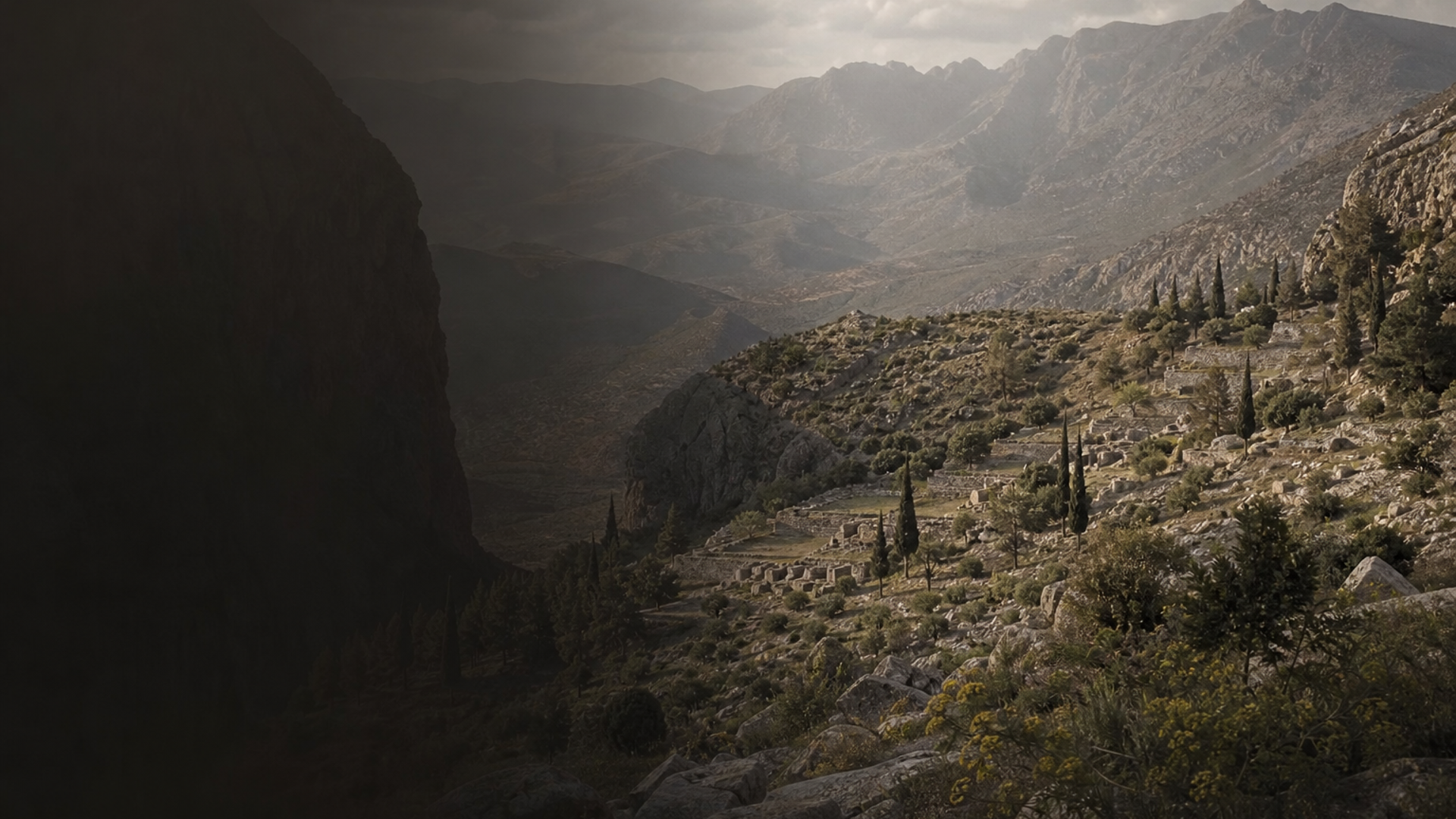
Nestled on the slopes beneath the famed sanctuary of Delphi, the settlement at Kastrouli (Desfina, Phokis) sits within a landscape shaped by pilgrimage, trade and seasonal herding. Archaeological data indicates occupation in the Iron Age, roughly 800–500 BCE, a time when small communities clustered around sanctuaries and arable pockets of the mainland. Material culture from nearby Delphi and surrounding Phokis — pottery styles, burial practices and fortification traces — show continuities with Late Bronze Age traditions alongside new regional expressions.

Visually, imagine low stone houses clinging to terraces, smoke rising from hearths, and pathways worn by ritual traffic toward the oracle. Limited evidence suggests local populations balanced farming, pastoralism and participation in sanctuary economies. The emergence of these Iron Age communities appears to be as much a story of persistence as of reorganization: people retained many inherited lifeways while adapting to shifting social networks across the Greek mainland.

Because the current genetic sample set is small (three individuals), any claims about origins must be cautious. Archaeological context, however, supports a picture of localized groups connected by exchange to broader Mediterranean and Aegean networks.

  • Settlement at Kastrouli active during 800–500 BCE
  • Material culture links to Late Bronze Age continuity and Iron Age regionalism
  • Communities likely combined farming, herding, and sanctuary-related activities
Chapter IV

Daily Life & Society

Daily life in the Delphi hinterland can be reconstructed from archaeology as a sequence of tactile routines: grinding grain on querns, repairing pottery, tending small olive plots and herds, and moving seasonally across upland pasture. Excavations in the Delphi region reveal domestic structures and associated finds consistent with small household-based economies and inter-household cooperation. The social world was interwoven with the sacred: the oracle at Delphi and its festivals drew pilgrims and traders, creating episodic surges of activity that would have reshaped labor demands and exchange.

Burial evidence across central Greece in the Iron Age shows a mix of cremation and inhumation practices, suggesting varied local customs and identities. Craft specialization appears modest but present — metalworking scraps and imported ceramics attest to participation in long-distance networks. Everyday life thus blended the intimate rhythms of village households with the broader cultural dynamism of the Archaic era.

Careful interpretation is needed: Kastrouli contributes a local perspective, but its small sample of genetic and material data means we must avoid overgeneralizing across the entire Delphi micro-region.

  • Household economies centered on farming, herding, and craft
  • Interaction with the sanctuary economy of Delphi shaped seasonal rhythms
Chapter V

Genetic Profile

Three mitochondrial genomes recovered from Kastrouli (dated to ca. 800–500 BCE) yield haplogroups J1c, J1, and U (one individual each). These maternal lineages are broadly distributed in Europe and the Near East during the Bronze and Iron Ages. Haplogroup J (including J1 and J1c) is often associated with Neolithic and later Mediterranean gene flow from Anatolia and the Near East, while mtDNA U is a deeper European lineage found across millennia.

No robust Y-chromosome pattern can be reported from these samples: common Y-DNA haplogroups were not determined or were not preserved sufficiently for confident assignment. The very small sample count (n=3) makes population-level inferences preliminary; statistical power is limited and susceptible to sampling bias. Nevertheless, the maternal signal from these three individuals is consistent with archaeological expectations for the central Greek mainland — a mix of lineages reflecting long-term local continuity and connections to wider Mediterranean gene pools.

Comparative ancient DNA studies in Greece and the Aegean reveal mosaic ancestry patterns in the Iron Age, with varying proportions of local Bronze Age ancestry and incoming elements. The Kastrouli mtDNA results fit this nuanced picture: they neither demand wholesale migration models nor exclude episodes of gene flow. Future sampling (more individuals, Y-DNA, and genome-wide data) is essential to refine demographic narratives.

  • mtDNA: J1c (1), J1 (1), U (1) — three individuals total
  • No reliable Y-DNA reported; sample size (n=3) limits firm population conclusions
Chapter VI

Legacy & Modern Connections

The human threads from Kastrouli weave into modern Greece in subtle ways. Maternal lineages like J and U persist in contemporary Mediterranean and European populations, reflecting long-standing genetic continuity as well as episodic mobility. Archaeology reminds us that the Iron Age landscapes around Delphi were dynamic meeting points for local communities and wider networks of exchange and belief.

For modern descendants and researchers alike, these three genomes act as a fragile bridge: evocative but incomplete. They invite broader sampling and integrated study — combining archaeology, isotopes, and genome-wide data — to reveal how the peoples around Delphi participated in the demographic and cultural currents of the early first millennium BCE. Until such data accumulates, conclusions must remain cautious, framed as provisional steps toward understanding a storied past.

  • Maternal lineages seen at Kastrouli persist in modern Mediterranean gene pools
  • Current genetic picture is a tentative bridge — further sampling is required
AI 电源

AI 助手

就 Delphi: Iron Age Echoes 文化提问

AI 助手 由DNAGENICS公司制作

解锁此特性
Ask questions about the Delphi: Iron Age Echoes culture. Our AI assistant can explain genetic findings, historical context, archaeological evidence, and modern connections.
AI 样本分析

Delphi: Iron Age Echoes 文化是人类历史中值得了解的一章……

遗传分析揭示了与早期种群的联系,同时显示了独特的适应和文化创新的证据。 古代DNA样本提供了对迁徙模式、社会结构以及古代种群之间的生物关系的深刻见解。

这是人工智能分析的预览。 解锁全AI 助手, 以探索关于:

  • 遗传组成和祖先
  • 移徙模式和起源
  • 日常生活和文化习俗
  • 现代遗传遗产

探索更古老的文化

揭开古代世界文明的故事

使用优惠码 可减免 35% • 11月12日 到期




