Dinkha Tepe: Bronze–Iron Iran

下载的 PDF 是图像副本。如需可选中文本及更好的辅助技术支持,请使用打印功能。

Dinkha Tepe: Bronze–Iron Iran

揭开一个失落的文明

正在加载考古记录……

正在收集古代记录

跳转到主内容
Dinkha Tepe: Bronze–Iron Iran
文明焦点

Dinkha Tepe: Bronze–Iron Iran

An archaeogenetic portrait from 2012–841 BCE at a tell in present-day Iran

2012 CE - 841 BCE
Dinkha Tepe, Iran
滚动开始
Chapter I

剧情

了解 Dinkha Tepe: Bronze–Iron Iran 文化

Archaeological and aDNA evidence from 14 individuals at Dinkha Tepe (2012–841 BCE) reveals maternal lineages dominated by mtDNA U, J, and T. Archaeological data indicate local continuity across the Bronze–Iron transition with genetic signals reflecting regional Near Eastern affinities.

Time Period

2012–841 BCE

Region

Dinkha Tepe, Iran

Common Y-DNA

Not reported / undetermined

Common mtDNA

U (4), J (3), T (2), N (1), U2d (1)

Chapter II

时间线

这种文化历史上的关键时刻

2012 BCE

Earliest sampled burial at Dinkha Tepe

Oldest radiocarbon-calibrated burial in the current dataset dates to 2012 BCE, anchoring the Bronze–Iron transition sequence for the site.

Chapter III

Origins & Emergence

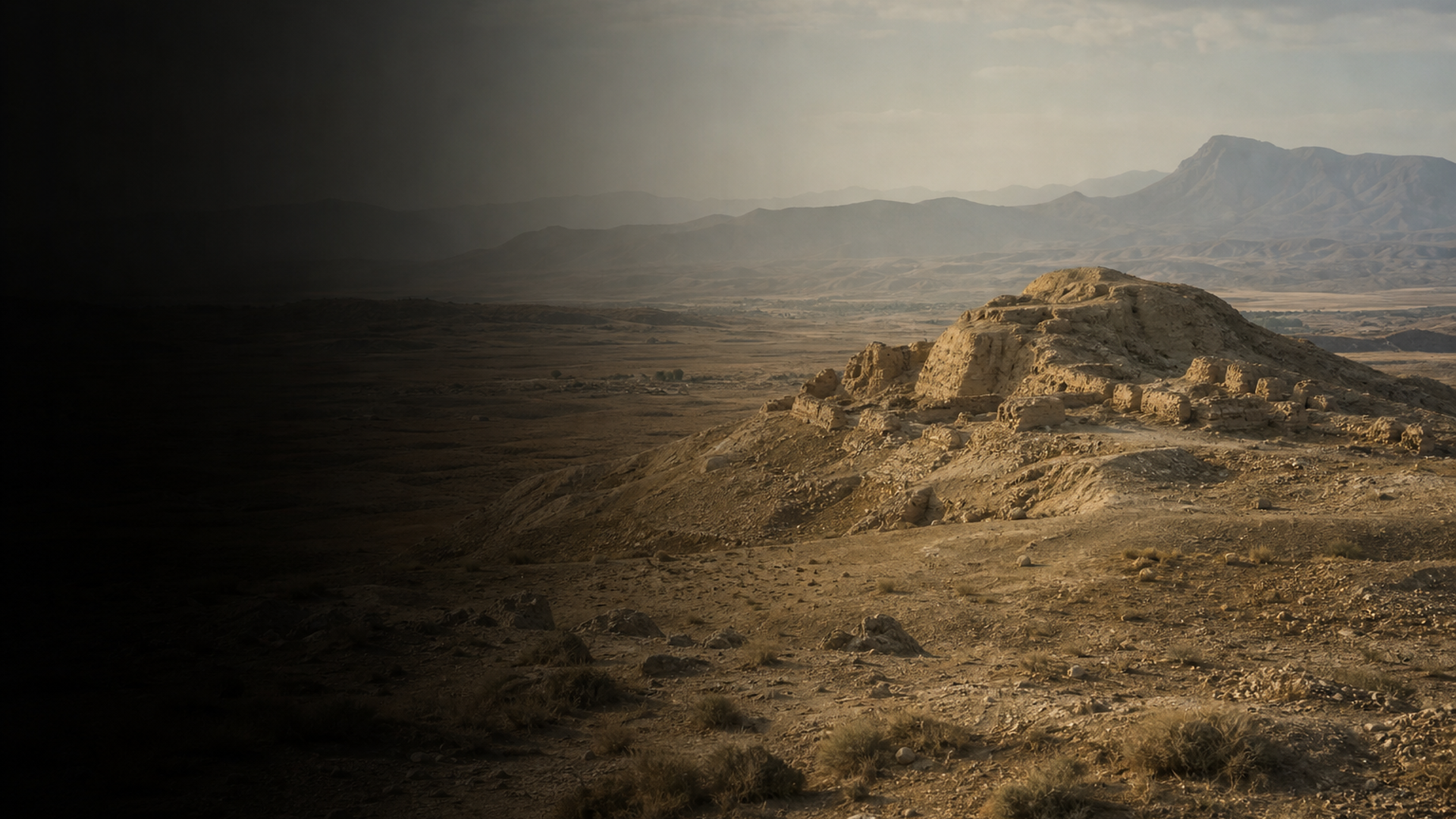
Dinkha Tepe sits in the archaeological landscape of ancient Iran as a compact story told in layers of earth and clay. Radiocarbon-calibrated contexts and stratigraphic sequences at the tell span the late Bronze Age into the early Iron Age; the sampled burials dated between 2012 and 841 BCE. Archaeological data indicate a community that participated in long-distance exchange networks while maintaining local lifeways: pottery styles show affinities with neighboring regions, and metallurgical debris points to local craft and imported raw materials.

Archaeological evidence suggests continuity of occupation through changing political horizons of the second and first millennia BCE. Ceramic horizons, building remains, and funerary assemblages hint at gradual social transformations rather than abrupt replacement. Limited evidence suggests episodes of external influence—novel ceramic types and prestige goods—penetrated this frontier zone, likely carried by trade, marriage, or small-scale movement of people.

Seen from a cinematic vantage the tell is a palimpsest: each layer a curtain lifting on a community negotiating continuity and change at the edge of larger cultural spheres. While material culture frames the story, ancient DNA from the same contexts allows us to test whether cultural change tracked demographic change.

  • Dated sequence: 2012–841 BCE spanning Bronze–Iron transition
  • Material culture shows both local continuity and external influences
  • Dinkha Tepe provides a continental frontier perspective in ancient Iran
Chapter IV

Daily Life & Society

Archaeological assemblages from Dinkha Tepe — household ceramics, loom weights, animal bone, and fragments of metalworking — sketch a lived world of farming, herding, and craft specialization. Hearths and storage pits imply cereal cultivation and household provisioning; faunal remains suggest mixed herding strategies with cattle, sheep, and goat. Funerary contexts recovered from the mound include both primary and secondary interments, sometimes accompanied by modest grave goods. These burial practices reflect social identities negotiated through memory and material display rather than lavish elite ostentation.

Stratified domestic compounds and rubbish deposits indicate generations of reworked living space, where pottery forms evolve slowly and everyday objects were repaired and reused. Archaeological data indicates active participation in regional exchange: raw metal and stylistic motifs on ceramics point to ties with nearby plains and highland networks. In cinematic terms, daily life at Dinkha Tepe was composed of quiet routines — tending fields, shaping clay, and weaving social ties — punctuated by episodes of exchange that stitched the tell into wider economic and cultural webs.

  • Economy based on mixed agriculture, herding, and local craft
  • Burial variability suggests household-level identities with modest grave goods
Chapter V

Genetic Profile

Fourteen individuals sampled from Dinkha Tepe provide a first genetic vista onto a community active between 2012 and 841 BCE. Mitochondrial DNA is reported for most samples and is dominated by West Eurasian maternal lineages: haplogroup U (4 individuals), J (3), T (2), N (1), and the rarer U2d (1). These mtDNA types are common across the Near East and parts of Eurasia and often reflect deep maternal ancestries that predate the historical Bronze–Iron sequence.

Notably, no consistent Y-DNA profile is available in the current dataset (Y-chromosome information is not reported or remains undetermined), so paternal-line inferences must be withheld. Archaeogenetic signals from the mtDNA suggest continuity with broader regional maternal lineages and do not, by themselves, demonstrate major population replacement during the Bronze–Iron transition at this site. However, the presence of J and T alongside U haplogroups points to a mix of local and regionally widespread maternal ancestries that could reflect longstanding Neolithic and Bronze Age genetic substrates plus later contacts.

Because the dataset comprises 14 individuals from a single tell, conclusions about population dynamics must remain cautious. The sample offers strong directional clues—regional affinity and maternal continuity—but resolving finer-scale admixture or sex-biased migration requires larger, geographically broader datasets and any available Y-DNA data. Ancient DNA and archaeological context together provide a complementary narrative: cultural change at Dinkha Tepe was not necessarily accompanied by wholesale demographic turnover, at least on the maternal side.

  • mtDNA diversity dominated by U, with notable J and T lineages
  • Y-DNA not reported; paternal dynamics remain unresolved
Chapter VI

Legacy & Modern Connections

The genetic mosaic observed at Dinkha Tepe — maternal haplogroups that continue to appear across the Near East and Eurasia — speaks to long-term continuity in the human tapestry of this landscape. Haplogroups like U and J persist in modern populations of Iran and neighboring regions, but direct one-to-one ancestry claims are inappropriate: centuries of movement, admixture, and population shifts separate ancient tell-dwellers from contemporary communities.

Archaeological continuity in material culture combined with the mtDNA profile suggests that elements of the ancient local gene pool persisted through the Bronze–Iron transition, even as social and political horizons shifted. For modern descendants and researchers alike, Dinkha Tepe offers a tangible link to ancestral lifeways — not as a single origin story but as a layered inheritance of genes, objects, and practices woven over millennia. Ongoing and expanded ancient DNA sampling across Iran will sharpen these connections and test hypotheses about regional continuity versus migration during key historical transitions.

  • Maternal lineages at Dinkha Tepe echo haplogroups found in the modern Near East
  • Direct descent is complex; broader sampling is needed for definitive links
AI 电源

AI 助手

就 Dinkha Tepe: Bronze–Iron Iran 文化提问

AI 助手 由DNAGENICS公司制作

解锁此特性
Ask questions about the Dinkha Tepe: Bronze–Iron Iran culture. Our AI assistant can explain genetic findings, historical context, archaeological evidence, and modern connections.
AI 样本分析

Dinkha Tepe: Bronze–Iron Iran 文化是人类历史中值得了解的一章……

遗传分析揭示了与早期种群的联系,同时显示了独特的适应和文化创新的证据。 古代DNA样本提供了对迁徙模式、社会结构以及古代种群之间的生物关系的深刻见解。

这是人工智能分析的预览。 解锁全AI 助手, 以探索关于:

  • 遗传组成和祖先
  • 移徙模式和起源
  • 日常生活和文化习俗
  • 现代遗传遗产

探索更古老的文化

揭开古代世界文明的故事

使用优惠码 可减免 35% • 11月12日 到期




