Echoes from Jabuticabeira II

下载的 PDF 是图像副本。如需可选中文本及更好的辅助技术支持,请使用打印功能。

Echoes from Jabuticabeira II

揭开一个失落的文明

正在加载考古记录……

正在收集古代记录

跳转到主内容
Echoes from Jabuticabeira II
文明焦点

Echoes from Jabuticabeira II

Shell-mound voices from coastal Brazil, where people and genes meet the estuary

410 BCE - 880 CE
Coastal Brazil (Jabuticabeira Shell Midden II)
滚动开始
Chapter I

剧情

了解 Echoes from Jabuticabeira II 文化

Archaeological remains from Jabuticabeira Shell Midden II (410 BCE–880 CE) reveal coastal sambaqui lifeways. Ancient DNA from five individuals shows predominantly mtDNA C1c and a single Y‑haplogroup Q lineage, a preliminary window into pre‑Columbian coastal populations of southern Brazil.

Time Period

410 BCE–880 CE

Region

Coastal Brazil (Jabuticabeira Shell Midden II)

Common Y-DNA

Q (observed: 1/5)

Common mtDNA

C1c (4/5), B2 (1/5)

Chapter II

时间线

这种文化历史上的关键时刻

200 CE

Peak shell-midden use at Jabuticabeira II

Archaeological layers indicate intense midden accumulation and repeated occupation around 200 CE, reflecting sustained coastal foraging and aggregation.

Chapter III

Origins & Emergence

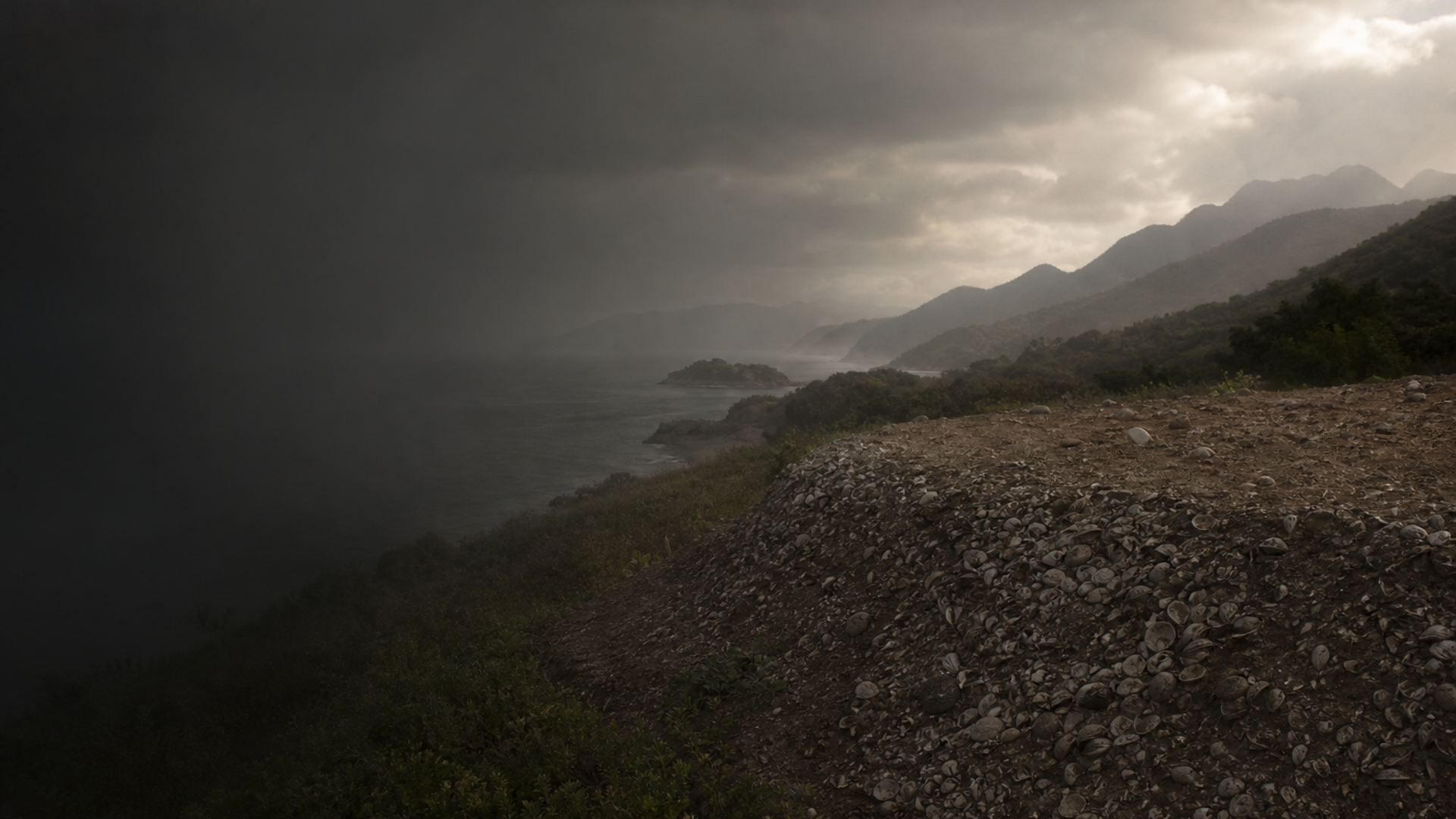
The people represented at Jabuticabeira Shell Midden II lived along Brazil's southern coast during a broad interval from roughly 410 BCE to 880 CE. Archaeological data indicates they were part of the regional sambaqui (shell mound) tradition: long-lived, often monumental midden deposits built from the refuse of maritime and estuarine resources. These sites are archaeological palimpsests—layers of shell, charcoal, bone and artifacts that record repeated episodes of occupation, feasting, and disposal across generations.

Limited evidence suggests that Jabuticabeira II was a focal place in a network of coastal settlements, where communities exploited rich estuarine fisheries, shellfish beds, and nearby terrestrial resources. Radiocarbon dates from the site bracket occupations across many centuries, but the pace and character of demographic change remain uncertain. The genetic data from five sampled individuals offers a tantalizing, though preliminary, glimpse: maternal lineages are dominated by mtDNA C1c with a single B2, while one male individual carries haplogroup Q — lineages that are broadly characteristic of Indigenous American populations. Because only five genomes are available, any reconstruction of population origins, continuity, or migration must be cautious and framed as provisional.

  • Occupations dated c. 410 BCE–880 CE at Jabuticabeira Shell Midden II
  • Part of the sambaqui shell‑mound tradition along southern Brazil's coast
  • Genetic signal is preliminary due to small sample count (n=5)
Chapter IV

Daily Life & Society

Imagine a coastline shaped by tides and the accumulated work of generations: middens rising like low terraces of shell, hearths glowing at dusk, fish and shellfish drying on racks. Archaeological remains at Jabuticabeira II speak to a diet focused on marine and estuarine resources—fish vertebrae, mollusk shells, and bird and mammal bones appear in midden deposits—supplemented by gathered and cultivated plant foods. Artifacts recovered from similar sambaqui contexts include stone tools, bone implements, and fragmentary ceramics; these items suggest varied craft activities and food processing routines.

Social life at shell-mound sites likely combined long-term residential use with episodic communal activities: large middens may mark places of aggregation, exchange, and ritual. Burials are sometimes found within or adjacent to sambaquis, and where preserved they can illuminate mortuary practices and social differentiation. For Jabuticabeira II, archaeological strata indicate repeated reuse of space over centuries, implying cultural continuity and strong place attachment. However, preservation biases and limited excavation mean many aspects—social hierarchy, seasonal mobility, and trade networks—remain incompletely understood.

  • Diet centered on fish, shellfish, and local terrestrial resources
  • Middens served as both refuse and focal places for repeated occupation
Chapter V

Genetic Profile

Ancient DNA recovered from five individuals at Jabuticabeira Shell Midden II provides a focused, yet small, dataset linking bones from the sambaqui to Indigenous American genetic lineages. Maternally, four individuals carry mtDNA haplogroup C1c and one carries B2. Both C1c and B2 are sublineages widely observed across pre‑ and post‑contact Native American populations and are interpreted as part of the founding maternal diversity of the Americas. Paternal data are much sparser: one male sample shows Y‑DNA haplogroup Q, a lineage that is also common among Indigenous peoples of the Americas.

These genetic signatures align with expectations for coastal South American populations, but the low sample count (n=5) constrains robust inferences about population structure, sex‑biased mobility, or continuity with later groups. Archaeogenetic data can be integrated with archaeological context—burial placement, isotopic evidence of diet, and artifact styles—to explore kinship, migration, and community boundaries. For Jabuticabeira II, current aDNA points to local continuity of Indigenous American maternal lineages through the sampled interval, yet broader regional sampling is needed to test hypotheses about gene flow along the Atlantic coast or connections to inland groups.

  • mtDNA dominated by C1c (4/5) with one B2—typical Native American maternal lineages
  • Y‑DNA Q observed in one male; conclusions limited by small sample size
Chapter VI

Legacy & Modern Connections

The material echoes of Jabuticabeira II—the shell terraces, food remains, and human burials—are part of a long coastal human story that continues to inform regional identities. Genetic continuity in maternal lineages suggests links between these ancient beachside communities and the broad genetic heritage of Indigenous South American populations. For modern descendant communities and researchers alike, archaeogenetics offers a powerful but sensitive tool: it can illuminate ancestry and mobility, but results must be contextualized with archaeology, oral histories, and ethical engagement.

Because the dataset from Jabuticabeira II is small, any claims about direct descent or population replacement are tentative. Future collaborations that expand sampling, incorporate stable isotope and paleoenvironmental data, and engage local stakeholders will refine our understanding of how the sambaqui builders are connected to present-day people along Brazil's southern coast.

  • Genetic signals point toward continuity with broader Indigenous American maternal lineages
  • Small sample size necessitates careful, collaborative follow-up research
AI 电源

AI 助手

就 Echoes from Jabuticabeira II 文化提问

AI 助手 由DNAGENICS公司制作

解锁此特性
Ask questions about the Echoes from Jabuticabeira II culture. Our AI assistant can explain genetic findings, historical context, archaeological evidence, and modern connections.
AI 样本分析

Echoes from Jabuticabeira II 文化是人类历史中值得了解的一章……

遗传分析揭示了与早期种群的联系,同时显示了独特的适应和文化创新的证据。 古代DNA样本提供了对迁徙模式、社会结构以及古代种群之间的生物关系的深刻见解。

这是人工智能分析的预览。 解锁全AI 助手, 以探索关于:

  • 遗传组成和祖先
  • 移徙模式和起源
  • 日常生活和文化习俗
  • 现代遗传遗产

探索更古老的文化

揭开古代世界文明的故事

使用优惠码 可减免 35% • 11月12日 到期