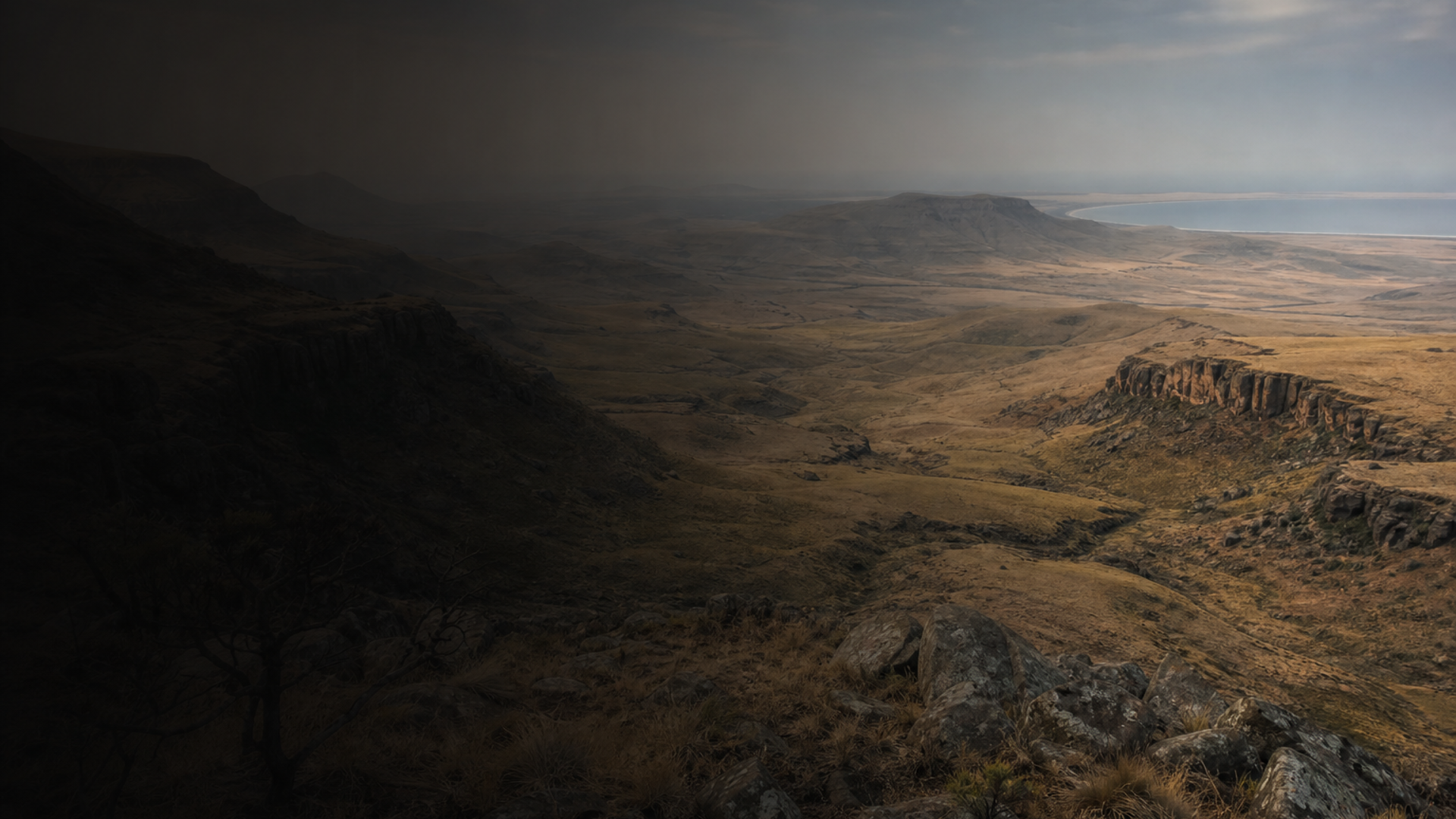
The places these people inhabited were cinematic: cliff overhangs that collect centuries of refuse, estuaries that concentrate fish and shellfish, and upland grasslands hunted with traps and projectiles. Archaeological assemblages at Eland Cave and Champagne Castle preserve stone flakes, hearth features, and ochre-stained artifacts that point to tool manufacture, cooking, and symbolic behavior. Shell beads and small personal items indicate long-distance exchange or coastal connections for inland groups.
Zooarchaeological remains from similar regional sites indicate a reliance on diverse resources—antelopes, small game, fish and marine shell—suggesting flexible seasonal rounds rather than a single subsistence strategy. By later centuries within the dated range, iron implements and pastoral residues appear regionally; archaeological data indicates that interactions with pastoralists and farming communities affected local economies unevenly across space and time.
Socially, mortuary variability (burial position, grave goods where present) implies varied social roles and identities. Yet the sparse sample set limits broad inferences about social structure across centuries. Carefully contextualized excavation and future aDNA sampling will help reveal whether observed patterns reflect local continuity, episodic migration, or layered occupations at the same sites.