Echoes of Early Bronze France

下载的 PDF 是图像副本。如需可选中文本及更好的辅助技术支持,请使用打印功能。

Echoes of Early Bronze France

揭开一个失落的文明

正在加载考古记录……

正在收集古代记录

跳转到主内容
Echoes of Early Bronze France
文明焦点

Echoes of Early Bronze France

Six ancient genomes illuminate coastal and alpine lives — cautiously interpreted

2437 CE - 1503 BCE
France (Alps, Brittany)
滚动开始
Chapter I

剧情

了解 Echoes of Early Bronze France 文化

Archaeological remains from Lauzet‑Ubaye and Port Blanc (Quiberon), dated c. 2437–1503 BCE, offer a preliminary genetic window into Early Bronze Age France. Limited samples (n=6) show diverse maternal lineages; interpretations remain tentative.

Time Period

c. 2437–1503 BCE

Region

France (Alps, Brittany)

Common Y-DNA

Not reported / limited data

Common mtDNA

J (2), W6 (1), T1a (1), H1e (1), T (1)

Chapter II

时间线

这种文化历史上的关键时刻

2500 BCE

Early Bronze networks intensify

Exchange of metals and new burial practices expand across Western Europe, setting the stage for regional Early Bronze Age expressions in France (brief, 50 words max).

Chapter III

Origins & Emergence

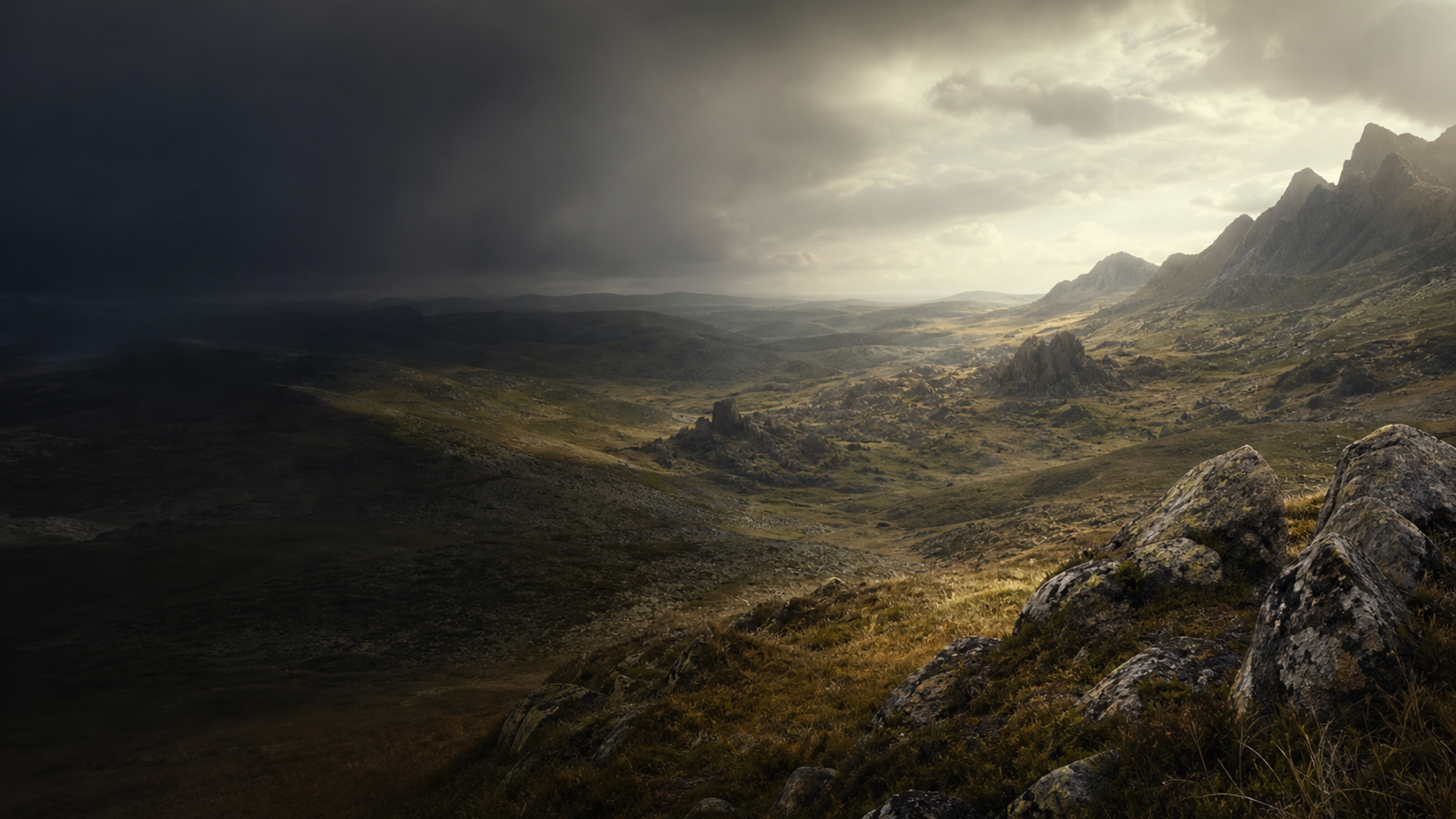
Across rocky coasts and high valleys, the Early Bronze Age in what is now France emerges in the archaeological record as a time of mobility and regional transformation. Radiocarbon dates for the six genomes in this dataset span roughly 2437–1503 BCE and derive from two distinct loci: an alpine grave at Lauzet‑Ubaye (Villard) and coastal burials at Port Blanc, Quiberon, in Morbihan. Archaeological data indicates continuing trade in metalwork and the persistence of local burial rites even as long‑distance exchange intensified.

Limited evidence suggests these people lived within networks that connected the Atlantic façade to interior river routes and the trans‑Alpine corridors. Material culture shows affinities with broader Early Bronze Age phenomena in Western Europe — hoards of copper and bronze, changes in dwelling construction, and shifting funerary practices — but regional expressions remained strong. Ancient DNA from neighboring regions has shown increased 'steppe‑related' ancestry during the third millennium BCE; however, with only six samples here, any claim about large‑scale population replacement in France_EBA must be tentative. Instead, the archaeological and genetic picture best supports a mosaic: local continuity interwoven with incoming influences that reshaped social and economic landscapes.

  • Samples dated c. 2437–1503 BCE from alpine and coastal sites
  • Material culture shows regional continuity with broader Bronze Age exchange
  • Genetic and archaeological data point to interaction, not simple replacement
Chapter IV

Daily Life & Society

Excavations at Lauzet‑Ubaye (Villard) and Port Blanc (Quiberon) evoke lives tied to steep valleys, rivers, and the sea. Archaeological remains — including domestic architecture fragments, funerary deposits, and associated artifacts — suggest economies built on mixed farming, pastoralism, coastal fishing, and metalworking. In alpine hamlets seasonal transhumance between valley floors and higher pastures likely structured household rhythms, while Atlantic communities exploited estuaries and coastal resources.

Grave goods and burial contexts reveal social differentiation: some burials are modest, others accompanied by metal objects or personal ornaments, hinting at status distinctions and differing life histories. Craft specialization appears in copper and bronze items, implying skilled metallurgy and exchange networks that carried raw materials and finished goods across hundreds of kilometers. Skeletal evidence from contemporary Early Bronze Age sites frequently records wear patterns consistent with heavy manual labor and varied diets combining cereals, meat, and marine resources.

Archaeological interpretations must remain cautious: the small number of genetic samples does not capture the full spectrum of social roles and local diversity. Yet when bones, artifacts, and isotopes are read together, a cinematic portrait emerges of communities negotiating local traditions and new connections across a changing Bronze Age world.

  • Mixed farming, pastoralism, coastal resource use reflected in sites
  • Grave variability and metalwork point to social differentiation
Chapter V

Genetic Profile

The genetic evidence for France_EBA here is slender but informative. Six mitochondrial genomes indicate maternal diversity: haplogroups J (2 individuals), W6 (1), T1a (1), H1e (1), and T (1). These mtDNA lineages are broadly distributed in Bronze Age and later European populations and reflect a mix of maternal ancestries rather than a single origin. No consistent or dominant Y‑chromosome pattern is available in this dataset, and published Y‑DNA data for these particular individuals are not reported, so paternal lineages remain unresolved.
Contextualizing these mtDNA findings with wider ancient DNA studies of Western Europe suggests a complex ancestry picture. Across the third and second millennia BCE, many regions show admixture between local Neolithic farmer descendants and incoming groups carrying Steppe‑related ancestry; maternal lineages like J and T can derive from farmer and post‑Neolithic networks, while lineages such as H1 are longstanding in Europe. Because the sample count is fewer than ten, conclusions must be preliminary: observed mtDNA diversity could reflect local female mobility, marriage networks along coasts and valleys, or simply sampling of an already diverse population.

Future recovery of nuclear genomes and Y‑chromosome data from more individuals at Lauzet‑Ubaye, Port Blanc, and other Early Bronze Age French sites will be essential to resolve population structure, sex‑biased mobility, and links to broader Bronze Age migrations.

  • mtDNA diversity includes J, W6, T1a, H1e, T — indicating mixed maternal ancestry
  • Sample count low (n=6); nuclear and Y‑DNA data are needed for robust conclusions
Chapter VI

Legacy & Modern Connections

Although these six genomes represent a small window, they contribute to the evolving story of Bronze Age France: a patchwork of local traditions shaped by wider currents of exchange and movement. Some maternal lineages observed here persist in later European populations, hinting at continuity in female lines through millennia. The sites — Lauzet‑Ubaye in the southern Alps and Port Blanc on the Breton coast — remind us that geography guided connections: mountain passes and maritime routes were equally important arteries for people and ideas.

For modern DNA users, these ancient individuals illustrate the complexity behind broad regional labels. Genetic heritage in contemporary French populations is the product of layered histories — Mesolithic and Neolithic settlers, Bronze Age mobility, and later historical movements. Given the limited sample size, any direct lineage claims should be cautious, but integrating archaeology with genetics helps translate bones and artifacts into human stories of adaptation, trade, and enduring ties to place.

  • Some observed maternal haplogroups have continuity in later European populations
  • Archaeogenetics links local archaeological contexts to long‑term demographic processes
AI 电源

AI 助手

就 Echoes of Early Bronze France 文化提问

AI 助手 由DNAGENICS公司制作

解锁此特性
Ask questions about the Echoes of Early Bronze France culture. Our AI assistant can explain genetic findings, historical context, archaeological evidence, and modern connections.
AI 样本分析

Echoes of Early Bronze France 文化是人类历史中值得了解的一章……

遗传分析揭示了与早期种群的联系,同时显示了独特的适应和文化创新的证据。 古代DNA样本提供了对迁徙模式、社会结构以及古代种群之间的生物关系的深刻见解。

这是人工智能分析的预览。 解锁全AI 助手, 以探索关于:

  • 遗传组成和祖先
  • 移徙模式和起源
  • 日常生活和文化习俗
  • 现代遗传遗产

探索更古老的文化

揭开古代世界文明的故事

使用优惠码 可减免 35% • 11月12日 到期




