Echoes of Early Iron Age England

下载的 PDF 是图像副本。如需可选中文本及更好的辅助技术支持,请使用打印功能。

Echoes of Early Iron Age England

揭开一个失落的文明

正在加载考古记录……

正在收集古代记录

跳转到主内容
Echoes of Early Iron Age England
文明焦点

Echoes of Early Iron Age England

Human lives at hillforts, lakeside villages and fields — where archaeology meets ancient DNA.

800 CE - 381 BCE
England, United Kingdom (southern sites)
滚动开始
Chapter I

剧情

了解 Echoes of Early Iron Age England 文化

Early Iron Age communities across southern England (800–381 BCE) lived in hillforts and lakeside settlements. Archaeological remains and 34 ancient genomes reveal a predominantly Bronze-Age-derived ancestry with local maternal continuity and varied male lineages, offering a cautious window into population change.

Time Period

800–381 BCE

Region

England, United Kingdom (southern sites)

Common Y-DNA

R (12/34 predominant), F (1), I (1)

Common mtDNA

H (13), K (5), U (5), J (2), H3 (2)

Chapter II

时间线

这种文化历史上的关键时刻

800 BCE

Early Iron Age onset in southern Britain

Hillfort construction and increased iron use mark cultural shifts from Late Bronze Age lifeways across southern England.

500 BCE

Peak hillfort activity and regional exchange

Fortified sites like Cadbury Castle show intensified occupation and material exchange with continental networks.

381 BCE

Terminal samples in England_EIA

The latest genomes in this dataset date to this time, framing the sampled interval for genetic analysis.

Chapter III

Origins & Emergence

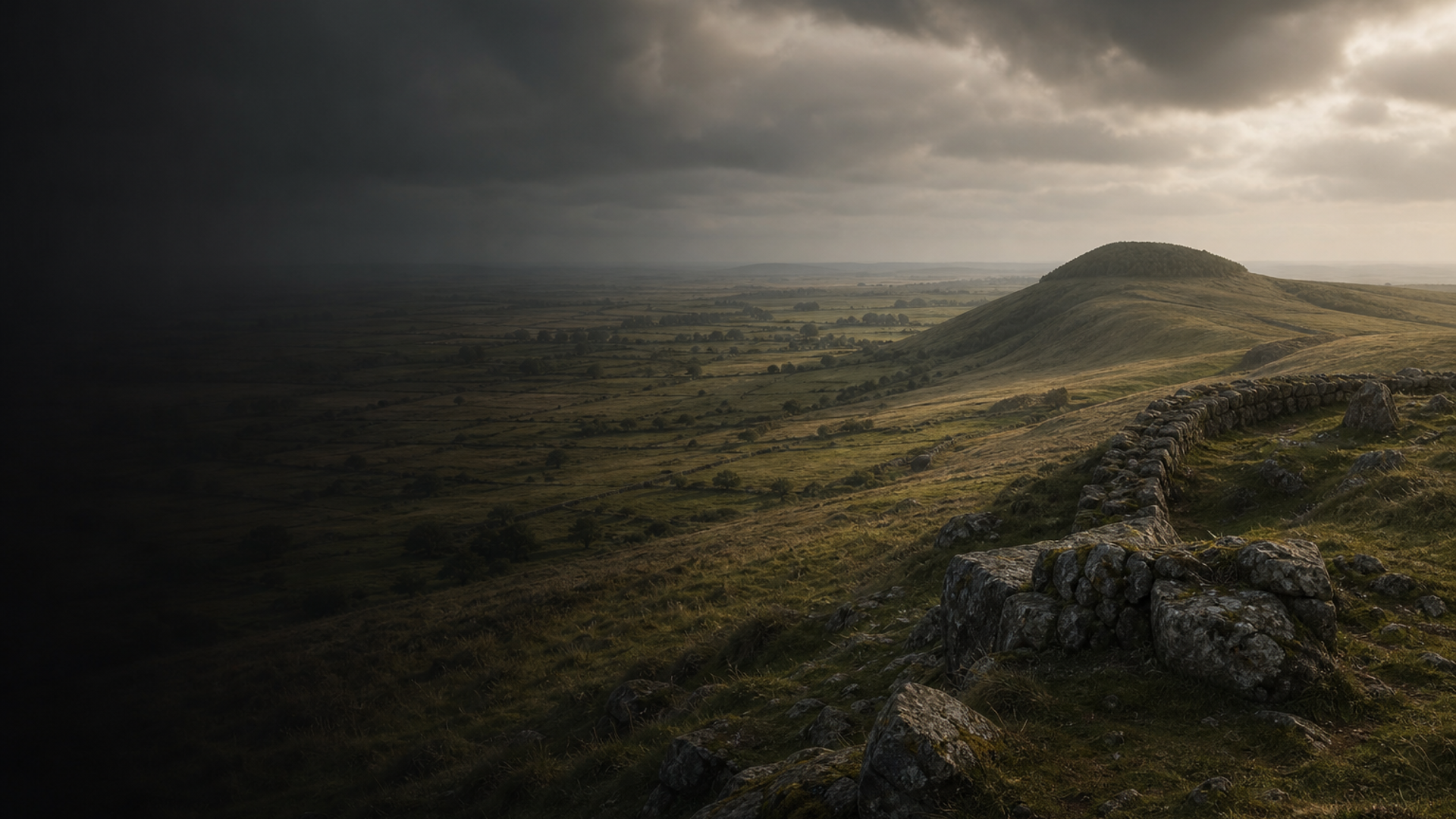
The England_EIA designation covers communities in southern England during the Early Iron Age, roughly 800–381 BCE. Archaeological landscapes — from hillforts such as Cadbury Castle (Somerset) and Kingsdown Camp (Mells Down), to lakeside sites like Meare Lake Village (Somerset) and small settlements at Trumpington Meadows and Teversham in Cambridgeshire — show a mosaic of defended centers, farmsteads and wetlands exploitation.

Material culture signals both continuity with Late Bronze Age lifeways and new trajectories in craft and social display: iron tools appear alongside longstanding ceramic traditions, and hillforts grow in prominence as focal places. Limited evidence suggests changing connections with continental Europe, seen in imported goods and stylistic influences, but the pattern is complex and regionally varied. Archaeological data indicates that many communities retained long-term local practices while selectively adopting innovations.

Genetically, the samples in this group span multiple sites in Wiltshire, Gloucestershire, Somerset and Cambridgeshire, offering geographically spread insight. While genetics cannot on its own map cultural identities, the combined archaeological-genetic picture points to populations largely descended from earlier British Bronze Age groups with episodic influxes and local social reorganization. Where the data are thin, interpretations remain provisional and should be treated as working hypotheses rather than settled narratives.

  • Sites include Cadbury Castle, Meare Lake Village, Amesbury Down and Trumpington Meadows
  • Material culture mixes Bronze Age continuity with emerging Iron Age forms
  • Evidence suggests regional variation and selective continental connections
Chapter IV

Daily Life & Society

Life in England's Early Iron Age would have been a blend of agriculture, craft specialization, and community-scale coordination. Excavations at fortified sites like Cadbury Castle reveal terraces, ramparts and occupation layers consistent with groups organizing labor for defense and communal tasks. Wetland sites such as Meare Lake Village provide exceptional preservation of organic materials, indicating fishing, woodworking and reed technologies alongside cereal cultivation.

Burials and hoards — though unevenly preserved across sites — suggest social differentiation: some deposits are modest, others elaborate, implying emerging elite behaviors and ritual acts tied to landscape features. Pottery, metalwork and textile fragments show local styles with occasional imported items, pointing to networks of exchange. Tools of iron and bronze co-existed; smithing likely took place in or near settlement centers. Children, elders and specialists would have shared these villages, performing seasonal cycles of sowing, harvesting, animal husbandry and resource gathering.

Archaeological data indicates mobility at multiple scales: short-distance movement for pasture and trade, and episodic long-distance contacts reflected in exotic objects. The cinematic image of bustling hillforts overlooks the quieter daily rhythms preserved at smaller farms and lakeside dwellings, where most people lived and worked.

  • Economy based on mixed farming, fishing, craft and localized trade
  • Hillforts and wetlands served different social and economic roles
Chapter V

Genetic Profile

The England_EIA dataset comprises 34 genomes sampled from sites across southern England. This sample size is substantial enough to identify recurring patterns, though local variation and sampling bias must be acknowledged. Y-chromosome data show a dominance of haplogroup R (12 individuals), with single instances of F and I; many male lineages remain unassigned in the summary counts. Mitochondrial DNA is led by haplogroup H (13), with K (5), U (5), J (2) and H3 (2) also present, indicating maternal continuity with earlier British populations.

These maternal haplogroups are common in Bronze Age and later European contexts, suggesting substantial continuity on the female line across the Late Bronze–Early Iron Age transition. The prominence of R on the Y chromosome is consistent with broader patterns of Steppe-derived paternal lineages in Britain since the Bronze Age, but without fine-scale subclade resolution (e.g., R1b subtypes) we should avoid over-precise claims. Archaeological data indicates local social change; genetic data here aligns best with a model of demographic continuity tempered by occasional gene flow from continental contacts.

Autosomal ancestry (genome-wide signal) for comparable Early Iron Age British samples typically shows a majority component related to earlier British Bronze Age populations, with varying degrees of continental affinities. For England_EIA, the geographical spread of samples — from Wiltshire to Cambridgeshire and Somerset — helps capture regional diversity, but follow-up sampling and higher-resolution Y- and autosomal analyses would refine our understanding. Where counts are low for particular haplogroups (e.g., F and I), conclusions remain tentative.

  • Maternal lineages (H, K, U) point to continuity with Bronze Age Britain
  • Paternal R dominance aligns with broader Steppe-derived male lineage patterns, though subclade resolution is needed
Chapter VI

Legacy & Modern Connections

The genetic and archaeological traces of the Early Iron Age feed into the long arc of British prehistory. Many mtDNA lineages prominent in these samples — especially haplogroup H and its subclades like H3 — persist at appreciable frequencies in modern Britain, suggesting maternal continuity over millennia. The recurrence of haplogroup R among males echoes a deeper Bronze Age demographic event whose signatures continue in later populations.

Culturally, hillforts and wetland communities help explain later landscape use and place-based identities. Yet it is important to stress caution: genetics measures ancestry, not culture. The England_EIA genomes illuminate population structure and movement, but linking them to specific ethnicities or languages exceeds what the data can securely tell us. Continued excavation, more expansive sampling and higher-resolution sequencing will improve connections between ancient lives and modern lineages, refining the narrative of how Early Iron Age people contributed to British genetic and cultural heritage.

  • Maternal continuity (H lineages) links ancient communities to modern British populations
  • Genetic signals of Bronze Age-derived paternal ancestry persist but require finer resolution
AI 电源

AI 助手

就 Echoes of Early Iron Age England 文化提问

AI 助手 由DNAGENICS公司制作

解锁此特性
Ask questions about the Echoes of Early Iron Age England culture. Our AI assistant can explain genetic findings, historical context, archaeological evidence, and modern connections.
AI 样本分析

Echoes of Early Iron Age England 文化是人类历史中值得了解的一章……

遗传分析揭示了与早期种群的联系,同时显示了独特的适应和文化创新的证据。 古代DNA样本提供了对迁徙模式、社会结构以及古代种群之间的生物关系的深刻见解。

这是人工智能分析的预览。 解锁全AI 助手, 以探索关于:

  • 遗传组成和祖先
  • 移徙模式和起源
  • 日常生活和文化习俗
  • 现代遗传遗产

探索更古老的文化

揭开古代世界文明的故事

使用优惠码 可减免 35% • 11月12日 到期